By TOM MARQUARDT and PATRICK DARR
We didn’t have much hope for the 1969 Cabernet Sauvignon. Not because the producer was an amateur, but because every wine we’d tasted from that era had been tired. Yes, they’d survived — but survival was about all we could say for them.
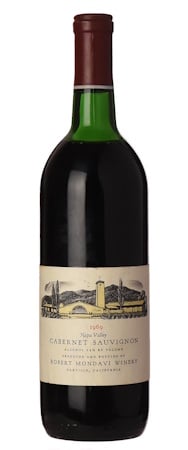
This wine, however, was another matter. A 1969 Robert Mondavi Cabernet Sauvignon, still alive and still kicking, elegant in a way that felt almost Burgundian, laced with dried red fruit. The tannins had long since softened away, but the acidity and structure remained. It was like an old building still standing: aged, but beautiful for it.
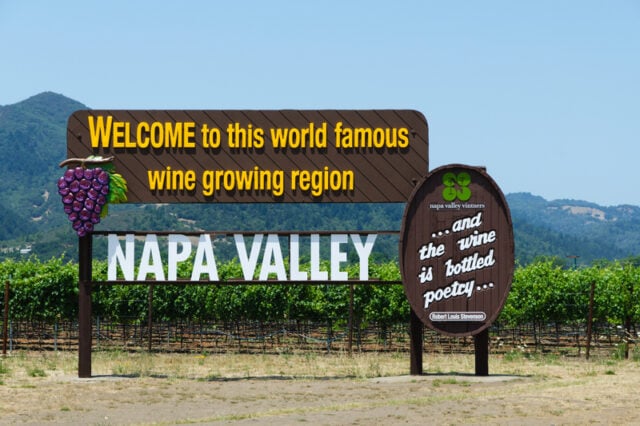
As we sipped slowly, savoring it, we found ourselves thinking about what was happening in Napa Valley in the late 1960s. Unlike today’s sea of small and large wineries, the established producers back then could be counted on one hand: Beaulieu Vineyards, Louis Martini, Beringer, Inglenook, Charles Krug. The next few years would bring the arrival of Robert Mondavi, Chappellet, Heitz, and Mayacamas. Their wines were more classic: lighter in body, lower in alcohol, with natural, high acidity and firm structure.

By 1969, Robert Mondavi had already left Charles Krug and the family business after a bitter falling-out. Only 52 years old, he bought vineyard land in To Kalon in 1966 and built a state-of-the-art winery in Oakville. His legacy began there in earnest, as he set out to make the cabernet sauvignon as good as first-growth Bordeaux. He hired Warren Winiarski, who would go on to build his own legacy by launching Stag’s Leap Wine Cellars in 1973. Taking Winiarski’s place at Mondavi was Mike Grgich. A few years later, Winiarski’s 1973 Cabernet Sauvignon won worldwide acclaim at the Judgment of Paris blind tasting, and Grgich’s 1973 Chardonnay, made at Chateau Montelena, took first place in the same competition stacked with top Burgundy producers. Winiarski, Grgich, Mondavi — three pioneers who put Napa Valley on the world’s map around the time the 1969 was bottled.
If only that 1969 bottle could talk.
Mondavi died in 2008 at age 94, so he isn’t around to tell us how his wines have evolved, or how the 1969 stacks up against today’s vintages. But we did get the chance to speak with Kurtis Ogasawara, who joined Robert Mondavi Winery in 2015 and now serves as its director of winemaking. He hasn’t tasted the 1969 himself, but he has sampled vintages from the early 1970s.
The first thing that jumps out is the alcohol level: 12 percent, printed plainly on the 1969 label. Today’s Mondavi cabernet sauvignon runs between 14.5 and 15 percent. Climate change may explain some of that rise, but Ogasawara points to other factors too — namely, that producers today are far more precise about when they pick.
“In the 1960s the vineyard team called the pick, and then winemakers just made the wine,” he told us. “In the 1990s, winemakers became more involved in that decision.”
He also noted that vines in the 1960s and ‘70s were often infected with viruses, forcing growers to pull them up. The vineyards weren’t quite as reliable.
According to Ogasawara, the 1969 included fruit from the celebrated To Kalon vineyard, but Mondavi was also sourcing grapes from other vineyards across Napa Valley — the same approach the winery uses today. Winemakers of that generation were simply determined to make the best wine they could. Today, Ogasawara says the focus has sharpened toward a more precise fruit profile, with closer attention paid to acidity and balance.
While most Napa producers of the era relied on American oak, Mondavi was the first to bring in French oak. The wine fermented in stainless steel before moving into barrels handpicked from French coopers. The 1969 was also likely unfined and unfiltered — another subtle innovation from a winemaker determined to push boundaries.
Ogasawara said Mondavi traveled to France himself to find the right oak, and French coopers came to Napa in turn, testing how different barrel shapes affected his cabernet. “They still come here to help determine the best oak for our wine,” Ogasawara says.
Does the legacy of that dream team — Mondavi, Grgich, and Winiarski — weigh on him?
“When I think about it too much, I want to run away,” Ogasawara admits. “But we’re so focused on getting better. I don’t get lost trying to fill their shoes.”
The Oakville winery itself has changed too — a new facility was built that incorporates the old Spanish Mission design with the new. Perhaps it’s the start of a new chapter.
Will Ogasawara’s wines age as gracefully as the 1969 did? We find ourselves wondering whether today’s bolder, more alcoholic, fruit-forward style will hold up decades from now the way Mondavi’s and Grgich’s understated, medium-bodied wines have.
“I think about that a lot too,” Ogasawara says. But based on the older vintages of his own winemaking he’s tasted so far, he’s confident they will.
Alas, I won’t be around to find out how the 2023 tastes in 57 years.
Here are some of the wines we recently tasted from the impressive Mondavi portfolio:
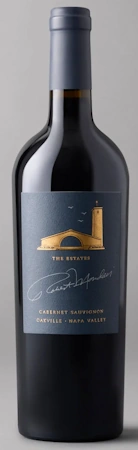
Robert Mondavi Winery Cabernet Sauvignon 2022 ($55). The most similar of the wines made by Robert Mondavi in 1969, this Cabernet Sauvignon blends grapes from the estate’s To Kalon and Stag’s Leap vineyards with grapes from other Napa producers. It is juicy with red fruit character.
Robert Mondavi Winery The Estates Cabernet Sauvignon 2022 ($105). Sourced primarily from To Kalon vineyard, this is a dramatic step up. Rich and complex with violet aromas, plum and black cherry fruit with hints of mint and clove. Soft, fine tannins.
Robert Mondavi Winery The Estates Red Blend 2022 ($95). Using all five noble Bordeaux grape varieties, Ogasawara has a dynamite wine with balance and structure. Juicy black cherry, plum and red currant notes with hints of black licorice and spice.
Robert Mondavi Winery The Estates Fume Blanc Napa Valley 2023 ($65). A bit of semillon softens this iconic wine—Mondavi was the first to use “fume”–and adds dimension too. Peach and apricot aromas give way to citrus and tropical fruit flavors.
Wine picks
Girard Cabernet Sauvignon Napa Valley 2022 ($40). You get a lot of Napa Valley depth for the price of this wine. Although it is predominantly cabernet sauvignon, other Bordeaux grape varieties have their role. Lush plum aromas with raspberry and plum flavors, hint of chocolate and a dash of spice.
Girard Artistry Red Wine Napa Valley 2022 ($65). All Bordeaux grape varieties go into this nicely textured blend. Forward blackberry and black cherry notes with a velvet mouthfeel and a hint of mocha.
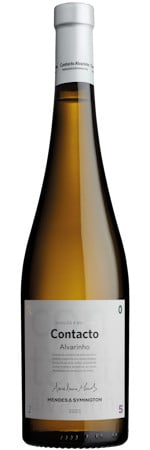
Mendes & Symington Contacto Alvarinho 2025 ($22). Made entirely from native, alvarinho grapes grown near the mountainous Spanish border, this Portuguese wine is fresh and vibrant with citrus and grapefruit notes.
Eden Rift Valiant Central Coast Chardonnay 2021 ($26). Aging this wine on its lees provides rich texture that you will find appealing. Orange, citrus notes with a creamy mouthfeel.
Disclaimer
Artificial Intelligence Disclosure & Legal Disclaimer
AI Content Policy.
To provide our readers with timely and comprehensive coverage, South Florida Reporter uses artificial intelligence (AI) to assist in producing certain articles and visual content.
Articles: AI may be used to assist in research, structural drafting, or data analysis. All AI-assisted text is reviewed and edited by our team to ensure accuracy and adherence to our editorial standards.
Images: Any imagery generated or significantly altered by AI is clearly marked with a disclaimer or watermark to distinguish it from traditional photography or editorial illustrations.
General Disclaimer
The information contained in South Florida Reporter is for general information purposes only.
South Florida Reporter assumes no responsibility for errors or omissions in the contents of the Service. In no event shall South Florida Reporter be liable for any special, direct, indirect, consequential, or incidental damages or any damages whatsoever, whether in an action of contract, negligence or other tort, arising out of or in connection with the use of the Service or the contents of the Service.
The Company reserves the right to make additions, deletions, or modifications to the contents of the Service at any time without prior notice. The Company does not warrant that the Service is free of viruses or other harmful components.