A Resurging Crisis in the Middle East
Military hostilities between the United States and Iran have entered a volatile new phase. President Donald Trump has doubled down on a hardline campaign of economic and military pressure against Tehran. Defense Secretary Pete Hegseth continues to enforce aggressive deterrence across regional waterways. Both leaders insist that the United States will not tolerate attacks on American forces or commerce. However, ongoing confrontations have sharply elevated the danger of direct conflict.
The Shadow of the Jordan Base Attack
Current operations follow the tragic drone strike on a remote American outpost in Jordan. An Iran-backed militia launched a low-flying suicide drone at Tower 22 near the Syrian border. The fatal blast killed three American soldiers and left dozens more wounded. The tragedy marked a significant turning point in regional security dynamics. It exposed critical vulnerabilities in defending forward operating bases against cheap unmanned aerial drones. Trump and Hegseth frequently reference that deadly attack as justification for overwhelming defensive strength today.

Standoff in the Strait of Hormuz
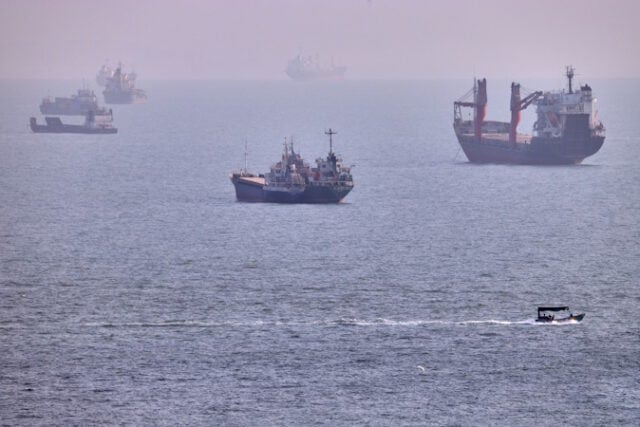
The conflict now centers directly on the Strait of Hormuz. This narrow waterway carries roughly twenty percent of global petroleum shipments every day. Iran has repeatedly threatened to close the channel and deploy maritime naval mines. In response, Trump ordered a strict naval blockade to safeguard commercial shipping lanes. American warships have cleared sea mines and intercepted hostile Iranian vessels attempting to disrupt tankers. Trump warned that any boat placing mines will face immediate destruction by American forces.
Hegseth’s Defense Execution and Operational Pushback
Inside the Pentagon, Defense Secretary Pete Hegseth oversees the demanding deployment of naval and air assets. Hegseth has directed strikes against Iranian missile sites, naval assets, and proxy hubs. He maintains that strong military actions have degraded Iranian offensive capabilities. Still, senior military commanders have privately voiced serious operational concerns to Hegseth. Extended naval patrols and high interceptor usage have stretched Pentagon readiness worldwide. Lawmakers also question whether a clear long-term endgame exists for this standoff.
Economic Pressure and Energy Security
The confrontation extends far beyond military strikes into the global economy. Maritime disruptions in the Persian Gulf have driven fuel and transport costs higher across international markets. Trump believes aggressive economic isolation will ultimately compel Iranian leadership to negotiate terms. Yet, Tehran shows little sign of yielding to American demands anytime soon. Iranian proxies remain capable of launching localized strikes throughout Iraq and Syria. Energy analysts warn that any closed passage could trigger historic global oil shocks.
The Path Forward Amid High Stakes
The standoff between Washington and Tehran leaves little margin for operational error. From Jordan’s desert borders to the Strait of Hormuz, American troops remain on high alert. Trump and Hegseth project confidence in their maximum pressure doctrine. Nevertheless, regional allies remain anxious about an accidental drift into full-scale war. Diplomatic solutions appear distant as military maneuvers dominate daily headlines. The coming weeks will determine whether deterrence holds or tensions ignite further.
Sources Used
- The Washington Post: U.S. forces strike Iranian launch site in first disclosed attack in nearly a month
- CBS News: Trump threatens to bomb Oman with Iran war stuck in stalemate
- Washington Examiner: The Iran war at six months: A ‘capital V’ victory, or a ‘capital Q’ quagmire?
- PBS NewsHour: Enemy drone that killed American troops in Jordan was mistaken for a U.S. drone
Disclaimer
Artificial Intelligence Disclosure & Legal Disclaimer
AI Content Policy.
To provide our readers with timely and comprehensive coverage, South Florida Reporter uses artificial intelligence (AI) to assist in producing certain articles and visual content.
Articles: AI may be used to assist in research, structural drafting, or data analysis. All AI-assisted text is reviewed and edited by our team to ensure accuracy and adherence to our editorial standards.
Images: Any imagery generated or significantly altered by AI is clearly marked with a disclaimer or watermark to distinguish it from traditional photography or editorial illustrations.
General Disclaimer
The information contained in South Florida Reporter is for general information purposes only.
South Florida Reporter assumes no responsibility for errors or omissions in the contents of the Service. In no event shall South Florida Reporter be liable for any special, direct, indirect, consequential, or incidental damages or any damages whatsoever, whether in an action of contract, negligence or other tort, arising out of or in connection with the use of the Service or the contents of the Service.
The Company reserves the right to make additions, deletions, or modifications to the contents of the Service at any time without prior notice. The Company does not warrant that the Service is free of viruses or other harmful components.