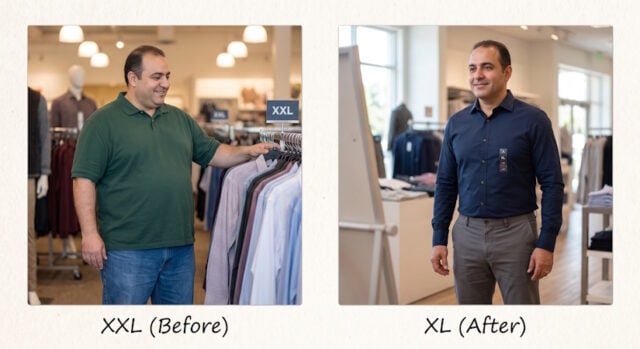
If you recently walked into a clothing store, you might have noticed something missing. The extended sizing sections are quietly vanishing from retail racks across the nation. Shoppers looking for XXL, 3XL, and 4XL garments are encountering empty spaces and sparse displays. Just a few years ago, fashion brands proudly promised size inclusivity for everyone. Store windows celebrated diverse body types with prominent displays. Today, that vibrant momentum is experiencing a sudden, disappointing retreat. Many customers now leave shopping malls completely empty-handed.
Recent retail data confirms what frustrated shoppers already see in dressing rooms. Analytics firm Edited examined new dress collections across prominent fashion websites. At fast-fashion giant H&M, sizes 3XL and 4XL completely vanished this year. The company also reduced its XXL inventory by three full percentage points. Other popular brands like Mango and Anthropologie cut back their larger dress assortments too. Even dedicated plus-size chains have closed hundreds of physical retail stores. Extended sizes are disappearing from physical racks faster than online catalogs.
So, why are major apparel brands stepping away from larger sizes right now? Industry executives frequently point to the surging popularity of GLP-1 weight-loss medications. Millions of American adults now take these prescription treatments to manage weight. Recent retail sales data shows steady increases in extra-small apparel purchases. Simultaneously, sales for medium, large, and plus-size garments have experienced slight dips. Corporate analysts argue that changing body profiles complicate future inventory forecasts. Rather than navigating shifting sizes, brands simply trim their widest size ranges.
However, weight-loss drugs do not explain the full retail retreat. Designing quality garments for larger bodies requires specialized patterns and distinct grading. Retailers cannot simply scale up small measurements without causing severe fit issues. True extended sizing demands dedicated fabric testing and skilled tailoring teams. Many fast-fashion companies skipped these essential steps during their initial inclusivity pushes. When poorly tailored garments failed to sell, executives blamed a lack of customer demand. Cutting sizes became an easy shortcut to protect quarterly profit margins.

As conventional clothing racks shrink, shoppers are turning to alternative shopping avenues. The secondhand resale market is currently experiencing a historic boom in extended sizing. Resale platform ThredUp reports record spikes in plus-size donations and customer purchases. Shoppers undergoing body transitions frequently rely on resale platforms for affordable wardrobe updates. Buyers also discover greater variety and higher-quality garments through vintage and thrift sources. Meanwhile, mass retailers like Walmart continue to expand budget-friendly, inclusive clothing lines. They recognize the immense spending power of underserved plus-size consumers.
The disappearance of XXL options leaves a deeply frustrating gap in modern retail. True size inclusivity should never be treated as a temporary marketing trend. Bodies naturally change, and everyone deserves access to well-fitting, stylish apparel. Apparel makers should invest in flexible tailoring, adjustable waistbands, and consistent fit models. Brands that abandon their customers risk losing long-term brand loyalty. Shoppers will continue supporting the businesses that respect their sizing needs. Fashion is at its best when it welcomes every single customer. Racks that exclude shoppers ultimately leave massive revenue on the table.
Sources Used
- The Guardian: https://www.theguardian.com/fashion/ng-interactive/2026/aug/20/plus-size-clothes-glp-1
- Modern Retail: https://www.modernretail.co/operations/supply-and-demand-is-broken-while-some-retailers-are-investing-in-plus-size-apparel-others-are-pulling-back/
- Gap Inc. Corporate News: https://www.gapinc.com/en-us/articles/2022/05/update-on-old-navy-extended-size-inventory-in-stor
- UkrMedia (Edited Retail Research): https://ukrmedia.news/en/economics/plus-size-clothes-us-glp1-demand/
Disclaimer
Artificial Intelligence Disclosure & Legal Disclaimer
AI Content Policy.
To provide our readers with timely and comprehensive coverage, South Florida Reporter uses artificial intelligence (AI) to assist in producing certain articles and visual content.
Articles: AI may be used to assist in research, structural drafting, or data analysis. All AI-assisted text is reviewed and edited by our team to ensure accuracy and adherence to our editorial standards.
Images: Any imagery generated or significantly altered by AI is clearly marked with a disclaimer or watermark to distinguish it from traditional photography or editorial illustrations.
General Disclaimer
The information contained in South Florida Reporter is for general information purposes only.
South Florida Reporter assumes no responsibility for errors or omissions in the contents of the Service. In no event shall South Florida Reporter be liable for any special, direct, indirect, consequential, or incidental damages or any damages whatsoever, whether in an action of contract, negligence or other tort, arising out of or in connection with the use of the Service or the contents of the Service.
The Company reserves the right to make additions, deletions, or modifications to the contents of the Service at any time without prior notice. The Company does not warrant that the Service is free of viruses or other harmful components.