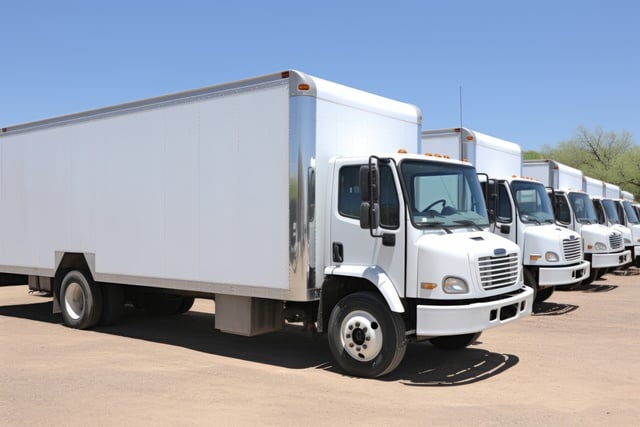
Commercial shipments move through multiple handoff points — transfers between facilities, carrier pickups, terminal arrivals, and final delivery. Each transition introduces different operating conditions, coordination requirements, and facility environments. The number and nature of those handoffs may affect a trucking operation’s liability exposure profile independently of fleet size or total mileage.
A commercial shipment typically moves through several consecutive stages before reaching the consignee. It may be collected by a truck, brought to a terminal, processed through a warehouse, and then delivered.
Each handoff may introduce a different operating environment. The truck may remain the same while the conditions of the transportation process shift considerably.
STAR Mutual RRG is a member-owned risk retention group that provides commercial auto liability coverage across the trucking and transportation sector, serving operations that range from regional freight and for-hire carriers to specialized hauling and last-mile delivery.

Physical Transport of Cargo Is Not the Whole Story
Transportation is often understood as movement from one point to another.
In practice, significant time may be spent at locations where responsibility for handling, staging, loading, unloading, or transferring cargo changes hands.
Handoff points include:
- Transfer of cargo between facilities
- Transfer of cargo from shipper to trucking company
- Transfer of a trailer between operations
- Arrival of cargo at a terminal
- Release of goods to the consignee
These transition points make up the broader transportation process — and each carries its own operating conditions.
Different Handoff Points Create Different Operating Conditions
A large distribution center and a direct pickup at a small shipper present two different environments for the same truck and driver.
Loading and unloading procedures, traffic density, pedestrian activity, and staging areas may all differ significantly between locations.
The same truck and driver may encounter different levels of operating exposure depending on what takes place at each stage of a single shipment.
This does not mean one location type is inherently more hazardous than another. It reflects that the characteristics of both the environment and the operation are worth considering together.
Increased Number of Handoffs Creates Increased Complexity
A direct pickup and delivery involves a limited number of handoff points.
A shipment routed through several facilities moves through a different kind of process. Each additional handoff introduces another facility, another set of procedures, and another coordination stage.
The number of handoffs may therefore affect the complexity of the transportation operation — even when total mileage remains the same.
A fleet handling similar cargo over similar mileage may carry a meaningfully different operational profile depending on how many intermediate facilities it passes through.
Facilities Matter
The location of a handoff is only part of the picture.
The design and operating procedures of a facility may also influence the exposure environment.
Large terminals may have high vehicle density, numerous loading zones, frequent trailer movements, and significant interaction between vehicles and personnel. Smaller facilities may have fewer vehicles but different access procedures, loading practices, or staging arrangements.
This does not indicate anything specific about claims outcomes — it reflects that operating conditions may differ significantly between facilities depending on their design and activity level.
How Handoffs Affect Operational Coordination
Physical transfer of cargo is typically accompanied by coordination activity.
Pickup times, delivery instructions, documentation, equipment availability, and shipment status all require management. When multiple handoffs are involved, coordination becomes a more substantial part of the operating process.
Changes in communication patterns may therefore accompany physical operational shifts.
This becomes particularly relevant when a trucking company begins working with customers whose distribution networks involve multiple facilities.
How Customer Changes May Affect Handoff Patterns
A transportation company may retain its fleet and drivers while changing its customer base.
A new customer may operate a network of regional distribution centers rather than direct-to-consignee delivery. Another may require cargo to pass through several facilities before final delivery.
The number and types of handoffs may change without any increase in fleet size.
Liability exposure may therefore be distributed differently as the operation works through a different combination of facilities and procedures.
Why Handoff Frequency May Differ Between Similar Carriers
Two trucking companies may handle the same cargo type and operate the same number of trucks — yet carry meaningfully different handoff patterns.
One may deliver cargo directly. The other may route it through terminals, cross-docking facilities, and distribution centers.
Their mileage may be comparable. Their operating environments may differ considerably.
This illustrates why mileage and fleet size may not fully describe the conditions under which a transportation operation functions.
Why the Full Movement Chain Provides Better Exposure Context
Examining the whole movement chain — rather than individual locations in isolation — may provide a more complete picture of handoff-related exposure.
A movement chain may consist of stages such as:
pickup → loading → transit → intermediate facility → transfer → final delivery
Each stage introduces its own operating conditions. When one stage changes, the overall pattern may shift as well.
This approach may help distinguish a simple destination change from a more meaningful shift in the movement pattern.
Conclusion
Handoffs are not simply physical points along a delivery route. They are transition points where equipment, cargo handling, facility environment, and coordination requirements may all change.
An increase or decrease in handoff frequency may shift the operational profile of a trucking company without any change to fleet size, driver roster, or total mileage.
Considering the entire movement chain may support a more complete analysis of how liability exposure is distributed across a transportation operation.
Disclaimer
Artificial Intelligence Disclosure & Legal Disclaimer
AI Content Policy.
To provide our readers with timely and comprehensive coverage, South Florida Reporter uses artificial intelligence (AI) to assist in producing certain articles and visual content.
Articles: AI may be used to assist in research, structural drafting, or data analysis. All AI-assisted text is reviewed and edited by our team to ensure accuracy and adherence to our editorial standards.
Images: Any imagery generated or significantly altered by AI is clearly marked with a disclaimer or watermark to distinguish it from traditional photography or editorial illustrations.
General Disclaimer
The information contained in South Florida Reporter is for general information purposes only.
South Florida Reporter assumes no responsibility for errors or omissions in the contents of the Service. In no event shall South Florida Reporter be liable for any special, direct, indirect, consequential, or incidental damages or any damages whatsoever, whether in an action of contract, negligence or other tort, arising out of or in connection with the use of the Service or the contents of the Service.
The Company reserves the right to make additions, deletions, or modifications to the contents of the Service at any time without prior notice. The Company does not warrant that the Service is free of viruses or other harmful components.