Iran Update: Military Maneuvers, Diplomatic Friction, and Energy Security
The Middle East is navigating another precarious chapter as regional rivalries, military posturing, and resource anxieties converge. Between heavy naval redeployments by the United States, fresh diplomatic feuds between Tehran and Doha over downed aircrews, persistent Israeli strikes, and the lingering threat to worldwide energy stockpiles, the stakes have rarely been higher.
1. US Naval Power: Aircraft Carriers Bolster Regional Deterrence
In response to volatile exchanges and threats to commercial waterways, the United States has maintained an aggressive posture in the region, keeping carrier strike groups and specialized air assets positioned across US Central Command (CENTCOM) operational waters.
The deployment of massive carrier battle groups serves multiple strategic objectives:

- Active Deterrence: Demonstrating immediate retaliatory capability against state-sponsored strikes or proxy incursions.
- Maritime Escort & Freedom of Navigation: Guarding vital transit chokepoints like the Bab el-Mandeb and the Strait of Hormuz against drone strikes and sea mines.
- Air Defense Integration: Coordinating with regional allies to create a layered defense network capable of intercepting ballistic missiles and suicide drones mid-flight.
While Washington emphasizes that carrier task forces are deployed to prevent an all-out regional confrontation, Tehran views the buildup as direct provocation, complicating ongoing mediation efforts.
2. The Pilot Controversy: Tehran’s Accusation and Doha’s Firm Rebuttal
A sudden diplomatic flashpoint emerged after Iranian authorities formally claimed that three of their air force pilots were being held captive in Qatar.
According to General Mohammad Bagherzadeh, head of the Iranian armed forces’ missing persons committee, two Iranian Su-24 fighter jets went down during March combat sorties aimed at military facilities hosting American components, notably Al Udeid Air Base. Tehran identified three pilots—Javad Salehi, Abdolmajid Dashtian, and Omran Behraveshian—as surviving ejection and being taken into Qatari custody, while a fourth pilot, Majid Kazemi, was killed. Tehran has formally appealed to the International Committee of the Red Cross (ICRC) to intervene.
┌────────────────────────────────────────────────────────────────────────┐
│                        THE SU-24 PILOT DISPUTE                         │
├───────────────────────────────────┬────────────────────────────────────┤
│ Tehran's Position                 │ Doha's Response                    │
├───────────────────────────────────┼────────────────────────────────────┤
│ • 3 pilots alive in Qatari custody│ • Categorical denial of detention  │
│ • Geneva Convention violations    │ • Search-and-rescue fully documented│
│ • Requests immediate ICRC access  │ • Only 1 body found & repatriated  │
│ • Names: Salehi, Dashtian, etc.   │ • Urges de-escalation & calm       │
└───────────────────────────────────┴────────────────────────────────────┘
Qatar quickly pushed back against the allegations. Majed Al Ansari, spokesperson for Qatar’s Foreign Ministry, categorically denied that any Iranian pilots are in Qatari custody. Doha clarified that while contact was initiated after the aircraft breached its airspace and defensive action followed, search-and-rescue teams only recovered the remains of one pilot—which were repatriated to Iran—with no evidence of surviving crew members. Qatari officials expressed surprise over the timing of Tehran’s public accusations, noting that Qatar continues to serve as an indispensable mediator in broader peace talks.
3. Israeli Kinetic Operations: Precision Strikes and Defense Calculus
Simultaneously, Israeli military operations against Iranian infrastructure and command networks continue to reshape the battlefield. Israeli operations have focused on neutralizing deep-strike drone assembly hubs, ballistic missile launchers, and high-level commanders.
Israel’s defense doctrine remains centered on preventing Iran from developing break-out nuclear capability and curbing precision missile transfers along its northern borders. In response, Tehran has repeatedly demonstrated its willingness to fire salvos of ballistic missiles and long-range drones, creating an escalatory cycle where every defensive interception risks igniting an open, multi-front war.
4. Energy Vulnerabilities: Dwindling Oil Reserves and Global Market Strain
Beyond immediate military maneuvers, the economic fallout is sending shockwaves through global markets. The threat of protracted warfare across the Persian Gulf has ignited serious concerns regarding the depletion of commercial and national strategic petroleum reserves (SPRs) worldwide.
                     GEOPOLITICAL ESCALATION
                                │
             ┌──────────────────┴──────────────────┐
             ▼                                     ▼
   Shipping Disruptions                  Strikes on Refineries
  in the Strait of Hormuz                  & Energy Hubs
             │                                     │
             └──────────────────┬──────────────────┘
                                ▼
                   Rapid Drawdown of Global SPRs
                                │
                                ▼
               Soaring Inflation & Supply Bottlenecks
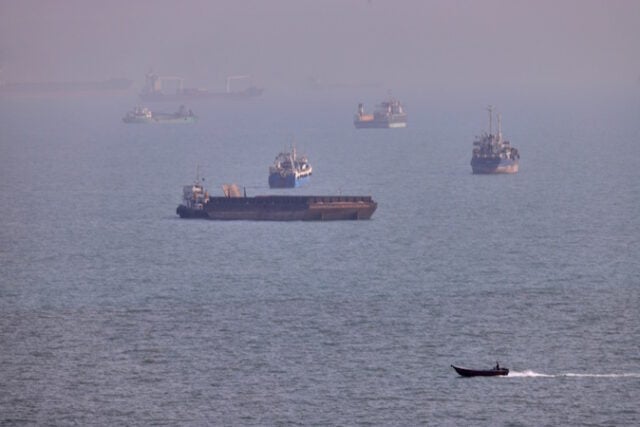
- Shipping Bottlenecks: Approximately 20% of global petroleum passes through the narrow Strait of Hormuz. Threats to tankers have sent maritime insurance rates through the roof and forced vessels into lengthy, expensive detours.
- Infrastructure Vulnerability: Both sides have struck or threatened energy infrastructure, including offshore gas fields and regional refineries, raising fears of structural output reductions.
- Reserve Depletion Concerns: Major consuming economies had already drawn down significant portions of their strategic stockpiles to cushion earlier price spikes. With reserves operating well below capacity, governments face dwindling buffers should a sudden shutdown of Gulf flows occur, threatening another round of severe inflation and fuel rationing fears.
The Path Ahead
The situation surrounding Iran remains balanced on a razor’s edge. While US carrier groups provide immediate tactical coverage and deter mass attacks, genuine stability hinges on whether backchannel diplomacy can resolve hostage disputes, protect energy corridors, and halt kinetic exchanges before the buffer of emergency reserves runs completely dry.
Disclaimer
Artificial Intelligence Disclosure & Legal Disclaimer
AI Content Policy.
To provide our readers with timely and comprehensive coverage, South Florida Reporter uses artificial intelligence (AI) to assist in producing certain articles and visual content.
Articles: AI may be used to assist in research, structural drafting, or data analysis. All AI-assisted text is reviewed and edited by our team to ensure accuracy and adherence to our editorial standards.
Images: Any imagery generated or significantly altered by AI is clearly marked with a disclaimer or watermark to distinguish it from traditional photography or editorial illustrations.
General Disclaimer
The information contained in South Florida Reporter is for general information purposes only.
South Florida Reporter assumes no responsibility for errors or omissions in the contents of the Service. In no event shall South Florida Reporter be liable for any special, direct, indirect, consequential, or incidental damages or any damages whatsoever, whether in an action of contract, negligence or other tort, arising out of or in connection with the use of the Service or the contents of the Service.
The Company reserves the right to make additions, deletions, or modifications to the contents of the Service at any time without prior notice. The Company does not warrant that the Service is free of viruses or other harmful components.