The Great Flock Debate: Public Safety vs. Mass Surveillance in Florida
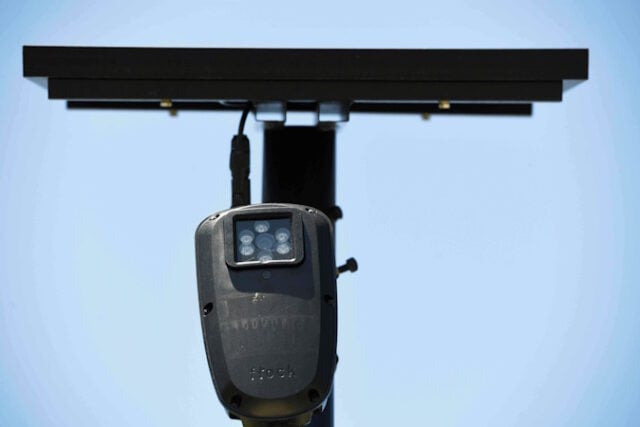
If you have driven through almost any Florida neighborhood lately, chances are you have passed under the unblinking eye of a Flock Safety camera. These solar-powered, pole-mounted devices look unassuming enough, but they sit at the center of one of the country’s hottest civil liberties arguments.
At their core, Flock systems are automated license plate readers (ALPRs). Unlike old-school traffic cameras that only photograph drivers who run red lights, Flock units capture high-resolution snapshots of every single passing vehicle. They log license plates, vehicle makes, models, colors, and unique features like roof racks or bumper stickers into a searchable cloud database.
For law enforcement agencies and homeowner associations (HOAs), the technology feels like a breakthrough. Police departments and sheriffs across Florida point to real-time alerts that help recover stolen vehicles, locate missing seniors under Silver Alerts, and quickly apprehend violent suspects before they flee. Proponents argue that in an era of tight municipal budgets and police staffing shortages, automated eyes serve as a powerful force multiplier, deterring property crime and keeping quiet streets safe.

However, civil liberties advocates, privacy watchdogs, and everyday drivers see a far darker picture. Organizations like the American Civil Liberties Union (ACLU) and the Electronic Frontier Foundation (EFF) warn that linking thousands of ALPRs together effectively creates an unchecked dragnet surveillance network. Instead of investigating specific crimes based on reasonable suspicion, the system catalogs the daily movements of millions of innocent citizens without a warrant. Critics note that tracking where someone drives can reveal private medical visits, religious gatherings, political meetings, and daily personal routines—data vulnerable to systemic abuse, out-of-state sharing, and unauthorized searches.
In Florida, this friction has reached a boiling point. Flock cameras have expanded across Miami-Dade, Central Florida, and dozens of residential subdivisions. But pushback has intensified. Central Florida communities have seen protests and camera vandalism, while local city councils face heated pushback over contract renewals. The debate has even spilled onto the statewide campaign trail, with Florida gubernatorial candidates calling for pauses on camera contracts or demanding judicial search warrants before police query vehicle movement history.
Flock has attempted to ease concerns by introducing audit logs, requiring case numbers for queries, and shortening default data retention windows. Yet skeptics argue that policy tweaks sidestep the core constitutional question: should private companies and government agencies be permitted to build a searchable record of where free citizens travel in public?
As Florida continues its rapid growth, the Flock debate exposes a classic modern dilemma. Communities want rapid investigative tools when crimes occur, but they also value their constitutional right to travel without being digitally tracked. Finding that boundary will define the future of American privacy on the open road.
Sources Used
- WLRN Public Media: https://www.wlrn.org/government-politics/2026-08-03/block-flock-debate-over-license-plate-surveillance-cameras-seep-into-floridas-gubernatorial-race
- American Civil Liberties Union (ACLU): https://www.aclu.org/news/privacy-technology/despite-new-updates-flocks-creepy-cameras-remain-major-civil-liberties-threat
- WKMG ClickOrlando News 6: https://www.clickorlando.com/news/local/2026/08/07/flock-license-plate-readers-vandalized-across-central-florida-as-debate-over-surveillance-technology-continues/
- Flock Safety Policy & Legal Documentation: https://www.flocksafety.com/legal/lpr-policy
- KQED News: https://www.kqed.org/news/12090103/get-the-flock-out-the-heated-debate-over-license-plate-readers
- 107.1 KISS FM Florida News: https://kissfm1071.iheart.com/featured/florida-news/content/2026-08-06-florida-flock-cameras-fuel-debate-over-crime-and-privacy/
Disclaimer
Artificial Intelligence Disclosure & Legal Disclaimer
AI Content Policy.
To provide our readers with timely and comprehensive coverage, South Florida Reporter uses artificial intelligence (AI) to assist in producing certain articles and visual content.
Articles: AI may be used to assist in research, structural drafting, or data analysis. All AI-assisted text is reviewed and edited by our team to ensure accuracy and adherence to our editorial standards.
Images: Any imagery generated or significantly altered by AI is clearly marked with a disclaimer or watermark to distinguish it from traditional photography or editorial illustrations.
General Disclaimer
The information contained in South Florida Reporter is for general information purposes only.
South Florida Reporter assumes no responsibility for errors or omissions in the contents of the Service. In no event shall South Florida Reporter be liable for any special, direct, indirect, consequential, or incidental damages or any damages whatsoever, whether in an action of contract, negligence or other tort, arising out of or in connection with the use of the Service or the contents of the Service.
The Company reserves the right to make additions, deletions, or modifications to the contents of the Service at any time without prior notice. The Company does not warrant that the Service is free of viruses or other harmful components.