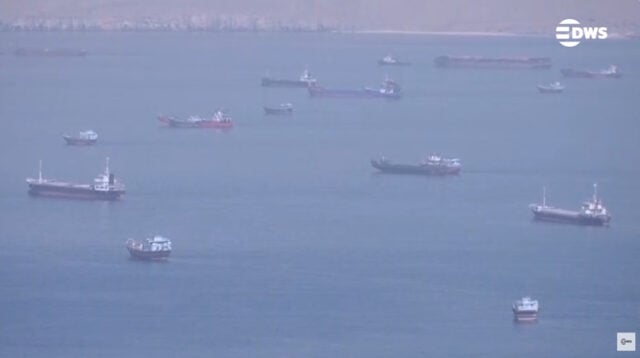
For months, the global energy market has been holding its breath over the high-stakes confrontation in the Persian Gulf. Now, a potential diplomatic breakthrough is finally taking shape. Iran and Oman are putting the finishing touches on a bilateral draft agreement to establish defined navigation corridors through the critical Strait of Hormuz. For a global economy rattled by disrupted energy flows, supply chain bottlenecks, and volatile oil prices, any sign of movement around this strategic maritime choke point offers a welcome glimmer of hope. However, while diplomatic momentum is rapidly building in Muscat, Tehran is making one crucial point abundantly clear: agreeing on technical coordinates with Oman does not mean commercial tankers will start sailing freely without major concessions from Washington.
Iranian officials, including Foreign Ministry spokesperson Esmaeil Baghaei and Supreme National Security Council officials, have emphasized that reopening the vital waterway depends entirely on the United States meeting a strict list of demands. Tehran’s requirements are far-reaching and politically complex. Top priorities include the immediate lifting of the U.S. naval blockade on Iranian ports, the unfreezing of Iranian foreign assets, and a full withdrawal of American forces from the region. Furthermore, Iranian negotiators have called for financial war compensation for recent military strikes and an immediate halt to U.S. military actions targeting Iranian-backed militias in neighboring countries. In essence, Tehran is utilizing the waterway negotiations as strategic leverage to alter its broader posture against Washington.
From the American perspective, the framing of the situation is fundamentally different. President Donald Trump, Secretary of State Marco Rubio, and Treasury Secretary Scott Bessent have voiced public optimism, suggesting that a deal or temporary arrangement could be finalized imminently to restore commercial maritime traffic and stabilize global fuel prices. Nevertheless, U.S. officials maintain that the Strait of Hormuz is an international waterway where no single country can exercise unilateral control. Washington firmly rejects any arrangement that would allow Iran to charge transit fees, require transit approvals, or assert sovereign dominance over international shipping lanes. Demonstrating this firm stance, Washington recently enacted fresh economic sanctions against Iranian financial networks to maintain maximum diplomatic leverage.

Oman’s diplomatic role as a mediator remains essential in bridging communication gaps between the opposing parties. The proposed technical agreement outlines divided inbound and outbound shipping lanes passing through Iranian and Omani waters to manage vessel traffic safely. However, moving from technical maps to real-world maritime safety requires overcoming deep-seated mutual distrust. Tehran refuses to guarantee passage while U.S. naval blockades persist, whereas Washington insists on unconditional freedom of navigation. As both nations weigh their strategic options, the Strait of Hormuz remains the ultimate flashpoint in a high-stakes standoff where every diplomatic step forward requires navigating intense geopolitical hurdles and complex international expectations.
Ultimately, whether this bilateral draft between Tehran and Muscat translates into a wider regional truce hinges on how far both sides are willing to compromise. With global trade on the line, the next few days could determine the future of international shipping routes.
Sources Used
- The Washington Post: Iran says deal with Oman is close — but its demands leave Hormuz opening uncertain
- Iran International: US imposes new Iran sanctions as officials say Hormuz deal is near
- The Guardian: Iran and Oman agree on coordinates of route through strait of Hormuz, says Iranian foreign ministry
- Financial Times: Iran says it has reached agreement with Oman on Hormuz shipping route
- CBS News: Iran, Oman deal on Strait of Hormuz getting close, Tehran says
Disclaimer
Artificial Intelligence Disclosure & Legal Disclaimer
AI Content Policy.
To provide our readers with timely and comprehensive coverage, South Florida Reporter uses artificial intelligence (AI) to assist in producing certain articles and visual content.
Articles: AI may be used to assist in research, structural drafting, or data analysis. All AI-assisted text is reviewed and edited by our team to ensure accuracy and adherence to our editorial standards.
Images: Any imagery generated or significantly altered by AI is clearly marked with a disclaimer or watermark to distinguish it from traditional photography or editorial illustrations.
General Disclaimer
The information contained in South Florida Reporter is for general information purposes only.
South Florida Reporter assumes no responsibility for errors or omissions in the contents of the Service. In no event shall South Florida Reporter be liable for any special, direct, indirect, consequential, or incidental damages or any damages whatsoever, whether in an action of contract, negligence or other tort, arising out of or in connection with the use of the Service or the contents of the Service.
The Company reserves the right to make additions, deletions, or modifications to the contents of the Service at any time without prior notice. The Company does not warrant that the Service is free of viruses or other harmful components.