By TOM MARQUARDT and PATRICK DARR
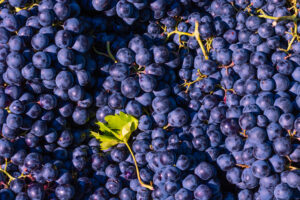
Fourteen acres of cabernet sauvignon cling to Atlas Peak’s 30-degree slope, their roots driven deep into fractured rock where no machine can tread. There’s no logical reason to coax low-yielding fruit from such unforgiving ground. Philippe Langner, who’s staked his career on this site, might say the same of himself.
Langner’s stubbornness mirrors that of his vines. Born in El Salvador to a German father and Parisian mother, he moved every three years to far-flung areas like Bangladesh, Colombia, Zaire—hardly regions to spark a winemaking obsession. Even after earning two agronomy degrees, he wondered if he’d end up doing little more than gardening. A six-month stint in a Paris bank convinced him an office wasn’t his home. “He said I was crazy,” Langner recalls of his boss steering him toward finance’s bigger paychecks. “But I needed to produce something.”
 That boss landed him a job at a French château, where he met legendary consultants Jacques Boissenot and Michel Rolland—perfect mentors with contrasting wine philosophies. After four years in France, he joined Sullivan Cellars in Napa, laboring to craft monumental cabs even in brutal vintages like 2009. Exhausted, he struck out on his own.

In 2004, he purchased a steep vineyard up more than 1,300 feet on Atlas Peak near Pritchard Hill and founded Hesperian Wines. But true hardship lay ahead. In 2015, the clusters of flowers suffered shatter and set no berries. In 2017, a wildfire consumed his house and reduced the crop. A 2020 blaze crept within five miles, and smoke taint forced him to discard that harvest, too.
Ready to quit? “Absolutely not,” he says, even as early rain, cold, and wind have again caused shatter in this year’s crop.
His personal struggles and those of his vines have coalesced into extraordinary wines born of devotion and persistence. Each morning he walks the 14 acres of the Kitoko vineyard just beyond his door, tending each vine according to its rocky micro-site. One block ripens so unevenly he makes three or four passes at harvest. Langner devotes all of his time to his vineyards—when we spoke to him by phone, he was carting an ATV to a repair shop.
At Sullivan, he battled big berries and wide vine spacing on the valley floor in Rutherford. Here, the harsh soils do the work. “The vines suffer more. Color comes naturally, so I don’t need cold soak,” he explains. “I had to relearn and take my foot off the accelerator.”
Cool winds from San Pablo Bay greet the wines, but there is a smaller diurnal range between day and night than exists in the valley. The fruit has a lower natural pH level and aromatics are more perfumed.
His early vintages delivered “a punch in the gut”—brutally tannic wines. Today his cabernets show more finesse: softer, more approachable, yet still built to age. Langner believes consumers have tired of the high-alcohol, ultra-ripe style critics once praised. “The pendulum is swinging back,” he says.
The three cabernets we tasted were balanced, with lively acidity and fine tannins. They had the soft mouthfeel as Langner wanted, but lurking in the background was a whisper of ageability. Hesperian also offers a more modestly priced Anatomy Cabernet Sauvignon.
Langner has applied the language of his childhood to many of the wines. “Hesperian” has its roots in Ancient Greek mythology and means “of the west” and references the garden of the Hesperides and the golden apples of the setting sun. “Kitoko” means “beautiful” in Lingala, the Congolese language of his childhood in Zaire. The same goes for each of his three cabernets.
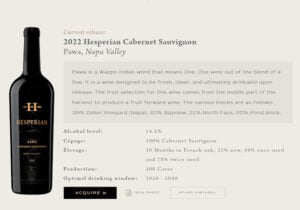
The 2022 Hesperian “Pawa” Napa Valley Cabernet Sauvignon is the fleshiest wine of the trio and blends Kitoko fruit with grapes from Eagle’s Nest Vineyard in southern Napa Valley. Dark and loaded with vibrant plum, cherry and black currant flavors, it shows well now. With hints of dried sage and rosemary, it finishes with soft tannins and a dash of spice.
We liked the Hesperian “Witha,” which combines early-harvest Kitoko fruit with that from Coombsville. Fresh dark berry flavors with approachable tannins and notes of dried rosemary. Balanced acidity makes it a good food wine.
The estate 2022 Hesperian Kitoko Vineyard Cabernet Sauvignon from Atlas Peak is the producer’s flagship wine. Using grapes from every block, it speaks to the rocky terroir with a distinctive mineral, crushed rock character. The fruit is more concentrated with varietal, mountain flavors of black cherries. This structured power horse is made for aging.
Wine picks
Alma de Cattleya Sonoma County Chardonnay 2024 ($30). Once again, this reasonably priced chardonnay out delivers. Delicious apple flavors, luscious mouthfeel and accented by citrus notes.
Bloodlines California Cabernet Sauvignon 2024 ($40). Fans of Orin Swift wines (Abstract, Papillon, 8 Years in the Desert, et al) will enjoy this newest Dave Phinney invention. Under the broad “California” appellation, it follows a familiar recipe: forward fruit redolent of blackberries and black currants with a dash of black pepper and reasonable tannins to keep it food friendly.
Lucy Rosé of Pinot Noir Santa Lucia Highlands 2025 ($24). This is a delicious rosé for summer sipping and $1 of every purchase is donated to breast cancer research. Fresh strawberry and raspberry flavors with a bit of grapefruit to keep it interesting.
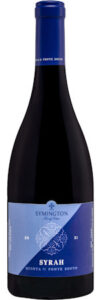
Quinta do Fonte Souto Syrah 2021 ($48). From the Alentejo region of Portugal, this unique wine is possible because the vineyard is at an elevation of 1,640 feet. The result is an herbal nose with ripe black fruit flavors and hints of dark chocolate.
Disclaimer
Artificial Intelligence Disclosure & Legal Disclaimer
AI Content Policy.
To provide our readers with timely and comprehensive coverage, South Florida Reporter uses artificial intelligence (AI) to assist in producing certain articles and visual content.
Articles: AI may be used to assist in research, structural drafting, or data analysis. All AI-assisted text is reviewed and edited by our team to ensure accuracy and adherence to our editorial standards.
Images: Any imagery generated or significantly altered by AI is clearly marked with a disclaimer or watermark to distinguish it from traditional photography or editorial illustrations.
General Disclaimer
The information contained in South Florida Reporter is for general information purposes only.
South Florida Reporter assumes no responsibility for errors or omissions in the contents of the Service. In no event shall South Florida Reporter be liable for any special, direct, indirect, consequential, or incidental damages or any damages whatsoever, whether in an action of contract, negligence or other tort, arising out of or in connection with the use of the Service or the contents of the Service.
The Company reserves the right to make additions, deletions, or modifications to the contents of the Service at any time without prior notice. The Company does not warrant that the Service is free of viruses or other harmful components.