Delays securing insurance approval and finding post-hospital care kept medically cleared patients in Florida hospitals for more than 781,000 unnecessary days, according to a new survey from the Florida Hospital Association.
The association estimates the delays generated $2.5 billion in preventable healthcare spending in 2025 while slowing patients’ recovery and limiting hospital capacity.
FHA surveyed member hospitals regarding discharge delays that occurred between July 1, 2024, and June 30, 2025. The results showed that 243,000 medically cleared patients remained hospitalized due to factors beyond hospitals’ control.
Nearly one in 10 patients experienced a delayed discharge. Health plan prior authorization requirements accounted for 41% of those delays, according to the association.

“No one should be in a hospital any longer than is appropriate for their medical care needs. Patients deserve timely access to the next level of care or critical services and supports to aid in their recovery and healing,” FHA President and CEO Mary Mayhew said. “Our data tells us that for many patients, they are delayed leaving the hospital because of a lack of timely insurance authorizations.”

Medicare Advantage patients accounted for almost half of those whose discharge was delayed. Prior authorization issues were responsible for 52% of delays affecting those patients, according to FHA.
Nearly 4,000 Medicare Advantage patients waited more than a week to be placed after they were medically cleared to leave the hospital.
The availability of post-acute care also contributed to the bottleneck. FHA found 41% of delayed patients were waiting for a bed in a skilled nursing or rehabilitation facility. Gaps in health plans’ provider networks were another factor.
The delays also affected patients still seeking admission. More than 158,000 emergency department patients, or 7.4%, waited longer than 12 hours for an inpatient bed.
“Floridians deserve timely access to care. By reducing discharge delays and freeing up hospital beds for other patients who need critical care, Florida’s healthcare delivery system can support patients’ swift recovery and optimal outcomes,” Mayhew said.
FHA said recent federal audits reinforce hospitals’ concerns about prior authorization practices.
The U.S. Department of Health and Human Services Office of Inspector General released findings in June from two investigations involving Medicare Advantage plans. According to FHA’s account of the audits, investigators found instances in which plans improperly denied or delayed authorization for medically necessary post-acute care.
Those practices can extend hospital stays, delay access to rehabilitation or skilled nursing care and increase providers’ administrative workload.
“These federal findings validate what Florida hospitals experience every day,” Mayhew said.
FHA is calling on policymakers, regulators and health plans to accelerate prior authorization decisions for post-hospital care. The association also wants greater transparency and accountability in denial and appeal decisions, broader provider networks and increased access to post-acute care facilities.
— Malpractice mentions —
Florida has one of the worst rates of medical malpractice reports in America.
High Rise Financial, a legal funding company, found in a study published this month that Florida had the fourth-worst rate of medical malpractice reports in the country. New Mexico topped the list, followed by New York and Pennsylvania.
Researchers developed the study by looking at the National Practitioner Data Bank figures between 2022 and 2026. There were a total of 61,199 medical practitioners in Florida and 5,078 medical practice reports during those four years.

That comes out to 83 malpractice reports per 1,000 medical practitioners, putting Florida in fourth place. New Mexico’s rate was 115.7 malpractice reports per 1,000 practitioners, the highest rate. But Florida’s rate is woefully high compared to some of the states rated the safest for medical procedures.
The study found that North Dakota ranked 50th in the country, with only 31 reports over the four years and 11.3 malpractice reports per 1,000 practitioners.
“The comparison highlights the significant differences in malpractice reporting rates across the country and reinforces Florida’s position among the states with the highest concentration of malpractice reports,” the study concluded.
While Florida’s rate of malpractice reports stood out, the raw number of 5,078 reports between 2022 and 2026 put Florida in the second spot for the highest total number of reports, falling behind only New York, which had 5,321 reports of malpractice in that state. New York also had a much higher malpractice rate, with 97.2 reports per 1,000 practitioners.

— Tampa’s land of Oz —
Tampa General Hospital (TGH) hosted a high-profile official to view its food service model.
Mehmet Oz, administrator of the U.S. Centers for Medicare & Medicaid Services, toured the facility on Friday to see the academic health system’s food services that deliver fresh meals to patients. The meals specialize in nutrient-dense food.
Oz got a full explanation from TGH officials on how the service model works. Iron Chef Geoffrey Zakarian developed it in collaboration with Tanuja Sharma, TGH Medical Director of Integrative Medicine and Arts. The meals program is rooted in a Mediterranean diet and highlights flavor, nutritional balance and recovery for patients. The menu is designed to accelerate healing.

It’s the latest prominent visitor to stop in at TGH to learn more about the hospital’s nutritional approach. Robert F. Kennedy Jr., Secretary of the U.S. Department of Health and Human Services, was recently in Tampa, too. He was joined by U.S. Department of Agriculture Secretary Brooke Rollins a week ago. They were promoting the “Make Hospital Food Healthy Again” commitment to put nutrition at the forefront of hospital recovery care.
Oz actually tasted some of the menu selections and visited with kitchen staff and TGH dietitians. He also reviewed the TGH Care Coordination Center that uses technology and artificial intelligence to improve patient outcomes.
— Major gift —
Frank and Carol Morsani have gifted $5 million to the Tampa General Hospital (TGH) Foundation to support emergency services at TGH Brooksville.
The Morsanis’ gift is the first major donation supporting the region since TGH Brooksville, TGH Spring Hill and TGH Crystal River joined TGH’s nonprofit academic health system.
“We have a bold vision for the future of TGH Brooksville, and a key step in realizing that vision is leveraging transformational philanthropy,” said TGH President John Couris, who also serves as CEO of Florida Health Sciences Center.

“By partnering with generous donors like Frank and Carol who share our commitment to excellence, we can drive meaningful change, expand access to care and bring innovative health solutions to the communities that need them most.”
The Morsanis are longtime Brooksville residents and prominent Tampa Bay area philanthropists. The couple said they hope their gift inspires others to contribute similarly to the Brooksville campus and to others in the area.
“Carol and I chose to support TGH Brooksville because strong healthcare changes lives and strengthens our community,” Frank Morsani said. “We hope this gift will advance innovation, support caregivers and bring hope and healing for generations to come.”
The Morsanis, through their Frank and Carol Morsani Foundation, have collectively donated millions of dollars to local institutions.
“On behalf of the entire leadership team at TGH Brooksville, we are deeply grateful for this extraordinary act of generosity,” said Bobby Ginn, President of TGH Brooksville and TGH Spring Hill. “Philanthropic investments like the one realized through the generosity of the Morsanis enable us to advance our mission and invest in the people, programs and technology that transform lives every day.”
Stacy Brandt, the Executive Vice President and Chief Administrative Officer for the Florida Health Sciences Center at TGH, said the investment will support transformative change.
“At a pivotal moment in the growth of our hospitals in Hernando County, this generosity will help create new opportunities for healing, innovation and better health outcomes,” she said.
Added Frann Leppla, TGH Executive Vice President and TGH Foundation President: “When TGH Brooksville joined our academic health system in 2023, it opened a new chapter for healthcare philanthropy in Citrus and Hernando counties. As visionary philanthropists, the Morsanis recognize the value of investing in this growing healthcare ecosystem to help ensure their local community will benefit from groundbreaking care closer to home.”

— CLEAR LABELS —
The Senate Health, Education, Labor and Pensions (HELP) Committee has advanced bipartisan legislation from U.S. Sens. Rick Scott and Kirsten Gillibrand that would require prescription drug labels to disclose where generic drugs and their active pharmaceutical ingredients are manufactured.
The Consumer Labeling for Enhanced API Reporting and Legitimate Accountability for Base Entity Listings (CLEAR LABELS) Act cleared the Committee on a 21-1 vote and now heads to the full Senate. The measure would require prescription drug labeling to identify the original manufacturers of generic drugs and APIs, giving patients, pharmacists, healthcare providers and purchasers more visibility into where medicines are produced.

“Through more than a half dozen hearings and our investigative report, the U.S. Senate Special Committee on Aging has exposed the dangers posed by foreign generic drugs, especially those made in Communist China and India. Our work has shown the urgent need for reforms to ensure Americans know where their drugs are made so they can be confident that their medications are safe for themselves and their families,” said Scott, who chairs the Senate Special Committee on Aging.
Gillibrand added, “Americans deserve to know where their prescription drugs are manufactured so they can make informed healthcare decisions. The CLEAR LABELS Act would make this information readily accessible to patients, pharmacists, purchasers, and providers while strengthening accountability throughout the supply chain.”
Current federal labeling requirements do not require public disclosure of where generic drugs or their active ingredients are manufactured. Scott has repeatedly raised concerns about the nation’s dependence on pharmaceutical products and ingredients produced overseas, particularly in China and India, through hearings held by the Senate Special Committee on Aging and an investigative report released with Gillibrand last year.
The legislation is co-sponsored by U.S. Sens. Ashley Moody, Tommy Tuberville, Katie Britt, Ron Johnson, Mike Lee, Kevin Cramer, Chuck Grassley, Pete Ricketts, Joni Ernst and Alan Armstrong.
— Clean bill of health —
The Florida Nurses Association and its political committee endorsed 26 candidates across House and Senate races in the 2026 election cycle.
The Florida Nurses Political Action Committee backed 19 House candidates and seven Senate candidates, saying the slate reflects the organization’s priorities on nursing practice, patient safety and healthcare quality.

“Every day, lawmakers make decisions that directly affect nurses and the patients they serve,” said Willa Hill, Executive Director of the Florida Nurses Association. “These endorsements represent candidates who have demonstrated a commitment to supporting nursing practice, protecting patient safety, and advancing a healthy Florida. We are proud to stand behind each of these individuals as they seek to serve their communities.”
The House endorsements include Rep. Michelle Salzman in House District 1, Jon Fay in HD 2, Tricia Berry in HD 6, Chase Brannon in HD 10, Terrance Freeman in HD 12, Rep. Chad Johnson in HD 22, Rep. JJ Grow in HD 23, Rep. Bill Partington in HD 28 and Rep. Erika Booth in HD 35.
FNPAC also endorsed Emily Duda Buckley in HD 38, Samuel Vilchez Santiago in HD 43, Rep. Jennifer Kincart Jonsson in HD 49, Rep. Vanessa Oliver in HD 76, Susan Frantz in HD 78, Eric Stelnicki in HD 100, Rep. Robin Bartleman in HD 103, Bruno Barriero in HD 113, Ashley Perez-Biliskov in HD 116 and Rep. Mike Redondo in HD 118.
Its Senate slate includes Sen. Jay Trumbull in Senate District 2, Jake Johansson in SD 8, Sen. Jason Brodeur in SD 10, Sen. Brian Nathan in SD 14, Sen. Jim Boyd in SD 20, Rep. Ashley Gantt in SD 34 and Sen. Ana Maria Rodriguez in SD 40.
The association is encouraging Florida nurses and other healthcare advocates to learn more about the endorsed candidates ahead of the election.

— LOBBYISTS —
Sebastian Aleksander Sr., The Aleksander Group: American Tech Medical
Benjamin Melnick, Allegiant Strategies Group: eMed Labs
Kirk Pepper, GrayRobinson: Azen Health of Florida
Ron Pierce, Melody Arnold, Natalie King, RSA Consulting Group: Langley Health Services

— ICYMI —
“Federal judge says certain abortion drug restrictions are unlawful” via Kelcie Moseley-Morris of Stateline — A federal judge in Virginia ruled that the U.S. Food and Drug Administration did not sufficiently justify restrictions imposed in 2023 on a drug used to terminate early pregnancies, adding another layer of complexity to a string of legal cases with opposing goals that could affect future abortion access. U.S. District Court Judge Robert Ballou, an appointee of former President Joe Biden, said the FDA failed to conduct an appropriate review of the 2023 restrictions on mifepristone, which include rules that prescribing pharmacies and clinicians must be specially certified and prescribers and patients must sign a form acknowledging the medication’s risks.
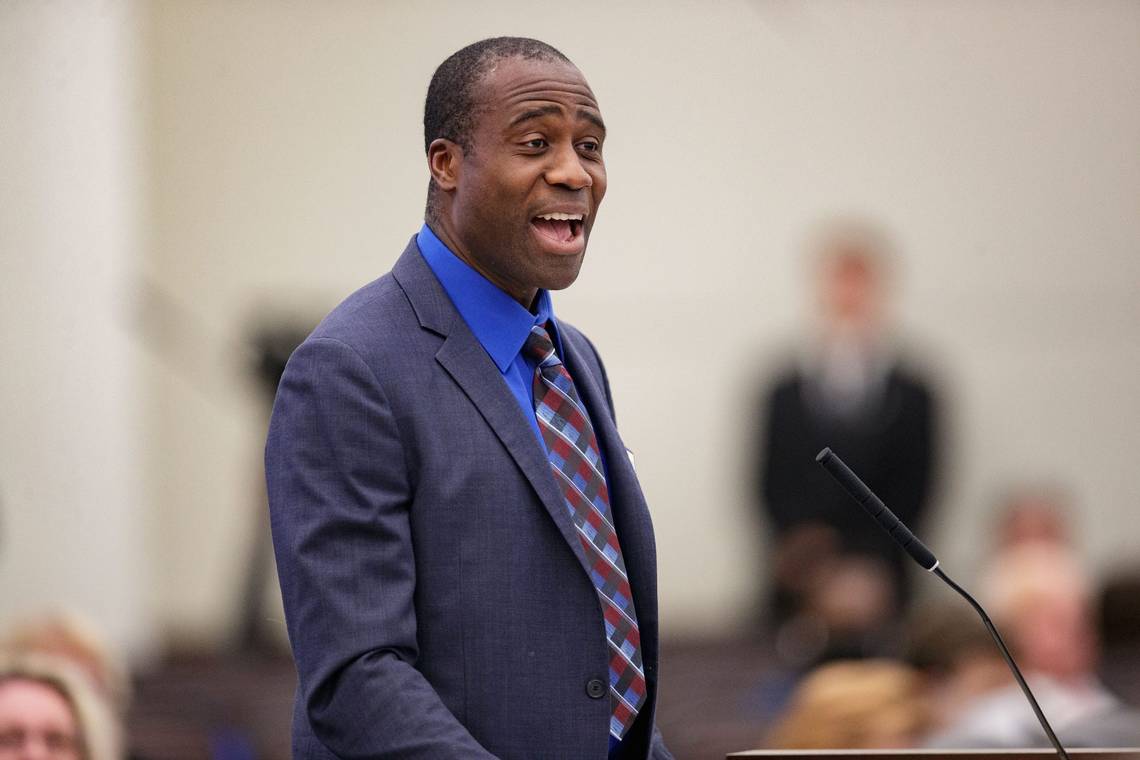
“Surgeon General suggests high measles counts could be tied to abortion opposition” via Christine Jordan Sexton of the Florida Phoenix — Federal data show Florida had 141 confirmed measles cases as of July 23, ranking the state fifth in the nation for most infections. A reporter asked Surgeon General Joe Ladapo about his level of concern about the measles cases and what he’d tell Florida families about the rising number of cases. The Surgeon General, long known for his vaccine skepticism, initially replied, “Oh no. Everyone’s got to take a vaccine.” But he followed, noting that “a lot of those cases” were reported at Ave Maria University, a private Roman Catholic college in Collier County. “You know, for some people — people may or may not know that the measles vaccines is developed with the cells that are a progeny from … an aborted fetus, and you know whether there’s a connection between the fact that you know some of the students at this university chose not to receive that vaccine, and it happens to be a vaccine that is related to the practice of abortion, I’m not sure,” he said.
“The end of Haitian TPS will create a humanitarian storm in South Florida” via Miriam Singer of the Tampa Bay Times — While hurricane season has been kind to us so far, we are about to be impacted by a “major hurricane” in the form of a humanitarian and healthcare crisis. The Supreme Court’s decision allowing termination of Temporary Protected Status for Haitian nationals has created immediate uncertainty for tens of thousands of hard-working residents who have built their lives here while caring for some of our most vulnerable seniors and frail residents of all ages. Unless Congress acts quickly, Haitians with TPS status will lose the ability to keep working in jobs our community desperately needs them to fill — and for organizations like Jewish Community Services of South Florida (JCS) and numerous others, the consequences are immediate, personal and heartbreaking.
“‘Medical freedom’ takes a back seat in Florida’s Midterm fights” via Arek Sarkissian of POLITICO — Republican-dominated Florida has become the pre-eminent lab for the medical freedom movement, with the state’s leaders and lawmakers banning masks in schools and fluoride in water while questioning the efficacy of some vaccines. But this year, those issues are landing with a thud on the campaign trail. Even though DeSantis made medical freedom a cornerstone of his time in office, and the state’s conservative Surgeon General, Joseph Ladapo, remains a national folk hero to some MAHA groups, the issues are now overshadowed by affordability and broader scrutiny on the effects of some MAHA-influenced proposals. Most candidates in this cycle have focused on economic concerns, including taxes and the effects of the AI boom, rather than on government healthcare restrictions.
“Should kratom be criminalized? Follow the science.” via John Cleveland of The Washington Post — Emergency scheduling should be reserved for genuine public health emergencies, not complex scientific and regulatory debates where the evidence remains unsettled. While 7-hydroxymitragynine, or 7-OH, may ultimately warrant regulation or permanent scheduling, the Drug Enforcement Administration has not demonstrated the imminent danger needed to bypass the normal rulemaking process. Nearly 1 million Americans use 7-OH products, yet no documented deaths have been conclusively attributed to the substance when consumed in isolation. Many users also report using it to reduce or eliminate illicit opioid use, experiences that warrant rigorous scientific evaluation rather than dismissal. If permanent scheduling is justified, the government should make its case through a transparent administrative process that allows scientists, physicians, patients and the public to fully evaluate the evidence.

— RULES —
The Agency for Health Care Administration’s final Medicaid rule (59G-4.251) regarding Prescribed Drugs Reimbursement Methodology goes into effect on July 15. More here.
The Board of Pharmacy’s final rule (64B16-27.700) regarding Compounding goes into effect on August 3. More here.
The Department of Health, Division of Public Health Statistics and Performance Management final rule (64W-6.005) regarding Award Prioritization and Awards goes into effect on August 4. More here.
The Department of Health’s Division of Public Health Statistics and Performance Management final rule (64W-6.006) regarding Funding Methodology and Awards takes effect on August 4. More here.
The Board of Pharmacy’s final rule (64B16-26.351) regarding Standards for Approval of Registered Pharmacy Technician Training Programs goes into effect on August 6. More here.

— PENCIL IT IN —
Aug. 4
Happy birthday to Danny Nix, Jr.!

Aug. 5
Happy birthday to Sen. Ed Hooper and Rep. Tyler Sirois!
Aug. 8
Happy birthday to Rep. Debra Tendrich!
Aug. 9
Happy birthday to Sen. Keith Truenow!
The post Diagnosis for 7.27.26: Checking the pulse of Florida healthcare news and policy appeared first on Florida Politics – Campaigns & Elections. Lobbying & Government..
Disclaimer
Artificial Intelligence Disclosure & Legal Disclaimer
AI Content Policy.
To provide our readers with timely and comprehensive coverage, South Florida Reporter uses artificial intelligence (AI) to assist in producing certain articles and visual content.
Articles: AI may be used to assist in research, structural drafting, or data analysis. All AI-assisted text is reviewed and edited by our team to ensure accuracy and adherence to our editorial standards.
Images: Any imagery generated or significantly altered by AI is clearly marked with a disclaimer or watermark to distinguish it from traditional photography or editorial illustrations.
General Disclaimer
The information contained in South Florida Reporter is for general information purposes only.
South Florida Reporter assumes no responsibility for errors or omissions in the contents of the Service. In no event shall South Florida Reporter be liable for any special, direct, indirect, consequential, or incidental damages or any damages whatsoever, whether in an action of contract, negligence or other tort, arising out of or in connection with the use of the Service or the contents of the Service.
The Company reserves the right to make additions, deletions, or modifications to the contents of the Service at any time without prior notice. The Company does not warrant that the Service is free of viruses or other harmful components.