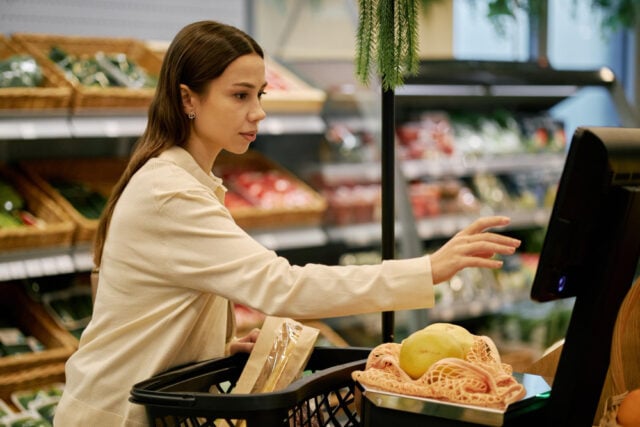
Have you noticed that a trip to the supermarket feels more like an exercise in high stakes strategic budgeting these days? You grab a few everyday essentials, roll up to the cash register, and suddenly your jaw hits the floor. If your grocery bill has been giving you major sticker shock, you are certainly not imagining things.
The reality behind this financial squeeze is stark. According to The Associated Press, “buying food to eat at home has gotten 33% more expensive in U.S. cities since the beginning of 2019.” To put that into perspective, prices rose only 6.4% over the entire seven and a half years prior. This historic surge marks the largest jump in grocery costs in half a century, forcing millions of households to completely rewire their shopping habits and weekly menus.
Take staples like ground beef, for example. The average price per pound has climbed to nearly seven dollars, marking a dramatic 79% increase since 2019. Ada Torres, a Texas resident interviewed by The Associated Press, explained that five pounds of ground beef now costs almost twenty dollars, turning a basic staple into a rare luxury. “Prices are sky-high,” Torres told The Associated Press. “One hundred dollars’ worth of groceries these days is nothing. Maybe you can bring home seven family-size items, if you manage to find a good deal.” To cope, her family has swapped brand-name products for generic lines and relies heavily on chicken, cold cuts, and eggs.
Across the country, consumers are adopting similar playbooks to survive the squeeze. Shoppers are downloading store apps to hunt for digital coupons, building dinner menus around short-term sales, and visiting multiple stores just to complete one weekly shopping list. As market research expert Sally Lyons Wyatt told The Associated Press, people are actively building creative household strategies because ongoing financial pressure shows no signs of disappearing. Meanwhile, retail consultant Matt Hamory observed that as prices stretch beyond comfortable limits, shoppers start splitting their trips or dropping higher-end stores entirely.

What triggered this massive spike? It was truly a perfect storm of global events. The coronavirus pandemic disrupted supply lines and drove up labor and shipping costs. Severe weather events like droughts, along with diseases like bird flu, drastically cut farm production. Furthermore, foreign tariffs and international conflicts disrupted critical supplies of oil, fertilizer, coffee, and grain.
While government data indicates that average weekly earnings have grown slightly faster than food costs since 2019, everyday consumers still feel the burn every time they shop. As senior policy fellow Jared Bernstein noted in his interview with The Associated Press, people hold a deeply honed awareness of grocery prices because food is an absolute necessity, not a discretionary expense you can easily skip.
Ultimately, navigating today’s supermarket aisles requires patience, planning, and flexibility. By leaning into smart shopping tactics, swapping out high-cost items, and staying savvy about sales, families continue to find clever ways to keep nutritious meals on their kitchen tables without completely breaking the family budget or bank.
Sources
- The Associated Press: Americans rewire their grocery shopping routines while digesting the biggest price jump in 50 years
Disclaimer
Artificial Intelligence Disclosure & Legal Disclaimer
AI Content Policy.
To provide our readers with timely and comprehensive coverage, South Florida Reporter uses artificial intelligence (AI) to assist in producing certain articles and visual content.
Articles: AI may be used to assist in research, structural drafting, or data analysis. All AI-assisted text is reviewed and edited by our team to ensure accuracy and adherence to our editorial standards.
Images: Any imagery generated or significantly altered by AI is clearly marked with a disclaimer or watermark to distinguish it from traditional photography or editorial illustrations.
General Disclaimer
The information contained in South Florida Reporter is for general information purposes only.
South Florida Reporter assumes no responsibility for errors or omissions in the contents of the Service. In no event shall South Florida Reporter be liable for any special, direct, indirect, consequential, or incidental damages or any damages whatsoever, whether in an action of contract, negligence or other tort, arising out of or in connection with the use of the Service or the contents of the Service.
The Company reserves the right to make additions, deletions, or modifications to the contents of the Service at any time without prior notice. The Company does not warrant that the Service is free of viruses or other harmful components.