Summer potlucks and fresh salads are a warm-weather staple, but health officials are urging extra caution at the grocery store right now. According to the latest updates from the Centers for Disease Control and Prevention (CDC) and the Food and Drug Administration (FDA), cases of Cyclospora infection—known as cyclosporiasis (a gastrointestinal illness caused by a microscopic parasite)—have been rising sharply across the country.
The CDC reports over 4,100 laboratory-confirmed domestic cases across 41 states, with 7,400 more cases currently under investigation. A major driver of the recent surge includes a multistate outbreak linked to contaminated shredded iceberg lettuce sourced from Taylor Farms de Mexico, which led to voluntary recalls and nearly 2,000 confirmed illnesses across nine states.
Understanding the Risk
Unlike common bacterial foodborne bugs like E. coli or Salmonella, Cyclospora cayetanensis is a resilient parasite spread when food or water becomes contaminated with microscopic human waste. Once ingested, it causes symptoms like severe, watery diarrhea, loss of appetite, bloating, stomach cramps, and fatigue. Left untreated, these symptoms can persist for weeks or even relapse over time.
What makes Cyclospora especially tricky for home cooks is its resilience. Standard chlorine washes and routine chemical sanitizers commonly used in commercial food processing or household kitchens often fail to eliminate the parasite. Moreover, because produce items like pre-packaged salad mixes or salsas contain ingredients from multiple growers, tracking down the exact origin during an outbreak takes time.

Simple Actions to Protect Your Family
While health agencies work to contain outbreaks and monitor supply chains, you can take practical steps in your own kitchen to minimize your risk:
- Check for Recalls: Stay updated on current FDA food safety alerts. Immediately throw away or return any recalled produce, such as affected Taylor Farms iceberg lettuce.
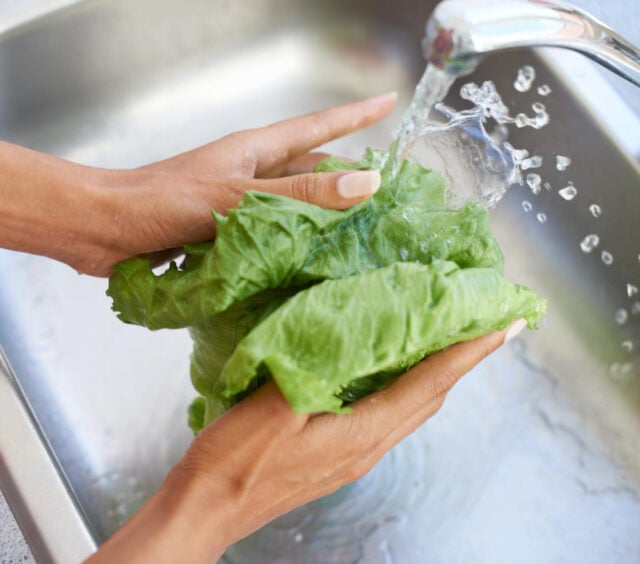
- Wash Thoroughly Under Running Water: Always rinse fresh fruits and vegetables under clean, running tap water before eating, peeling, or cutting—even if the package is labeled as “pre-washed”.
- Scrub Firm Produce: Use a clean vegetable brush to scrub firm-skinned produce like melons and cucumbers under running water.
- Skip Soaps and Bleach: Do not use soap, detergent, bleach, or chemical produce washes. They are not proven effective against Cyclospora and can leave harmful chemical residues on your food.
- Cook When Possible: Heating produce to an internal temperature of at least 158°F (70°C) kills the parasite. If you are preparing meals for young children, elderly family members, or immunocompromised individuals, cooked dishes are the safest choice.
- Practice Clean Hygiene: Wash your hands with warm water and soap for at least 20 seconds before and after handling raw produce. Keep cutting boards, countertops, and utensils thoroughly scrubbed with hot, soapy water.
If you or a family member experiences prolonged stomach trouble after eating fresh produce, reach out to a healthcare provider. Testing specifically for Cyclospora requires a targeted lab test, and effective prescription antibiotics are available to help you recover quickly.
Sources and Links:
- CDC – Surveillance of Cyclosporiasis: https://www.cdc.gov/cyclosporiasis/php/surveillance/index.html
- CDC – Investigation Update: Cyclospora Outbreak: https://www.cdc.gov/cyclosporiasis/outbreaks/07-26/investigation.html
- CDC – Cyclospora Outbreak Linked to Iceberg Lettuce Release: https://www.cdc.gov/media/releases/2026/cyclospora-outbreak-linked-to-iceberg-lettuce-expanded-to-four-new-states.html
- CDC – Preventing Cyclosporiasis: https://www.cdc.gov/cyclosporiasis/prevention/index.html
- FDA – Cyclospora Pathogen Safety Guide: https://www.fda.gov/food/foodborne-pathogens/cyclospora
Disclaimer
Artificial Intelligence Disclosure & Legal Disclaimer
AI Content Policy.
To provide our readers with timely and comprehensive coverage, South Florida Reporter uses artificial intelligence (AI) to assist in producing certain articles and visual content.
Articles: AI may be used to assist in research, structural drafting, or data analysis. All AI-assisted text is reviewed and edited by our team to ensure accuracy and adherence to our editorial standards.
Images: Any imagery generated or significantly altered by AI is clearly marked with a disclaimer or watermark to distinguish it from traditional photography or editorial illustrations.
General Disclaimer
The information contained in South Florida Reporter is for general information purposes only.
South Florida Reporter assumes no responsibility for errors or omissions in the contents of the Service. In no event shall South Florida Reporter be liable for any special, direct, indirect, consequential, or incidental damages or any damages whatsoever, whether in an action of contract, negligence or other tort, arising out of or in connection with the use of the Service or the contents of the Service.
The Company reserves the right to make additions, deletions, or modifications to the contents of the Service at any time without prior notice. The Company does not warrant that the Service is free of viruses or other harmful components.