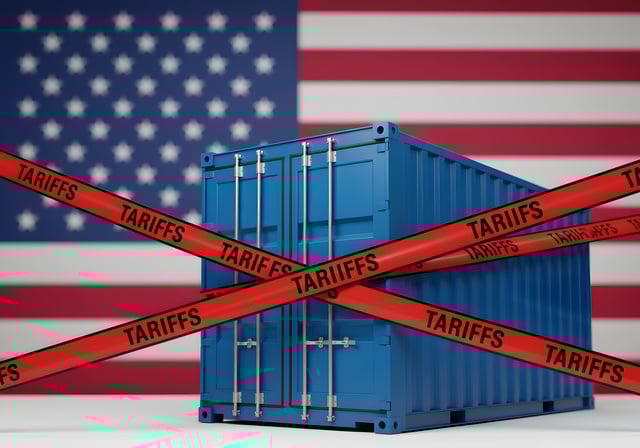
The Trump administration has officially enacted sweeping new import duties on 60 trading partners, imposing tariffs ranging from 10% to 12.5% under Section 301 of the Trade Act of 1974. Announced by United States Trade Representative Jamieson Greer, the policy targets nations accused of failing to enforce prohibitions against goods produced with forced labor. The new duties take effect immediately as previous temporary trade measures reach their scheduled expiration date.
This aggressive move serves as a durable replacement for the temporary 10% global tariff instituted under Section 122 of the Trade Act of 1974. That 150-day emergency authority was enacted after the U.S. Supreme Court struck down the administration’s earlier reliance on the International Emergency Economic Powers Act (IEEPA) in February 2026. By utilizing Section 301 following multi-month USTR investigations, two rounds of public hearings, and over 2,100 public comments, trade officials aim to establish a more legally resilient tariff framework for American commerce.
Under the updated policy structure, 17 nations with existing baseline labor prohibitions—including Canada, Mexico, and the United Kingdom—will face a 10% tariff rate. Meanwhile, 43 other key trading partners, including major manufacturing hubs like China and Vietnam, are subject to the higher 12.5% levy. Certain strategic goods are explicitly exempt from these duties, including domestic energy imports such as crude oil and natural gas, products that comply with the United States-Mexico-Canada Agreement (CUSMA), and sectors already subject to individual tariffs on steel, aluminum, and automobiles.
The economic footprint of this multi-country action is substantial. Nonpartisan estimates from the Committee for a Responsible Federal Budget project that the 60-economy tariffs will raise roughly $900 billion in gross federal revenue through Fiscal Year 2036. While U.S. officials present the measure as the most sweeping labor-enforcement action in international history, trade economists and consumer coalitions caution that broad import taxes inevitably increase operational costs for domestic businesses, raise everyday prices for consumers, and invite retaliatory trade restrictions from key foreign trading partners.

Looking ahead, businesses across multiple retail, automotive, and manufacturing industries are preparing for immediate supply chain adjustments and potential legal challenges. Though Section 301 provides clearer statutory authority than previous emergency executive decrees, industry leaders anticipate ongoing disputes regarding product exemptions and tariff classification rules. With these new levies going into effect across scores of nations simultaneously, international trade dynamics and global supply networks will undergo a dramatic transformation throughout the remainder of 2026.
Sources and Links:
- Office of the United States Trade Representative (USTR): https://ustr.gov/about/policy-offices/press-office/press-releases/2026/july/ustr-takes-action-forced-labor-section-301-investigations
- Committee for a Responsible Federal Budget: https://www.crfb.org/blogs/section-301-and-338-tariffs-replace-less-60-lost-ieepa-revenue
- CBS News: https://www.cbsnews.com/news/trump-tariffs-dozens-countries-forced-labor/
- CTV News: https://www.ctvnews.ca/world/trumps-tariffs/article/trump-hitting-countries-including-canada-with-forced-labour-tariffs/
- Tax Policy Center: https://taxpolicycenter.org/features/tracking-trump-tariffs
Disclaimer
Artificial Intelligence Disclosure & Legal Disclaimer
AI Content Policy.
To provide our readers with timely and comprehensive coverage, South Florida Reporter uses artificial intelligence (AI) to assist in producing certain articles and visual content.
Articles: AI may be used to assist in research, structural drafting, or data analysis. All AI-assisted text is reviewed and edited by our team to ensure accuracy and adherence to our editorial standards.
Images: Any imagery generated or significantly altered by AI is clearly marked with a disclaimer or watermark to distinguish it from traditional photography or editorial illustrations.
General Disclaimer
The information contained in South Florida Reporter is for general information purposes only.
South Florida Reporter assumes no responsibility for errors or omissions in the contents of the Service. In no event shall South Florida Reporter be liable for any special, direct, indirect, consequential, or incidental damages or any damages whatsoever, whether in an action of contract, negligence or other tort, arising out of or in connection with the use of the Service or the contents of the Service.
The Company reserves the right to make additions, deletions, or modifications to the contents of the Service at any time without prior notice. The Company does not warrant that the Service is free of viruses or other harmful components.