Dehydration symptoms can develop when you lose more fluids than you take in. Recognizing them early is key to avoiding serious health complications.
What Are the Typical Signs of Dehydration?
Anyone can become dehydrated.1 However, it’s more common in older adults, people who work or exercise in heat, and those with conditions or medications that increase sweating or urination.
The symptoms you have match the level of dehydration.
Common symptoms of dehydration include:

- Thirst
- Fatigue
- Dry lips and skin
- Decreased urine output
- Dark-colored urine
- Headache
- Muscle cramps
- Lightheadedness, dizziness, or fainting
- Low blood pressure upon standing
- Palpitations
How Does Mild Dehydration Affect Your Body?
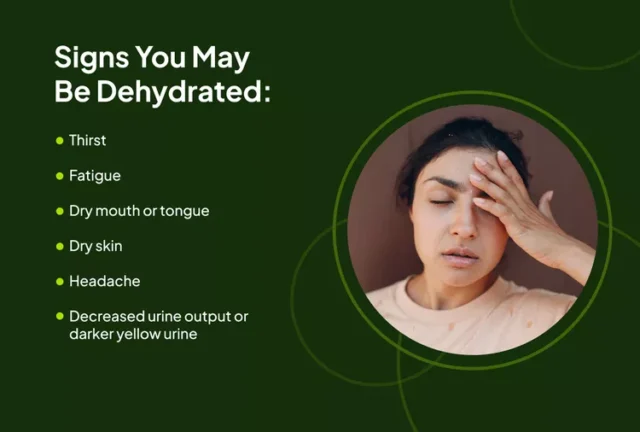
Signs you are mildly to moderately dehydrated include:
- Thirst
- Fatigue
- Dry mouth or tongue
- Decreased urine output or darker yellow urine
- Dry skin
- Headache
- Lightheadedness, dizziness, or fainting
- Inability to focus
- Muscle weakness or cramps
- Increased heart rate
- Quickened breathing
Many people overlook symptoms like trouble focusing or muscle weakness as signs of dehydration, leading them not to increase their fluid intake.
Fast breathing is another symptom people do not usually associate with dehydration. It can also worsen dehydration since respiration is one way your body loses water.
Recognizing all symptoms is essential, especially if you are at higher risk. Start drinking fluids as soon as you notice signs. This is often all you need for non-severe dehydration.
Severe Warning Signs To Watch Out For
Symptoms of severe dehydration may include:
- Parched mouth
- Dry, cracked lips
- Low blood pressure
- Lethargy
- Decreased alertness
- Lack of urination or urine that is very dark yellow or amber in color
- Very dry skin that doesn’t spring back quickly when pinched up (tented skin)
- Sunken eyes
- Confusion or loss of consciousness
Slow capillary refill is another sign of severe dehydration. Press the tips of your fingers or toes: It may be a sign of decreased blood flow if the color is slow to return. This can be a sign of shock, or when your body does not get enough blood flow.
Poor blood flow to your organs can lead to complications like liver injuries, kidney failure, or electrolyte imbalances.
Seek medical help if you or a loved one has any sign or symptom of severe dehydration.
How To Spot Dehydration in Children
Infants and young children can become dehydrated more quickly.5 They vomit and have diarrhea more often.
Since infants and very young children can’t express their thirst, look for these signs of dehydration:
- No wet diaper for over three hours
- Unusual sleepiness
- No tears when crying
- Sunken eyes
- High fever
- Irritability
- Increased heart rate
- Quickened breathing
- Sunken soft spots on the baby’s head
When Should You See a Doctor?
Call for medical help right away if you or someone you’re with has any of these symptoms:
- Confusion
- Fainting
- No urination
- Fast heart rate
- Fast breathing
Get immediate medical help if you or a loved one has signs of shock, such as:
- Low blood pressure
- Loss of consciousness
- Cold, clammy extremities
- Pale or bluish skin and nails
Someone who is severely dehydrated may need intravenous (IV) fluids at a hospital to get hydrated and prevent serious complications. Without treatment, severe dehydration can lead to permanent brain damage, seizures, or death.
Disclaimer
Artificial Intelligence Disclosure & Legal Disclaimer
AI Content Policy.
To provide our readers with timely and comprehensive coverage, South Florida Reporter uses artificial intelligence (AI) to assist in producing certain articles and visual content.
Articles: AI may be used to assist in research, structural drafting, or data analysis. All AI-assisted text is reviewed and edited by our team to ensure accuracy and adherence to our editorial standards.
Images: Any imagery generated or significantly altered by AI is clearly marked with a disclaimer or watermark to distinguish it from traditional photography or editorial illustrations.
General Disclaimer
The information contained in South Florida Reporter is for general information purposes only.
South Florida Reporter assumes no responsibility for errors or omissions in the contents of the Service. In no event shall South Florida Reporter be liable for any special, direct, indirect, consequential, or incidental damages or any damages whatsoever, whether in an action of contract, negligence or other tort, arising out of or in connection with the use of the Service or the contents of the Service.
The Company reserves the right to make additions, deletions, or modifications to the contents of the Service at any time without prior notice. The Company does not warrant that the Service is free of viruses or other harmful components.