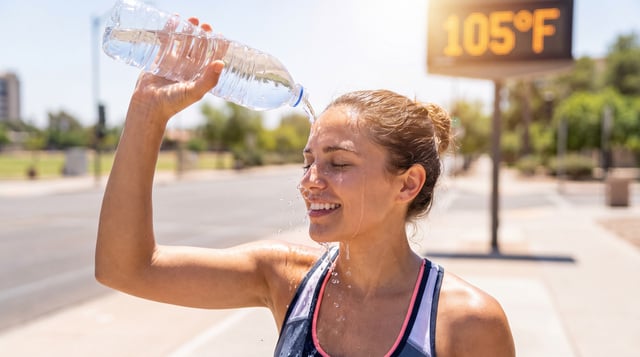
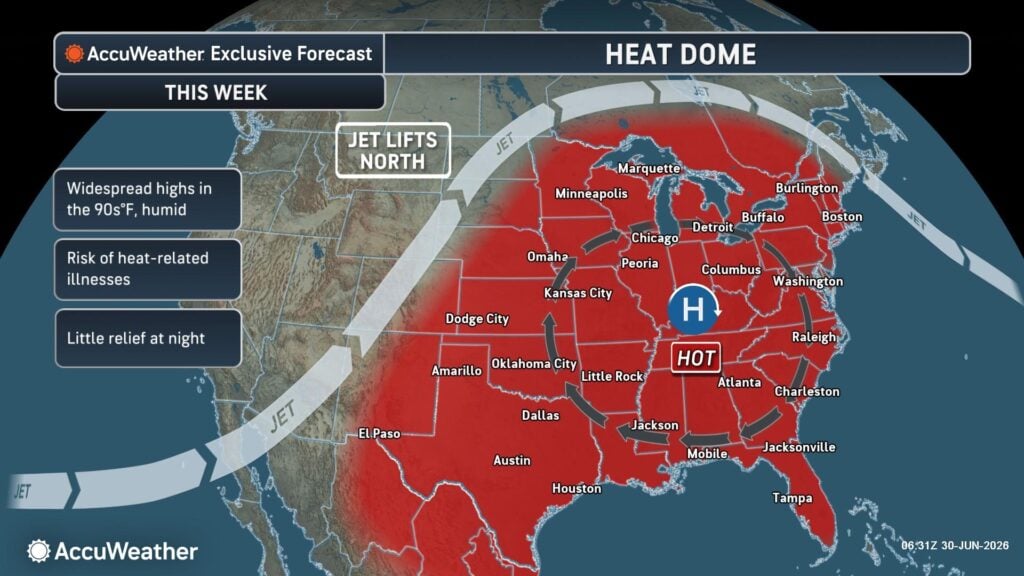
A historic weather pattern is dividing the United States this holiday weekend. Millions of citizens are preparing for America250 celebrations. However, hazardous weather conditions will affect outdoor events nationwide. A massive, stubborn heat dome is currently locked over the country. This system will gradually break down on Friday. The relief will arrive first in the Midwest and Great Lakes. Later, the cooler air will move into the East.
Right now, over 250 million Americans face severe heat. Temperatures are climbing rapidly into the 90s. AccuWeather RealFeel temperatures are exceeding 100 degrees in many communities. These conditions present significant risks for holiday travelers and outdoor revelers. Severe thunderstorms also threaten to disrupt scheduled firework displays.
The National Weather Divide
The atmospheric contrast creates two distinct holiday experiences. Three-quarters of Americans are enduring an intense heat wave. Meanwhile, residents in the Western United States will enjoy excellent conditions. Saturday night promises clear skies for firework viewing across the West.

A massive high-pressure system is expanding over that region. This system ensures a mostly clear to partly cloudy sky. It sets up ideal viewing conditions for holiday spectators. The Eastern United States faces a much more turbulent forecast. The atmosphere there will turn increasingly stormy on July Fourth.
Escalating Wildfire Crises in the Southwest
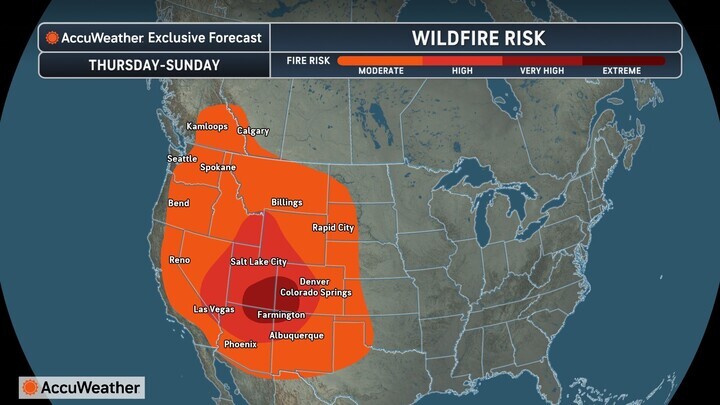 The clear Western skies come with severe environmental hazards. Extreme wildfire risks grip the dry Southwest region this weekend. Numerous active wildfires are currently burning across the state of Utah. A multi-day stretch of dry, windy conditions drives these fires.
Meteorologists forecast that breezy conditions will persist through the weekend. These dry winds can easily ignite new wildfire activity. Existing blazes can also spread with extreme speed. The dangerous environment prompted immediate action from state leadership. Utah’s governor has enacted a temporary ban on fireworks. This legal restriction remains active through July 5.
“Fireworks will be a major concern for any new wildfire activity through the holiday weekend across the Southwest.”
Unattended flames can quickly evolve into uncontrollable wildfires. Anyone enjoying outdoor cooking or bonfires must remain completely vigilant. An unattended flame can ruin communities in a matter of minutes. Furthermore, wildfire smoke is actively reducing regional air quality. The largest Utah blazes have blanketed downwind towns in smoke.
Nearby states face elevated risks due to persistent drought. Arizona, Colorado, and New Mexico have incredibly dry vegetation. Forecasted gusty winds will make these areas highly volatile.
Wildfire Impact Data Summary
| Wildfire Metric | Current Impact Statistics |
| Acres Burned Since June 25 | 400,000 acres |
| Total Acres Burned This Year | 3.17 million acres |
| Active Ban Restrictions | State of Utah Fireworks Ban |
| Ban Duration | Active through July 5 |
Unprecedented Heat in the Nation’s Capital
 Washington D.C. is facing a potentially historic heat wave this weekend. Millions of visitors will gather outside for America250 events. These extreme weather conditions can become deadly very quickly.
The forecasted high temperature for Saturday will reach 99 degrees. This falls just short of the all-time capital record. The city’s July Fourth record stands at 100 degrees. That milestone was established over a century ago in 1919. Daily highs will exceed 100 degrees on Thursday and Friday. This creates a severe risk for individuals exposed to prolonged heat.
The real danger stems from consecutive days of extreme temperatures. Stringing multiple hot days together places immense stress on the human body. High daytime temperatures combine with extremely warm nights. The body never gets a chance to cool down properly. This compounding effect drastically increases the risk of severe heat illness.
“Heat waves on average kill more Americans than any other severe weather type, including tornadoes, hurricanes, and floods.”
Despite this fact, heat waves rarely receive adequate public attention. However, the true underlying cause of these fatalities is extreme heat.
The Science Behind RealFeel Metrics
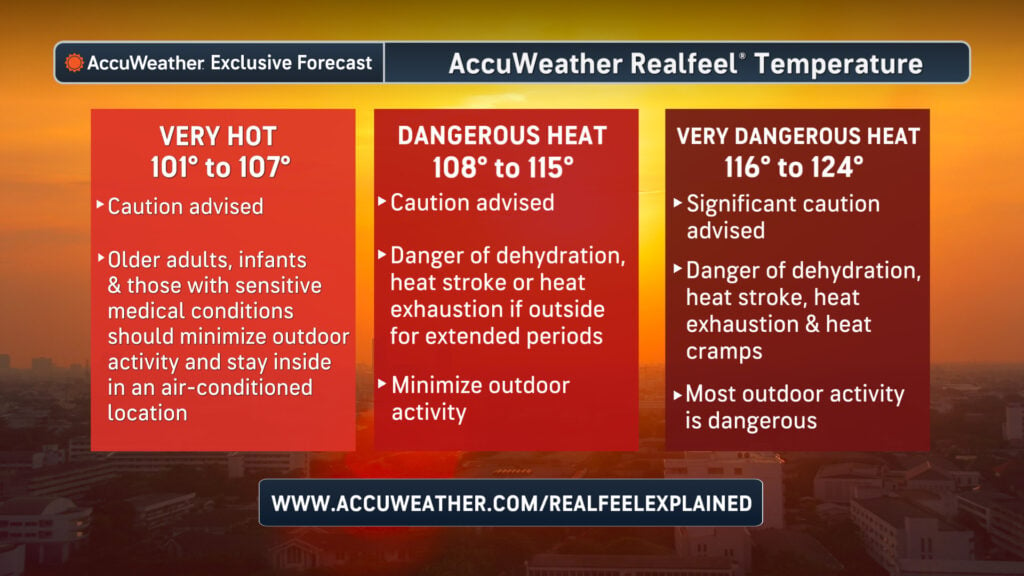 Standard thermometers do not fully capture how the body experiences heat. Meteorologists utilize a patented metric called the AccuWeather RealFeel Temperature. This advanced system combines fourteen distinct atmospheric factors. It provides an accurate measurement of how the weather actually feels.
The calculation assumes a person is dressed appropriately for the season. It accounts for conditions in both direct sun and shade. Users can easily monitor these values via mobile applications. RealFeel values will frequently exceed 100 degrees during this holiday. Understanding this metric helps individuals make safer choices outdoors.
The holiday weekend features a complex, evolving weather story across regions.
Friday, July 3 Forecast
Dangerous heat will continue to grip a massive portion of the nation. Severe thunderstorms will develop across the Plains and Midwest. Portions of the Eastern United States will also see storms. More than 250 million Americans will remain under heat advisories.
RealFeel temperatures of 100 to 110 degrees will persist across much of the area. Overnight hours will bring very little relief from the stifling heat. Strong storms may produce highly damaging winds and large hail. Heavy rainfall could cause localized flooding in susceptible areas. Major flight delays are possible at regional airport hubs. Highway travel disruptions may also impact millions of holiday commuters.
Independence Day Forecast
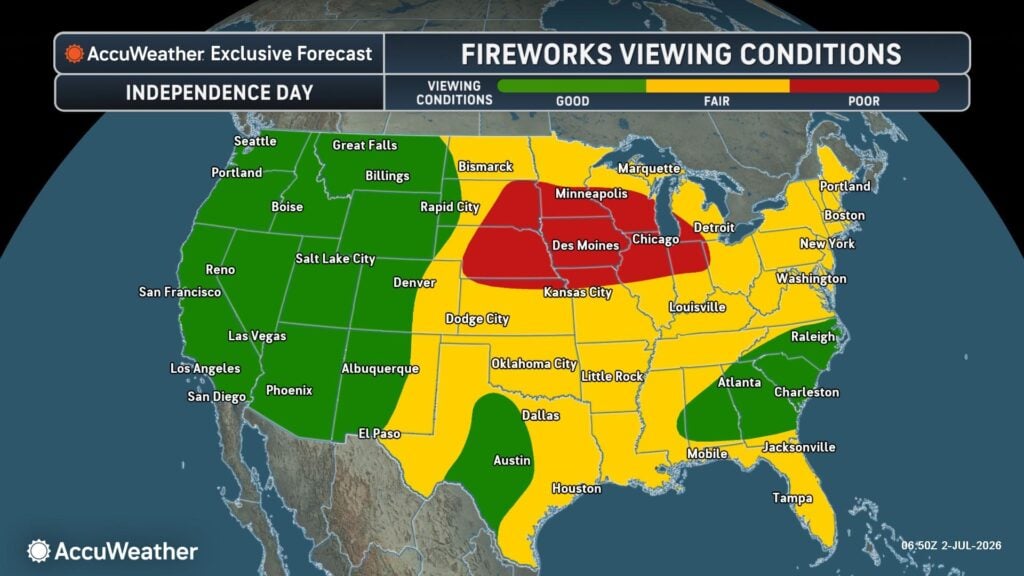 Extreme heat and scattered thunderstorms will directly impact outdoor celebrations. Millions of citizens will travel despite these challenging atmospheric conditions. Dangerous heat will continue across the entire Eastern United States. Major cities like New York and Philadelphia will sizzle. Washington D.C. will also experience intense afternoon heat.
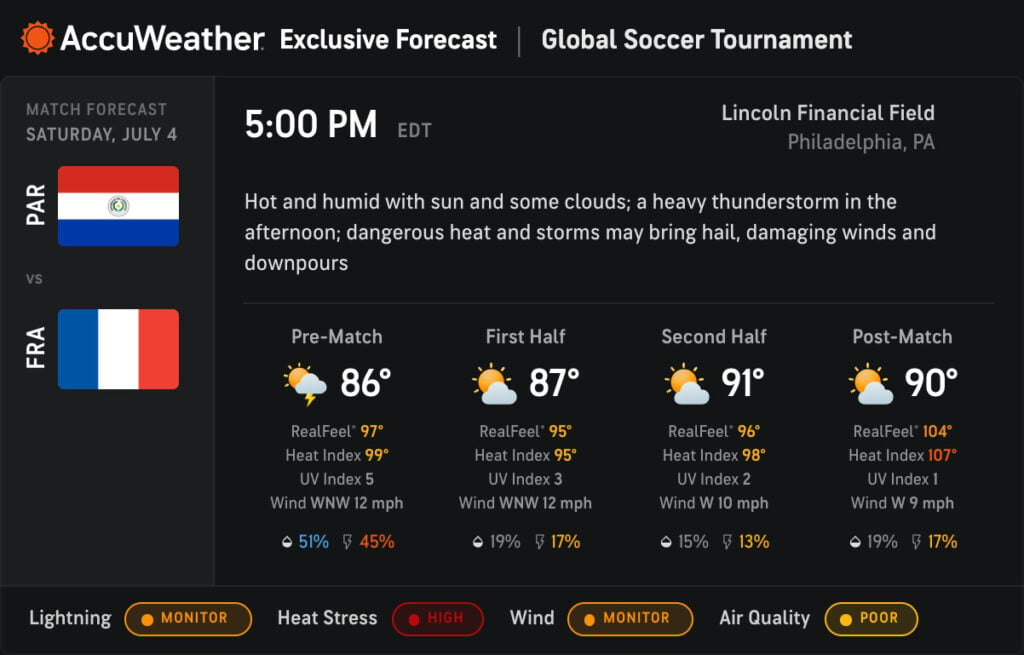
Late afternoon and evening storms may interrupt scheduled fireworks displays. Meanwhile, Philadelphia will host a major international World Cup soccer match. RealFeel temperatures will approach 100 degrees during the match. Post-match celebrations will see RealFeel values top 100 degrees. Outdoor revelers must monitor their physical condition closely. Additionally, wildfire smoke will reduce air quality in the Midwest. Parts of the Plains will also experience reduced visibility.
Sunday, July 5 Forecast
The intense heat wave will finally begin to ease gradually. However, the Northeast and Midwest will remain incredibly humid. The Southeast will continue to experience intensely hot conditions. High temperatures will reach the upper 90s in the Carolinas. Low 100s are possible in some Carolina communities.
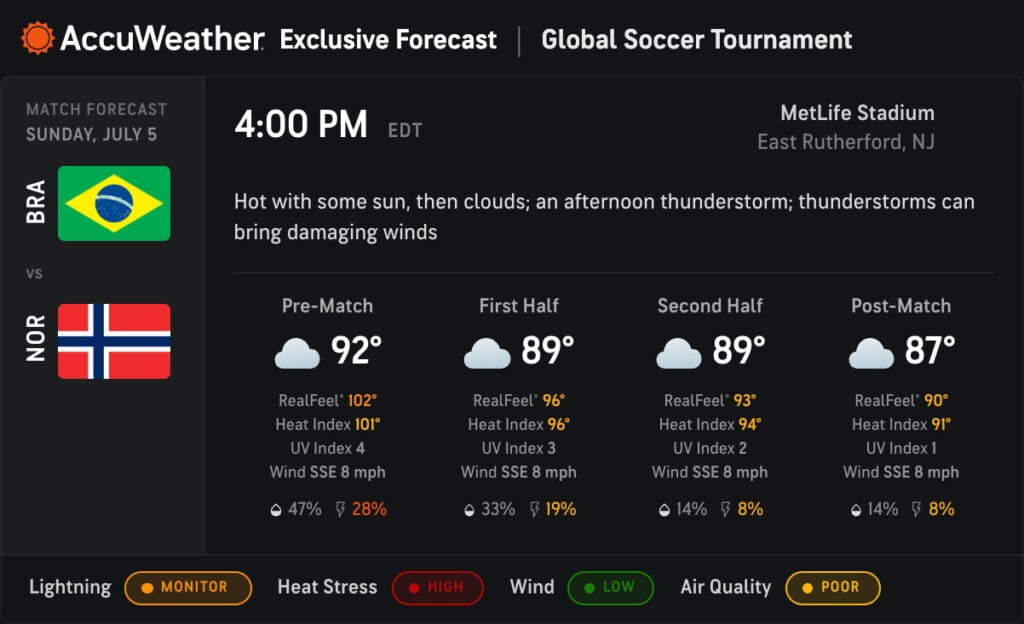
Scattered thunderstorms may bring localized flooding to vulnerable regions. Weather could also affect another major FIFA World Cup match. Brazil will play Norway near New York City.
Monday, July 6 Forecast
The broader weather pattern will begin a definitive shift. Extreme heat will slowly lessen across parts of the East. More seasonable temperatures will finally return to the Appalachians. Thunderstorms will become much more widespread across the Midwest. The Ohio Valley will also see increased storm activity. Meteorologists will continue to monitor Western wildfire activity very closely.
Crucial Heat Safety Protocols
Surviving a prolonged heat wave requires strict adherence to safety protocols. Individuals must stay hydrated by drinking water constantly throughout the day. Avoid prolonged outdoor exposure during peak afternoon heating hours. Schedule strenuous physical activities for the cooler morning hours.
Wear lightweight and light-colored clothing to reflect solar radiation. Spend significant time inside air-conditioned spaces or public cooling centers. Check regularly on vulnerable populations like older adults and children. Monitor family members and neighbors who have chronic medical conditions.
Never leave children or family pets inside parked vehicles. Closed vehicles reach deadly temperatures in a matter of minutes. Watch closely for clear signs of advancing heat illness. Dizziness, nausea, and a rapid heartbeat indicate a medical emergency. Intense thirst is a clear warning sign of dangerous dehydration.
Ensure home cooling systems are functioning at peak efficiency. Prepare for potential power outages by conserving household energy. Run major appliances early in the morning or late at night. Keep essential emergency supplies organized and readily accessible. Store ample fresh drinking water and non-perishable food items. Maintain functional flashlights and a well-stocked first-aid kit nearby.
Sources and Links:
Disclaimer
Artificial Intelligence Disclosure & Legal Disclaimer
AI Content Policy.
To provide our readers with timely and comprehensive coverage, South Florida Reporter uses artificial intelligence (AI) to assist in producing certain articles and visual content.
Articles: AI may be used to assist in research, structural drafting, or data analysis. All AI-assisted text is reviewed and edited by our team to ensure accuracy and adherence to our editorial standards.
Images: Any imagery generated or significantly altered by AI is clearly marked with a disclaimer or watermark to distinguish it from traditional photography or editorial illustrations.
General Disclaimer
The information contained in South Florida Reporter is for general information purposes only.
South Florida Reporter assumes no responsibility for errors or omissions in the contents of the Service. In no event shall South Florida Reporter be liable for any special, direct, indirect, consequential, or incidental damages or any damages whatsoever, whether in an action of contract, negligence or other tort, arising out of or in connection with the use of the Service or the contents of the Service.
The Company reserves the right to make additions, deletions, or modifications to the contents of the Service at any time without prior notice. The Company does not warrant that the Service is free of viruses or other harmful components.