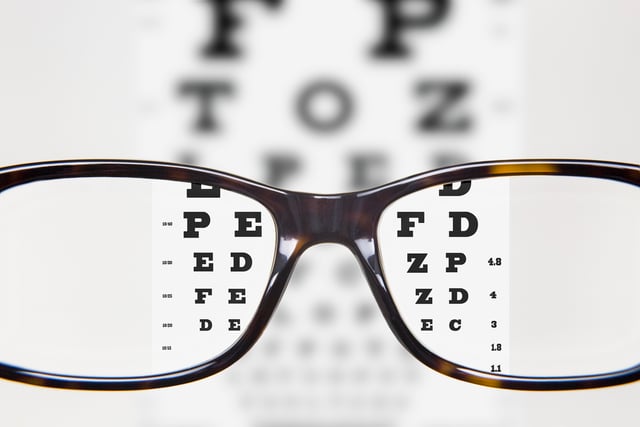
Most people who wear prescription glasses have experienced it at some point. A dull ache behind the eyes by mid-afternoon, a tension headache that builds through the day, or a general sense of tiredness that does not quite make sense given how much sleep they got the night before. The instinct is usually to blame the screen, the lighting, or the workload. But in many cases, the answer is sitting right on the face. A poorly fitted pair of prescription glasses is one of the most common and most overlooked causes of daily headaches and eye strain in adults, and the fix is often simpler than most people expect.
Why Fit Matters More Than Most People Realize
When prescription glasses do not fit properly, the eyes have to work harder than they should. A frame that sits too low pushes the lens’s optical center out of alignment with the pupil, so the eyes look through the wrong part of the lens for most of the day. A frame that is too wide causes the lenses to sit at an angle, introducing subtle distortion that the brain works continuously to correct. Even something as minor as nose pads that press unevenly can shift the frame slightly to one side, creating a small but persistent mismatch between what each eye is seeing. None of these issues are dramatic enough to notice immediately, but over the course of a working day they add up. The result is the kind of fatigue and head pain that many people have simply accepted as a normal part of wearing glasses, when it is actually a sign that the fit needs attention.
How to Identify the Right Frame Before You Buy

Knowing what to look for in a frame before committing to a pair makes the difference between glasses that work and glasses that cause problems. The optical center of each lens needs to sit directly in front of the pupil when looking straight ahead, which means the frame width and height have to match the wearer’s face measurements accurately. The bridge should sit comfortably on the nose without sliding, and the temples should rest flat against the sides of the head without pressing into the skin. Frame weight is also worth considering — lighter materials like titanium and thin acetate reduce the cumulative pressure on the nose and ears that builds over a full day of wear. Taking the time to understand these specifications before choosing a pair is what separates a comfortable long-term fit from one that creates daily discomfort. Adults who approach the process this way, researching frame dimensions, materials and fitting requirements ahead of time, tend to find that browsing prescription eyeglasses online gives them the space to cross-reference all of these details at their own pace before making a final decision.
What a Well-Fitted Pair of Glasses Actually Feels Like
A well-fitted pair of prescription glasses does several things consistently. The frame does not rest on the cheeks or slide down the nose during normal movement. The temples sit flat against the sides of the head without pressing into the skin, and the nose pads distribute weight evenly without leaving marks or creating pressure points. The top of the frame sits close to the brow line without touching it, and the overall width does not extend noticeably beyond the widest point of the face. These are not aesthetic preferences but functional requirements. When all of them are met, the eyes can do their work without compensation, and the headaches and fatigue that come with a poor fit simply stop occurring. Most people who have never worn a properly fitted pair are genuinely surprised by how different the experience feels within the first few hours.
How Frame Weight Plays Into Daily Comfort
Frame weight is another significant contributor to end-of-day discomfort and is rarely given enough attention. Heavier frames place more continuous pressure on the nose and the area behind the ears, which leads to a specific type of tension headache that tends to build gradually through the day and peak in the late afternoon. People who wear heavier frames often report the sensation of relief when they take their glasses off in the evening, something they have normalized to the point of not questioning. Lighter frame materials, including titanium, thin acetate and certain composites, distribute weight more evenly and reduce the cumulative pressure that builds over hours of wear. For anyone who spends significant time at a desk or in front of a screen, this is not a minor consideration. The difference between a frame that weighs twelve grams and one that weighs twenty-two grams may not sound significant, but across a ten-hour day it represents a meaningful difference in how the face and head feel by the time the glasses come off.
The Role of Lens Type in Reducing Strain
Beyond the frame itself, the type of lens directly affects how much strain the eyes experience throughout the day. Anti-reflective coatings reduce the amount of light bouncing off the lens surface, which significantly lowers the visual effort required in bright environments or in front of screens. Progressive lenses, which correct vision at multiple distances within a single lens, require a precise fit to function properly. If the fitting height is even slightly off, the wearer ends up using the wrong zone of the lens for close-up work, which places the same kind of strain on the eyes as wearing the wrong prescription entirely. Single vision lenses are less sensitive to fitting errors but still benefit from accurate pupillary distance measurement. Getting both the lens type and the fitting right at the same time yields the most noticeable improvement in comfort and the greatest reduction in headache frequency.
Conclusion
Headaches and eye strain are common among glasses wearers, but in most cases, they are a signal worth addressing rather than a condition to manage around. A frame that fits well, sits correctly on the face, and carries the right lens type removes most of the physical effort that causes discomfort in the first place. For anyone who has quietly accepted daily headaches as part of life with glasses, taking a closer look at fit is a practical and worthwhile first step.
Disclaimer
Artificial Intelligence Disclosure & Legal Disclaimer
AI Content Policy.
To provide our readers with timely and comprehensive coverage, South Florida Reporter uses artificial intelligence (AI) to assist in producing certain articles and visual content.
Articles: AI may be used to assist in research, structural drafting, or data analysis. All AI-assisted text is reviewed and edited by our team to ensure accuracy and adherence to our editorial standards.
Images: Any imagery generated or significantly altered by AI is clearly marked with a disclaimer or watermark to distinguish it from traditional photography or editorial illustrations.
General Disclaimer
The information contained in South Florida Reporter is for general information purposes only.
South Florida Reporter assumes no responsibility for errors or omissions in the contents of the Service. In no event shall South Florida Reporter be liable for any special, direct, indirect, consequential, or incidental damages or any damages whatsoever, whether in an action of contract, negligence or other tort, arising out of or in connection with the use of the Service or the contents of the Service.
The Company reserves the right to make additions, deletions, or modifications to the contents of the Service at any time without prior notice. The Company does not warrant that the Service is free of viruses or other harmful components.