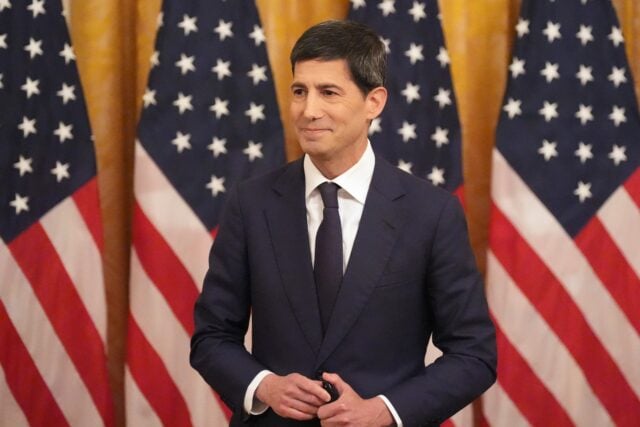
The eyes of the global financial community are fixed squarely on the Marriner S. Eccles Federal Reserve Board Building in Washington, D.C., where the Federal Open Market Committee (FOMC) has officially convened for its highly anticipated two-day June policy meeting. This gathering marks a major institutional milestone: it is the first meeting chaired by Kevin Warsh since he took the oath of office as the 17th Federal Reserve Chairman on May 22, 2026. Following a narrow 54–45 Senate confirmation vote on May 13, Warsh steps directly into a monetary policy pressure cooker.
The primary question dominating Wall Street trading desks ahead of Wednesday afternoon’s official policy announcement is straightforward: Will the newly minted Chairman hold, lower, or raise interest rates? Confronted with a deeply complex macroeconomic landscape marked by stubborn domestic inflation, fixed-income volatility, and explicit political commentary from the executive branch, Warsh must chart a careful path that preserves the central bank’s credibility while managing a highly divided committee.
Will He Hold, Lower, or Raise? The Consensus Forecast
When analyzing the options available to the committee on Wednesday, the probability of an immediate interest rate cut stands at zero percent. With key inflation gauges running nearly two percentage points above the central bank’s long-term 2% target and a domestic labor market that remains extraordinarily resilient, a rate reduction is functionally impossible to justify.
Conversely, an aggressive interest rate hike looms over fixed-income markets. A vocal contingent of hawkish analysts argues that the central bank needs to act preemptively to stamp out a recent flare-up in consumer prices. However, implementing an immediate rate hike at his very first meeting could shock the financial system and deepen existing fractures within the FOMC, which already displayed historic internal division under his predecessor, Jerome Powell.

Consequently, the overwhelming consensus among economists, primary dealers, and interest rate futures markets is that the Federal Reserve will hold interest rates steady, maintaining the benchmark federal funds rate within its current target range of 3.50% to 3.75%. This benchmark rate has sat at this exact restrictive level through several consecutive meetings since December 2025. Opting for a tactical hold on Wednesday provides Warsh with an essential buffer zone, allowing him to establish operational control, evaluate incoming data over the summer months, and orchestrate a critical shift in how the Federal Reserve communicates its policy bias to the public.
The Macroeconomic Crosscurrents: Inflation vs. Diplomatic Relief
The macroeconomic backdrop complicating Wednesday’s decision is defined by intense, opposing forces. On one side of the ledger, inflationary pressures have staged a worrying resurgence over the first half of 2026, unwinding much of the disinflationary progress achieved during the previous eighteen months. Overall consumer prices climbed to a three-year high of 4.2% year-over-year in May. This spike was driven substantially by a severe energy shock linked to the war in Iran, which broke out in late February. The geopolitical conflict caused severe supply disruptions and raised fears of prolonged blockades in the Strait of Hormuz—a crucial maritime artery through which roughly one-fifth of the world’s petroleum transits. In response, West Texas Intermediate (WTI) crude oil futures surged past $119 per barrel, directly inflating corporate input costs, logistics expenses, and domestic gasoline prices.
Compounding these price pressures is a domestic labor market that refuses to cool down. May non-farm payroll data surprised Wall Street by adding 172,000 jobs, handily beating consensus expectations, while the unemployment rate held firm at 4.3%. Strong wage growth continues to fuel steady domestic consumer spending, creating an underlying economic environment where core inflation—which strips out volatile food and energy sectors—remains entrenched near 3%.
On the other side of the ledger, a dramatic geopolitical breakthrough just days before the FOMC convened has given the central bank the breathing room it needs to maintain a steady hold on Wednesday. Over the weekend, Washington and Tehran tentatively agreed to a preliminary diplomatic framework for peace. The agreement outlines a 60-day cessation of hostilities, a complete reopening of the Strait of Hormuz, and the initiation of formal negotiations regarding nuclear programs and sanctions relief.
Global energy markets reacted instantly to the news, with WTI crude futures tumbling back below $80 per barrel for the first time since March. This sudden relief in commodity pricing provides the FOMC with a perfect rationale to pause and observe. Rather than reacting to lagging May inflation numbers with an immediate rate hike, a hold allows the committee to evaluate how quickly lower energy input costs will cool down broad consumer price indices over the summer.
Key Macroeconomic Metrics Heading Into Wednesday’s Decision
| Economic Indicator | Latest Metric (June 2026) | Wall Street Consensus Policy Impact |
| Federal Funds Rate | 3.50% – 3.75% | Hold expected; markets price in 100% stability for June. |
| Headline CPI (May) | 4.2% YoY (Three-Year High) | Eliminates any possibility of a rate cut; fuels hawkish sentiment. |
| Core Inflation | Near 3.0% YoY | Indicates structural price pressures remain entrenched in services. |
| May Non-Farm Payrolls | +172,000 (Above Expectations) | Signals a robust labor market that can tolerate restrictive rates. |
| WTI Crude Oil Futures | Below $80 / barrel (Post-Ceasefire) | Provides the Fed breathing room to execute a wait-and-see hold. |
| ECB Benchmark Rate | 2.25% (Hiked 25 bps this month) | Highlights global tightening pressure on the Federal Reserve. |
The Political Tightrope and Institutional Independence
Beyond raw data, Wednesday’s decision represents an immediate trial by fire regarding the Federal Reserve’s institutional independence. Warsh enters the chairmanship under an intense public spotlight. Historically regarded as an “inflation hawk” during his prior tenure as a Federal Reserve Governor from 2006 to 2011, Warsh was a frequent critic of aggressive balance sheet expansion and prolonged monetary easing under the Obama administration.
However, President Donald Trump, who nominated Warsh to the chairmanship on March 4, has maintained an aggressive, highly public campaign for lower interest rates to bolster domestic economic growth, breaking with decades of executive-branch protocol. On the Sunday immediately preceding the FOMC meeting, President Trump appeared on NBC’s Meet the Press to openly challenge the Wall Street narrative that the Fed might need to raise rates later this year to counter the 4.2% inflation print.
“I’m living with Kevin,” President Trump remarked during the broadcast, expressing his personal and professional regard for the new Chair. “But my feeling is that when a country is doing well, they shouldn’t be penalized by immediately raising interest rates.”
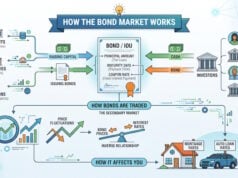
This public commentary places Warsh in a delicate position. To preserve the Fed’s credibility, he must demonstrate to global bond markets that his policy choices are insulated from executive directives. The bond market is already showing signs of strain, with Treasury yields ticking higher amid concerns about long-term federal borrowing and fiscal sustainability. Pushing through an immediate rate cut to appease the White House would trigger a major crisis of confidence in American monetary credibility. Conversely, forcing an immediate rate hike could fracture the committee; the April FOMC meeting under Powell featured three dissenting votes, the highest level of internal central bank division recorded since 1992. A steady hold allows Warsh to project analytical calm, proving the Fed remains independent while keeping his committee unified.
Shifting the Central Bank Communication Framework
While the benchmark interest rate is expected to remain unchanged on Wednesday, the true structural regime change under Chair Warsh is projected to manifest in how the central bank communicates its future intentions. Warsh has long been a vocal critic of modern central banking communication strategies, specifically the use of “forward guidance.” For over a decade, he has argued that explicitly telegraphing interest rate paths quarters in advance inadvertently boxes policymakers into rigid positions, turning fluid economic projections into artificial policy promises and preventing the central bank from acting swiftly when real-world conditions shift.
Fed-watchers widely expect Warsh to begin scaling back forward guidance immediately, utilizing Wednesday’s debut press conference to signal a fundamental philosophical shift. While he cannot legally or logistically eliminate the Summary of Economic Projections (SEP) or the famous “dot plot” of member interest rate forecasts at this specific meeting due to established institutional schedules, rumors are circulating on Wall Street that Warsh may downplay their predictive authority. Some analysts even speculate that he might decline to submit his own individual “dot” to the collection, reducing the chart’s perceived weight.
Warsh’s ultimate goal is a return to an Alan Greenspan-style communication model. This framework removes the practice of broadcasting long-term rate roadmaps, choosing instead to execute monetary policy on a highly flexible, meeting-by-meeting basis driven strictly by realized, real-time data.
Global Monetary Divergence and Market Outlook
A decision by the Federal Reserve to hold rates steady on Wednesday will further widen the policy divergence between the United States and other major global central banks. Just days ago, the European Central Bank (ECB) enacted a quarter-percentage-point increase, raising its benchmark interest rate to 2.25%—its first rate hike since 2022—citing persistent inflation risks tied to the Middle East energy crisis. Similarly, the Bank of Japan recently raised its key interest rate to 1%, its highest level in more than three decades. Meanwhile, the Bank of England (BoE) faces acute domestic pressure with inflation tracking at 2.8%, though it is widely expected to mirror the Fed by holding its benchmark rate steady at 3.75% this week.
This global environment underscores the fact that structural inflation remains a stubborn challenge across developed economies. Academic and market economists are deeply divided over whether a simple holding pattern will be sufficient for the U.S. economy moving forward. In a comprehensive poll conducted by the Financial Times and the University of Chicago’s Clark Center for Global Markets, a narrow majority of 47 leading economists wagered that the Warsh-led Fed will ultimately be forced to raise interest rates by at least 25 basis points before the conclusion of 2026. This represents a massive shift from early March, when over 60% of surveyed economists believed the Fed would spend the second half of the year cutting rates.
Financial markets are entering Wednesday’s session highly sensitive to these shifting expectations. While the Dow Jones Industrial Average opened the week by touching new all-time intraday highs above 52,000, mega-cap technology and artificial intelligence stocks have slumped, weighed down by the reality of a “higher-for-longer” yield environment. Fixed-income futures markets are currently pricing in an 80% probability of a future rate hike if core services inflation remains sticky near 3% over the summer.
Wednesday’s policy announcement and subsequent press conference will provide global markets with their first definitive look at the Warsh era. Surrounded by competing demands from an anxious bond market, an aggressive White House, and an unpredictable global energy complex, Warsh’s expected path of tactical restraint—a firm hold—serves as a measured opening gambit to assert his institutional independence and re-center the Federal Reserve on a flexible, data-driven foundation.
Sources and Links:
- Morningstar: At Warsh’s First Meeting as Fed Chair, What Changes Can Investors Expect? https://www.morningstar.com/economy/warshs-first-meeting-fed-chair-what-changes-can-investors-expect
- Northeastern Global News: Will the Federal Reserve cut interest rates? What to expect from Kevin Warsh’s first meeting https://news.northeastern.edu/2026/06/16/federal-reserve-meeting-kevin-warsh/
- Chase / J.P. Morgan Wealth Management: What To Expect at Kevin Warsh’s First Federal Reserve Meeting as Chair: 3 Things To Watch for When the FOMC Meets in June https://www.chase.com/personal/investments/learning-and-insights/article/kevin-warsh-first-federal-reserve-meeting-as-chair-june-2026
- Kiplinger: June Fed Meeting: Live Updates and Commentary https://www.kiplinger.com/news/live/fed-meeting-updates-and-commentary-june-2026
- Financial Times: Kevin Warsh enters the arena https://www.ft.com/content/0b984a9e-8ea5-48e5-98cc-5d9751a118a3?syn-25a6b1a6=1
- EFG International: Fed preview: testing times for the new Fed chair https://www.efginternational.com/us/insights/2026/fed_preview_testing_times_for_the_new_fed_chair.html
- Federal Reserve Board: Kevin Warsh takes oath of office as chairman and a member of the Board of Governors of the Federal Reserve System https://www.federalreserve.gov/newsevents/pressreleases/other20260522a.htm
- FXStreet: Kevin Warsh opens first Fed meeting June 16 with rate hold expected https://www.fxstreet.com/analysis/kevin-warsh-opens-first-fed-meeting-june-16-with-rate-hold-expected-202606151326
Disclaimer
Artificial Intelligence Disclosure & Legal Disclaimer
AI Content Policy.
To provide our readers with timely and comprehensive coverage, South Florida Reporter uses artificial intelligence (AI) to assist in producing certain articles and visual content.
Articles: AI may be used to assist in research, structural drafting, or data analysis. All AI-assisted text is reviewed and edited by our team to ensure accuracy and adherence to our editorial standards.
Images: Any imagery generated or significantly altered by AI is clearly marked with a disclaimer or watermark to distinguish it from traditional photography or editorial illustrations.
General Disclaimer
The information contained in South Florida Reporter is for general information purposes only.
South Florida Reporter assumes no responsibility for errors or omissions in the contents of the Service. In no event shall South Florida Reporter be liable for any special, direct, indirect, consequential, or incidental damages or any damages whatsoever, whether in an action of contract, negligence or other tort, arising out of or in connection with the use of the Service or the contents of the Service.
The Company reserves the right to make additions, deletions, or modifications to the contents of the Service at any time without prior notice. The Company does not warrant that the Service is free of viruses or other harmful components.