The Shattered Ceasefire: Midnight Thunder Over the Persian Gulf
The fragile, highly volatile peace that had uneasily settled over the Middle East over the past two months collapsed entirely on Wednesday, June 10, 2026. In a sudden, dramatic intensification of hostilities, the United States armed forces initiated a massive, multi-theater aerial bombardment campaign against key military installations deep within the sovereign territory of the Islamic Republic of Iran. The strikes, which officially began at 5:15 p.m. Eastern Time (after midnight local time in Tehran), targeted a wide array of strategic facilities, including advanced radar arrays, integrated air defense positions, command-and-control bunkers, and regional ammunition storage depots.
This devastating surge of kinetic energy marks the second consecutive day of intensive American air operations over the Iranian mainland. The current cycle of violence was ignited less than 48 hours ago following the high-profile crash of a U.S. Army attack helicopter near the strategic chokepoint of the Strait of Hormuz. White House officials immediately and unequivocally blamed Tehran for the loss of the aircraft, asserting that the American helicopter collided with an Iranian drone operating aggressively in international airspace. Though an official military investigation into whether the collision was intentional remains ongoing, the Trump administration chose not to wait for bureaucratic clarity. The initial American retaliation on Tuesday night focused primarily on local coastal monitoring arrays, but today’s operations represent a far more expansive, punishing, and system-wide dismantling of Iran’s defensive architecture.
As local state-affiliated media networks inside Iran quickly confirmed a succession of powerful explosions rocking Qeshm Island, the major southern port city of Bandar Abbas, and the coastal municipality of Sirik, global energy markets and international diplomatic bodies braced for the fallout of an unmitigated regional war. According to senior defense officials speaking from the Pentagon, today’s operation was meticulously designed to strip the Islamic Revolutionary Guard Corps (IRGC) of its capability to project naval power or monitor commercial shipping lanes throughout the Persian Gulf and the broader Gulf of Oman.

The Oval Office Mandate: Trump Claims Iran Will “Pay the Price”
The strategic logic driving today’s wide-scale kinetic operation was outlined early Wednesday morning by President Donald Trump during a series of combative public statements. Utilizing social media platforms ahead of formal diplomatic briefings, the president signaled an immediate shift away from passive containment toward active, aggressive coercion. Writing on Truth Social, Trump expressed deep frustration with the slow pace of back-and-forth peace negotiations that had been taking place through international intermediaries since a temporary ceasefire was implemented in early April.
“They’ve taken too long to negotiate a deal that would have been great for them, now they will have to pay the price!!!” Trump wrote on Wednesday morning, explicitly connecting the physical deployment of heavy ordnance to stalled diplomatic progress. Later in the day, addressing an assembled pool of political reporters in the Oval Office, the president amplified his rhetoric, making it clear that the United States intended to use its unmatched air supremacy to physically force the Iranian leadership back to the negotiating table on Washington’s strict terms.
“We’re going to be attacking them and attacking them very hard,” Trump told reporters from behind the Resolute Desk, ensuring that the impending air campaign would be heavily publicized and highly visible to the global community. “We’re going to hit them hard again today in case you miss it, in case you don’t turn on your television set. And we’ll see what happens with a deal. We were—we were really close to a deal, but they keep tapping us along.”
The administration’s explicit goal is to establish maximum leverage, countering what it perceives as an Iranian strategy of diplomatic delay combined with continuous, lower-level proxy provocations. By treating the ongoing peace process not as a separate legal mechanism but as an enterprise directly dependent on active military pressure, the White House has effectively re-written the standard rules of modern international engagement.
“Negotiate with Bombs”: Defense Secretary Pete Hegseth Unleashes the New Posture
The task of translating the president’s aggressive political rhetoric into a formal defense doctrine fell to U.S. Defense Secretary Pete Hegseth. Speaking to an impromptu gathering of reporters late Wednesday afternoon outside the headquarters of U.S. Central Command (CENTCOM) at MacDill Air Force Base in Tampa, Florida, Hegseth delivered a blunt, uncompromising press briefing that shocked veteran diplomatic observers with its raw, overt language.
Hegseth had spent the preceding hours locked in high-level briefing rooms with Admiral Bradley Cooper, the commander of CENTCOM, reviewing real-time satellite imagery and finalizing the dynamic target menus for the evening’s operations. Emerging from the command center, Hegseth discarded standard, carefully sanitized military jargon in favor of a direct warning intended to reverberate within the leadership councils of Tehran.
“Central Command will be busy tonight because President Trump said we will be hitting Iran hard, and we will be,” Hegseth announced plainly from the podium. He made it clear that the United States was prepared to maintain a continuous, crushing operational tempo until its geopolitical demands were fully satisfied. “Those strikes that will happen tonight will be strong. They will be clear. If they have to happen tomorrow night, they will be strong, and they will be clear. What we do tonight is going to enhance our military interests and also enhance our diplomatic position.”
The core of Hegseth’s address focused heavily on the concept of using heavy explosives as an active, direct mechanism of statecraft. Rather than framing air raids as a last resort resulting from a total failure of diplomacy, the defense secretary openly presented them as an integrated component of the negotiation itself.
“As President Trump said, they’ve been tap, tap, tapping,” Hegseth stated, mimicking the perceived stalling tactics of Iranian negotiators. “You can see when someone’s trying to tap, tap, tap on a deal, instead they’re going to have tap, tap, tap bombs dropping on key facilities in Iran from the United States of America.”
When a journalist directly asked whether it was the official policy of the United States to use raw kinetic destruction to secure international treaties, Hegseth leaned forward into the microphone and embraced the description without hesitation.
“If we need to negotiate with bombs, we’ll negotiate with bombs,” Hegseth asserted. “And we’re very good at it.”
Target Profiles: Inside the 5:15 PM Kinetic Inventory
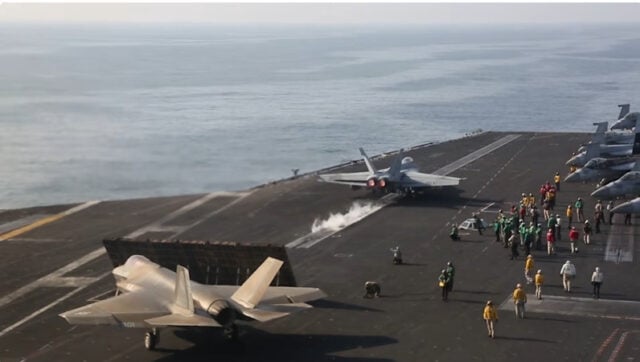
As Hegseth concluded his public statements, the physical execution of Operation Kinetic Pressure commenced with synchronized accuracy. At exactly 5:15 p.m. Eastern Time, a joint force of land-based stealth fighters, carrier-borne strike aircraft, and guided-missile naval platforms operating under CENTCOM command began releasing heavy precision ordnance across several highly fortified Iranian sectors.
According to technical operational parameters disclosed by military planners later in the evening, the primary objective of today’s specific waves was the total degradation of Iran’s localized surveillance capabilities and logistical support networks. The initial salvos relied on low-flying, radar-evading cruise missiles designed to slide underneath Iranian tracking envelopes, mapping out precise vectors to slam into hardened facilities before local crews could react.
| Geographic Location | High-Value Targets Struck | Primary Weapon Systems Deployed |
| Qeshm Island | Coastal Missile Storage, Early-Warning Radar | Carrier-Based F/A-18 Block III Super Hornets |
| Bandar Abbas Port | IRGC Naval Command Nodes, Fast-Attack Bases | Tomahawk Land-Attack Cruise Missiles (TLAM) |
| Sirik Coastal District | Air Defense Arrays, Municipal Water Infrastructure | B-52H Stratofortress Precision Gravity Bombs |
| Central Logistic Hubs | Electronic Surveillance Sites, Drone Depots | Air Force F-35A Lightning II Stealth Fighters |
While the Pentagon emphasized that its targets were strictly selected based on their immediate threat to international shipping and U.S. personnel, severe controversy erupted almost immediately regarding the physical fallout of the strikes in the southern coastal city of Sirik. Abdulhamid Hamzehpour, the Chief Executive Officer of Hormozgan Waterworks—the municipal agency tasked with managing water resources for the hyper-arid coastal region—reported that American munitions completely obliterated two major desalination plants and a massive municipal water storage reservoir.
The destruction of the facilities instantly cut off fresh water access to more than 20,000 local civilians during a period of extreme, dangerous summer heat. Iranian state media networks quickly broadcast verified video footage showing catastrophic structural damage to the concrete water tanks, with thousands of gallons of precious freshwater pouring out into the parched desert sands. Independent international legal observers and human rights monitors immediately raised sharp questions regarding the proportionality and legality of the strikes under international humanitarian law, noting that infrastructure vital to human survival cannot be classified as a lawful military objective without explicit, overwhelming justification.
The Naval Blockade: The Disabling of the M/T Settebello
In tandem with the heavy aerial bombardment of mainland military infrastructure, the United States today rigorously enforced its total naval blockade of all Iranian maritime ports. The administration’s policy mandates the complete interdiction of any merchant vessel attempting to export Iranian petroleum products or import restricted military components, a strategy intended to completely choke off the regime’s primary source of domestic revenue.
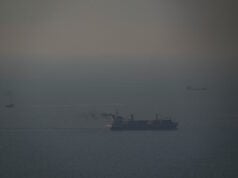
The most severe maritime engagement of the day occurred in the international waters of the Gulf of Oman, where a U.S. military aircraft intercepted the Palau-flagged oil tanker M/T Settebello. According to a formal statement issued by Captain Tim Hawkins, a senior spokesman for U.S. Central Command, intelligence tracking arrays verified that the Settebello was attempting to transport a substantial shipment of illicit Iranian crude oil out of a blockaded port, directly violating the enforcement zone.
[U.S. Maritime Control Network]
       │
       ▼ (Visual Identification & Audio Warnings)
[M/T Settebello] ─── (Defiance of Interdiction Order) ───► [Naval Engagement Zone]
       │
       ▼ (Kinetic Execution)
[Precision Munition Strike] ───► [Engine Room Disabled] ───► [Vessel Combat Ineffective]
CENTCOM forces issued multiple verbal and electronic warnings to the merchant vessel, ordering its captain to immediately alter course and submit to a safety inspection. When the crew of the Settebello actively defied the interdiction orders, a U.S. military aircraft fired highly specialized precision munitions directly into the ship’s primary engine room. The localized kinetic strike was engineered to instantly disable the vessel’s propulsion capabilities without rupturing the main cargo holds, preventing a catastrophic ecological oil spill in the delicate marine environment.
The strike marks the eighth merchant vessel to be physically disabled by American naval and air forces since the implementation of the total blockade. In the chaos following the explosion, the Indian Foreign Ministry reported that while 21 members of the international crew were successfully rescued by regional maritime response units, three Indian sailors were confirmed missing. The incident prompted New Delhi to officially summon the U.S. envoy to express deep concern over the increasing physical risks posed to international civilian mariners operating within the contested zone.
Regional Counter-Strikes: The Triple-Front Missile BATTLE
Tehran did not absorb today’s massive waves of American bombardment passively. Operating under direct orders from the supreme military command, the Islamic Revolutionary Guard Corps launched a highly coordinated, large-scale retaliatory offensive targeting American military installations located in three separate sovereign Middle Eastern nations: Bahrain, Kuwait, and Jordan.
According to reports carried by the semiofficial Iranian media outlet Tasnim, the IRGC launched synchronized volleys of tactical ballistic missiles and long-range one-way attack drones against 21 distinct sites hosting American military personnel. The retaliatory targets included the expansive headquarters of the U.S. Navy’s Fifth Fleet in Bahrain, the highly active Ali Al Salem and Ahmad Al-Jaber Air Bases in Kuwait, and a sensitive auxiliary air base located in the eastern desert of Jordan.
“The bases and assets that served as the primary source of Western aggression against our sovereign soil have been severely hit and compromised by our defensive missile units,” the Iranian Foreign Ministry asserted in a formal communique issued shortly after the counter-strike.
Despite the high volume of incoming Iranian ordnance, the localized defensive measures deployed by the United States and its regional allies proved highly effective. In Jordan, the state-run Petra news agency confirmed that national air defense units successfully intercepted five incoming ballistic missiles before they could impact their targets, resulting in zero domestic casualties. Simultaneously, the militaries of both Kuwait and Bahrain reported extensive, highly visible aerial interceptions illuminating the night sky as Patriot missile batteries successfully neutralized dozens of incoming Iranian drones, preventing any immediate structural damage to the U.S. command structures.
The Corridor Standoff: The Battle for the Strait of Hormuz
As the structural architecture of the conflict expanded, the economic theater emerged as a primary battleground today. Following the heavy strikes on its coastal infrastructure, the senior joint military command in Tehran announced that the strategic Strait of Hormuz was officially “closed until further notice.” The IRGC warned that any vehicle, whether commercial or military, attempting to enter the narrow waterway would be treated as an active hostile combatant and subjected to immediate, lethal targeting.
Within hours of the declaration, Iranian state-media channels triumphantly claimed that their remaining coastal defense batteries had successfully struck two commercial oil tankers that had attempted to “illegally pass” through the blockaded strait. The reports sent shockwaves through global commodity trading desks, triggering an immediate, vertical spike in crude oil futures as the international market reacted to the potential loss of a corridor that handles roughly 20 percent of global petroleum transit.
However, the Trump administration moved quickly to break the narrative of Iranian control. U.S. Central Command issued a rapid public counter-statement via social media, explicitly denying that the regime had successfully choked off maritime traffic.
“Commercial ships are continuing to transit in and out of the Strait,” CENTCOM announced, noting that heavy American naval task forces, backed by continuous airborne radar monitoring and protective carrier-based air escorts, were actively ensuring that international shipping lanes remained open.
Furthermore, President Trump took to social media to reveal previously classified details of ongoing, high-stakes clandestine naval operations designed to circumvent Iranian oversight completely. Trump claimed that the United States had successfully escorted more than 100 million barrels of oil through the Strait of Hormuz and into the open global market using advanced stealth protocols and darkened convoys.
“Did you know we’ve been taking out millions of barrels of oil? Nobody knows it,” Trump stated. “You know who doesn’t know about it? Iran, until right now. We took out, the other night, 22 ships. Late at night, with no lights. More than 200 Commercial Ships have safely traveled through the Strait.”
Geopolitical Repercussions and Global Market Contraction
The terrifying rapid-tempo escalation has sent shockwaves through the global diplomatic community. At the United Nations headquarters in New York, Secretary-General António Guterres issued an emergency warning today, stating that the continuous tit-for-tat kinetic strikes have pushed the entire Middle East to the absolute precipice of a devastating, full-scale regional war that could completely destabilize global economic systems.
The diplomatic situation is further aggravated by the ongoing, devastating conflict in neighboring Lebanon, where the national health ministry reported today that the continuous domestic death toll since March 2026 has climbed past 3,700 individuals. Because Iranian negotiators have continuously insisted that any permanent, binding peace treaty with the United States must be legally contingent upon a total cessation of hostilities within Lebanon, Washington’s sudden decision to bypass negotiations and bomb the Iranian mainland has thrown months of delicate, multi-party diplomatic work into absolute disarray.
As night transitions to dawn over the Persian Gulf, the tactical reality remains starkly transparent. The United States has made a historic gamble: betting that its absolute, crushing air and naval superiority can effectively beat the Islamic Republic into total economic and military submission. By openly using precision-guided heavy explosives as a primary diplomatic tool to force a capitulation deal, the administration has set a profound and unpredictable precedent for global conflict management in 2026.
Sources and Links:
The comprehensive analysis and specific operational details compiled within this report are drawn directly from the following verified journalistic and institutional sources:
- 1News (Associated Press): “US says it’s striking ‘multiple targets’ in Iran in latest escalation” (Published June 11, 2026 / Local Coverage) Link:
[https://www.1news.co.nz/2026/06/11/us-says-its-striking-multiple-targets-in-iran-in-latest-escalation/](https://www.1news.co.nz/2026/06/11/us-says-its-striking-multiple-targets-in-iran-in-latest-escalation/) - CBS News: “Iran Updates: Hegseth says U.S. will ‘negotiate with bombs’ if needed, as U.S. military announces more strikes” (Published June 10, 2026) Link:
[https://www.cbsnews.com/live-updates/iran-war-trump-us-strikes-apache/](https://www.cbsnews.com/live-updates/iran-war-trump-us-strikes-apache/) - The Washington Post: “Trump says Iran will ‘pay the price’ after it targets U.S. assets in three countries” (Published June 10, 2026) Link:
[https://www.washingtonpost.com/world/2026/06/10/trump-threatens-iran-after-it-targets-us-assets-middle-east/](https://www.washingtonpost.com/world/2026/06/10/trump-threatens-iran-after-it-targets-us-assets-middle-east/) - Al Jazeera English: “Iran attacks Bahrain, Kuwait, closes Hormuz Strait after fresh US strikes” (Published June 10, 2026) Link:
[https://www.aljazeera.com/news/2026/6/10/us-bombs-iran-after-trump-threat-tehran-closes-hormuz-strait-to-all-ships](https://www.aljazeera.com/news/2026/6/10/us-bombs-iran-after-trump-threat-tehran-closes-hormuz-strait-to-all-ships) - The Times of Israel: “U.S. strikes aim to create leverage in talks; official warns Iran not to ‘drag their feet'” (Published June 10, 2026) Link:
[https://www.timesofisrael.com/liveblog-june-10-2026/](https://www.timesofisrael.com/liveblog-june-10-2026/) - WKZO / Reuters News: “Hegseth: US to bomb ‘key facilities’ in Iran on Wednesday” (Published June 10, 2026) Link:
[https://wkzo.com/2026/06/10/hegseth-us-to-bomb-key-facilities-in-iran-on-wednesday/](https://wkzo.com/2026/06/10/hegseth-us-to-bomb-key-facilities-in-iran-on-wednesday/) - The Guardian (World Live Operations Archive): “Middle East crisis live: US says second day of Iran strikes ‘completed’; Tehran claims it has targeted US base in Bahrain” (Published June 10, 2026) Link:
[https://www.theguardian.com/world/live/2026/jun/10/iran-war-updates-missile-strikes-trump-us-retaliation-middle-east-crisis-war-live](https://www.theguardian.com/world/live/2026/jun/10/iran-war-updates-missile-strikes-trump-us-retaliation-middle-east-crisis-war-live) - Financial Times: “Donald Trump warns US will soon hit Iran ‘hard’ again as ceasefire crumbles” (Published June 10, 2026) Link:
[https://www.ft.com/content/a4ede6e5-4d5a-47e7-96bf-2bb2e6061775](https://www.ft.com/content/a4ede6e5-4d5a-47e7-96bf-2bb2e6061775)
Disclaimer
Artificial Intelligence Disclosure & Legal Disclaimer
AI Content Policy.
To provide our readers with timely and comprehensive coverage, South Florida Reporter uses artificial intelligence (AI) to assist in producing certain articles and visual content.
Articles: AI may be used to assist in research, structural drafting, or data analysis. All AI-assisted text is reviewed and edited by our team to ensure accuracy and adherence to our editorial standards.
Images: Any imagery generated or significantly altered by AI is clearly marked with a disclaimer or watermark to distinguish it from traditional photography or editorial illustrations.
General Disclaimer
The information contained in South Florida Reporter is for general information purposes only.
South Florida Reporter assumes no responsibility for errors or omissions in the contents of the Service. In no event shall South Florida Reporter be liable for any special, direct, indirect, consequential, or incidental damages or any damages whatsoever, whether in an action of contract, negligence or other tort, arising out of or in connection with the use of the Service or the contents of the Service.
The Company reserves the right to make additions, deletions, or modifications to the contents of the Service at any time without prior notice. The Company does not warrant that the Service is free of viruses or other harmful components.