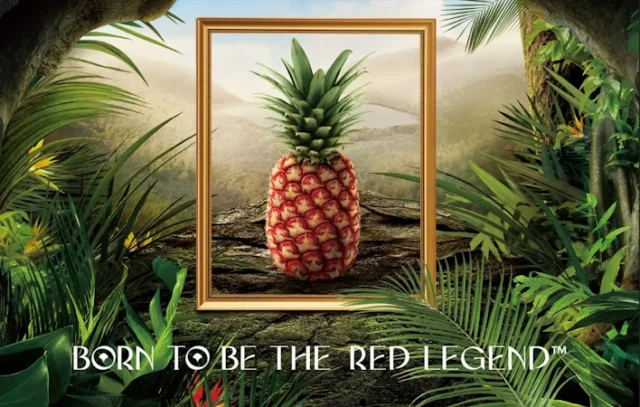
Imagine walking down the supermarket produce aisle, passing the regular apples, the everyday bananas, and the standard golden pineapples. Suddenly, your eyes lock onto something that looks less like a fruit and more like a finely polished gemstone. It has a striking, deep-red shell, an elegant crown of green leaves, and a price tag that commands a jaw-dropping $395.
Meet the Rubyglow pineapple. Developed by agricultural giant Fresh Del Monte, this isn’t just a new snack; it’s a full-blown viral luxury phenomenon. It is currently acting as the ultimate status symbol for high-rolling foodies and trendsetters across the globe.
So, what exactly is a Rubyglow pineapple, why does it cost as much as a designer smartphone, and what does it actually taste like? Let’s slice into the story of the world’s most exclusive fruit.
The 15-Year Quest for the Perfect Red Shell
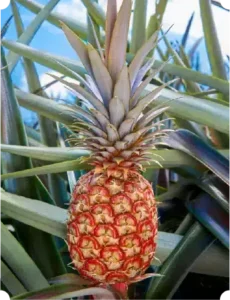 The Rubyglow didn’t just appear overnight by a fluke of nature. It is the result of over 15 years of meticulous research, development, and cross-breeding led by scientists in Costa Rica.

To create it, horticulturists cross-pollinated a traditional yellow pineapple with a rare, naturally pigmented purple variety. This complex, non-GMO botanical engineering resulted in a plant that produces a deep magenta, ruby-red exterior.
But creating the hybrid was only half the battle. Growing them requires an extraordinary amount of time and patience. Every single Rubyglow pineapple takes roughly two years to grow from a seed to a mature, harvestable plant. They are grown exclusively in specialized, tightly controlled research fields in Costa Rica, where farmers monitor everything from soil nutrients to weather exposure to ensure the fruit develops its signature red hue.
Because the cultivation process is so intensely demanding, availability is incredibly restricted. Only a few thousand Rubyglow pineapples are produced globally each year, transforming them from a grocery item into a strictly limited-edition luxury collectible.
What Does a $400 Pineapple Taste Like?
When you’re paying nearly $400 for a single piece of fruit, it needs to taste like absolute perfection. Fortunately, food critics and luxury buyers report that the Rubyglow lives up to the hype, offering a vastly different sensory experience than the standard $5 pineapple found at a local supermarket.
On the outside, the thick, vibrant red shell is stunning. But when you slice it open, you’re greeted by a deep, golden-yellow flesh that is exceptionally juicy.
Standard Pineapple vs. Rubyglow Experience

[Standard Pineapple]
Exterior: Greenish-brown, prickly
Acidity: High (can sting the tongue)
Core: Tough, fibrous, usually discarded

[Rubyglow Pineapple]
Exterior: Deep magenta/ruby red, smooth geometry
Acidity: Virtually zero (smooth, mellow finish)
Core: Extraordinarily soft, sweet, and fully edible
The flavor profile is engineered to be ultra-sweet with a completely natural, complex fruitiness. Traditional pineapples contain high levels of bromelain and acid, which can leave a sharp, stinging sensation on your tongue if you eat too much. The Rubyglow has been bred to have significantly lower acidity, producing an incredibly smooth, sweet finish. Additionally, the core is remarkably soft and edible, meaning there is zero waste when preparing the fruit.
A Masterclass in Luxury Scarcity Marketing
While the taste is undeniable, the massive price tag is fundamentally a product of deliberate luxury marketing. Fresh Del Monte is utilizing the exact same playbook used by high-end fashion houses like Hermès or collectible watchmakers like Rolex: extreme scarcity combined with immaculate presentation.
Instead of being stacked in a generic cardboard box on a grocery shelf, Rubyglow pineapples are treated like delicate works of art. They are sold in beautifully designed, custom-crafted origami boxes that open up like a flower to reveal the crimson fruit nestled safely inside.
The strategy has been an enormous success, particularly in markets where luxury fruit gifting is a deeply embedded cultural tradition. When Fresh Del Monte initially debuted the fruit, they targeted elite buyers in China, where red is traditionally associated with wealth, good fortune, and celebration. The fruit quickly became a viral sensation on social media platforms, with influencers and wealthy collectors filming “unboxing” videos of their $400 pineapples.
Following its massive success overseas, the Rubyglow has officially made its way to the United States. High-end, boutique produce distributors and specialty online grocers cater to ultra-wealthy food enthusiasts who are eager to experience the fruit firsthand or present it as an unforgettable centerpiece at an exclusive dinner party.
The Growing Trend of Designer Produce
The Rubyglow pineapple isn’t an isolated anomaly; it’s part of a rapidly growing global trend known as “designer produce.” Over the last decade, agricultural companies have increasingly focused on cultivating premium, trademarked fruit varieties designed specifically for consumers willing to pay a premium for novelty, superior flavor, and aesthetic perfection.
We’ve seen this trend explode before:
- Honeycrisp Apples: Transformed the apple industry by commanding double the price of traditional Red Delicious apples due to their superior crunch.
- Cotton Candy Grapes: Achieved a massive cult following for their uncanny, spun-sugar flavor profile.
- Pinkglow Pineapples: Fresh Del Monte’s previous viral hit, which featured an eye-catching pink flesh and sold for around $30 to $50 each.
The Rubyglow takes this concept to its absolute extreme. By pushing the boundaries of price and visual flair, it shifts fruit from a basic nutritional necessity into the realm of high-end art and experiential luxury. It proves that in today’s food culture, people aren’t just paying for sustenance—they are paying for the story, the rarity, and the sheer joy of trying something completely unique.
Sources and Links:
- Fresh Del Monte News: A $400 Pineapple is the Latest Entrant in the World of Luxury Fruit (Details the initial consumer rollout, the $395.99 pricing via specialty distributors like Melissa’s Produce, and historical context on previous viral fruit trends like the Oishii strawberry.)
- The Packer: Fresh Del Monte Debuts Red-Shelled Pineapple in U.S. Market (Covers the retail transition from the initial launch in China to nationwide U.S. distribution through boutique regional grocers.)
- Produce Report: Fresh Del Monte’s Rubyglow Pineapples Exclusively Launched in China (Provides analytical data on the 15-year development lifecycle in Costa Rica, crossbreeding with the Morada pineapple, and strict global production limits.)
- Fresh Del Monte Corporate Pressroom: Fresh Del Monte Unveils Red-Shelled Pineapple, the Rubyglow Pineapple (The official corporate press release outlining the plant patent details, strategic focus on the global luxury gifting market, and statements from executive leadership.)
Disclaimer
Artificial Intelligence Disclosure & Legal Disclaimer
AI Content Policy.
To provide our readers with timely and comprehensive coverage, South Florida Reporter uses artificial intelligence (AI) to assist in producing certain articles and visual content.
Articles: AI may be used to assist in research, structural drafting, or data analysis. All AI-assisted text is reviewed and edited by our team to ensure accuracy and adherence to our editorial standards.
Images: Any imagery generated or significantly altered by AI is clearly marked with a disclaimer or watermark to distinguish it from traditional photography or editorial illustrations.
General Disclaimer
The information contained in South Florida Reporter is for general information purposes only.
South Florida Reporter assumes no responsibility for errors or omissions in the contents of the Service. In no event shall South Florida Reporter be liable for any special, direct, indirect, consequential, or incidental damages or any damages whatsoever, whether in an action of contract, negligence or other tort, arising out of or in connection with the use of the Service or the contents of the Service.
The Company reserves the right to make additions, deletions, or modifications to the contents of the Service at any time without prior notice. The Company does not warrant that the Service is free of viruses or other harmful components.