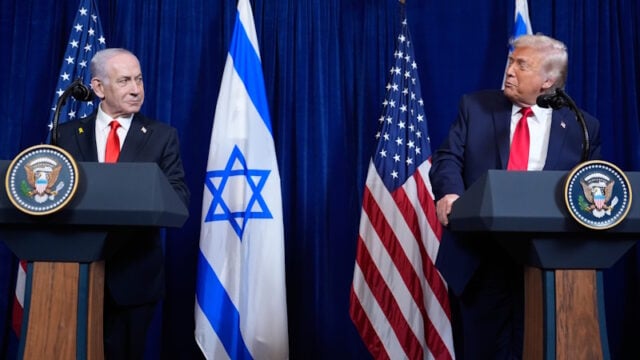
The volatile geopolitical landscape of 2026 has brought about a stunning reversal of roles in the Middle East. For years, U.S. President Donald Trump and Israeli Prime Minister Benjamin Netanyahu stood shoulder-to-shoulder as the architects of “maximum pressure” against the Islamic Republic of Iran. Yet, as a hot military conflict between the United States, Israel, and Iran grinds on, the long-standing ideological alliance between the two right-wing leaders has hit a dramatic, expletive-laden breaking point.
The immediate catalyst for this diplomatic rupture is Lebanon, where an aggressive Israeli campaign against Hezbollah has collided head-on with Donald Trump’s sudden, intense push to secure a sweeping peace deal with Tehran. What was once a unified front against the “Axis of Resistance” has devolved into a bitter tug-of-war, exposing raw political survival instincts on both sides and threatening to reshuffle the balance of power across the entire region.
The Explosive Phone Call Heard Round the World
The subterranean tensions between Washington and Jerusalem spilled into the open following a highly contentious, profane phone call between Trump and Netanyahu. According to reports from Axios, ABC News, and CNN, Trump launched into an unvarnished tirade against the Israeli premier after Netanyahu ordered intense military operations against Hezbollah strongholds in Beirut’s southern suburbs.
Sources briefed on the call revealed that Trump explicitly called Netanyahu “f***ing crazy” for ordering strikes that threatened to completely derail active, high-level diplomatic tracks between Washington and Tehran. Trump reportedly yelled, “What the f*** are you doing?” and went as far as to remind Netanyahu of past political favors, claiming he had personally helped keep the Israeli leader out of prison amid his long-running domestic legal troubles.

While Trump later attempted to smooth over the confrontation on Truth Social—characterizing the conversation as “very productive” and falsely claiming a total breakthrough—the damage was done. The leaked details underscored a profound strategic divergence: Trump wants an exit strategy from a costly war, while Netanyahu’s domestic survival depends on a total military victory.
Conflicting Agendas: The Exit Strategy vs. Perpetual War
The core of the rift lies in what each leader stands to lose. Donald Trump, at 79, faces immense political pressure at home. The escalation of the 2026 Iran war has triggered major schisms within his own political base. High-profile figures within the “America First” movement, including media personality Tucker Carlson and hardline isolationist lawmakers, have publicly accused the administration of betraying its anti-interventionist creed and allowing Israel to drag the U.S. into a prolonged Middle East quagmire.
Furthermore, economic fallout from the conflict is hitting American consumers directly. Iran’s blockade of the crucial Strait of Hormuz—the choke point for 20% of the world’s oil trade—has sent global energy markets into a tailspin. Coming off the back of a holiday weekend that saw the highest average U.S. fuel prices since the pandemic era, Trump is acutely aware that an unresolved war threatens his domestic agenda. Consequently, U.S. Secretary of State Marco Rubio and other top officials have been frantically negotiating a deal with Iranian representatives to reopen the Strait and secure a lasting ceasefire.
For Netanyahu, the calculus is entirely inverted. The long-serving prime minister is fighting a multi-front war in Gaza, Lebanon, and Iran while simultaneously navigating a resurrected domestic corruption trial involving charges of fraud and bribery. Analysts point out that Netanyahu’s right-wing governing coalition relies heavily on ultranationalist ministers, such as National Security Minister Itamar Ben-Gvir, who have openly urged Netanyahu to say “no” to Trump and push for total destruction of Hezbollah and Iran’s nuclear infrastructure.
“Netanyahu is dying to stay in power,” noted Mairav Zonszein of the International Crisis Group in an interview with Al-Monitor. “Trump is trying to figure out a way out of it… Trump is trying to move forward, and Netanyahu is still trying to go back to war.”
Lebanon as the Ultimate Geopolitical Leverage Point
The conflict in Lebanon has effectively become a proxy battleground for U.S.-Iran diplomacy. Following initial ceasefires brokered earlier in the spring, Iran conditionalized any long-term peace agreement or the reopening of the Strait of Hormuz on a total cessation of Israeli operations against Hezbollah. When Israel launched targeted drone strikes and heavy bombardments on Beirut, Iranian Foreign Minister Abbas Araghchi declared that Washington had failed to restrain its ally, prompting Tehran to temporarily suspend direct peace talks.
The tactical disconnect between Trump and Netanyahu was summed up by Israeli political analysts as a massive failure of communication. According to reports from Israel’s Channel 12, the friction arose from a fundamental misunderstanding: Trump believed Netanyahu had agreed to scale back hostilities to allow diplomacy to breathe, while Netanyahu believed Trump’s “maximum pressure” rhetoric gave Israel a blank check to permanently dismantle Hezbollah.
While Netanyahu did eventually yield to Trump’s intense pressure, agreeing to refrain from hitting Beirut proper unless provoked by direct Hezbollah rocket fire, the underlying structural dispute remains unresolved. Israel continues to operate heavily in southern Lebanon, testing the limits of Trump’s patience and Iran’s red lines.
Iran’s High-Stakes Gamble
As the two traditional allies bicker, the Islamic Republic of Iran is executing a high-stakes strategy designed to exploit the cracks in the U.S.-Israeli partnership. Despite suffering severe damage to its military infrastructure and leadership during the initial phases of the 2026 conflict, Tehran has maintained a tight stranglehold on global shipping through the Strait of Hormuz.
Iran is betting that the economic pain inflicted on the global West will eventually force the Trump administration to offer major concessions, such as the unfreezing of billions of dollars in overseas assets, in exchange for economic normalization. However, this is a dangerous tightrope walk. A U.S.-led naval blockade has severely crippled Iran’s own domestic economy, putting immense pressure on the regime’s long-term financial viability.
By tying the fate of the Strait of Hormuz directly to Israel’s military actions in Lebanon, Iran has successfully transformed Hezbollah’s survival into a direct American problem. Every time Israeli jets bomb Beirut, the political cost lands squarely on the desk of the American president in Washington, driving the wedge deeper between Trump and Netanyahu.
The Fragile Path Forward
As June 2026 begins, the Middle East finds itself trapped in a dizzying cycle of contradictory signals. Secretary of State Marco Rubio recently testified before Congress that Iran has suddenly agreed to negotiate stringent limits on aspects of its nuclear program that it previously refused to even discuss—a sign that U.S. pressure is yielding fruit. Simultaneously, Trump continues to insist that a final deal to halt the regional war is achievable within the coming days.
Yet, even as American and Iranian diplomats edge closer to a preliminary framework, the reality on the ground threatens to tear it apart at any moment. Hours after Trump and Netanyahu allegedly reached an understanding to dial back the violence, reports emerged of fresh drone strikes and retaliatory regional flare-ups, including reports from Fox News of Iranian missile and drone activity targeting peripheral Gulf positions in Kuwait and Bahrain.
The ironclad alliance that defined U.S.-Israeli relations during Trump’s first term has been replaced by a transactional, deeply strained relationship. Trump’s legacy hinges on his ability to fulfill his campaign promise of ending foreign wars and stabilizing the American economy. Netanyahu’s legacy hinges on a refusal to compromise on Israel’s absolute security doctrine, regardless of the cost to Washington. With both leaders utterly unwilling to blink, the current rift over Iran and Hezbollah may not just be a passing diplomatic spat, but the beginning of a fundamental realignment in global politics.
Sources and Links
- Al-Monitor: ‘Crazy’: Trump-Netanyahu relationship under growing strain
- Time: Trump Says It’s Time ‘One Way or Another’ for Iran to Make a Deal and Insists Talks Have Been Ongoing
- The Guardian: Why Benjamin Netanyahu poses an obstacle to US and Iran peace deal
- Fox News: Trump insists Iran talks are on, saying deal is ‘not a simple thing’
- Iran International: Lebanon becomes a test of Trump’s Iran diplomacy
- Al Jazeera English: Trump claims Israel-Hezbollah ceasefire as Iran deal talks accelerate
- CNN: ‘Pissed’ Trump told Netanyahu that he’s ‘f***ing crazy’: Axios
- Wikipedia: 2025–2026 Iran–United States negotiations
- Wikipedia: 2026 Iran war
Disclaimer
Artificial Intelligence Disclosure & Legal Disclaimer
AI Content Policy.
To provide our readers with timely and comprehensive coverage, South Florida Reporter uses artificial intelligence (AI) to assist in producing certain articles and visual content.
Articles: AI may be used to assist in research, structural drafting, or data analysis. All AI-assisted text is reviewed and edited by our team to ensure accuracy and adherence to our editorial standards.
Images: Any imagery generated or significantly altered by AI is clearly marked with a disclaimer or watermark to distinguish it from traditional photography or editorial illustrations.
General Disclaimer
The information contained in South Florida Reporter is for general information purposes only.
South Florida Reporter assumes no responsibility for errors or omissions in the contents of the Service. In no event shall South Florida Reporter be liable for any special, direct, indirect, consequential, or incidental damages or any damages whatsoever, whether in an action of contract, negligence or other tort, arising out of or in connection with the use of the Service or the contents of the Service.
The Company reserves the right to make additions, deletions, or modifications to the contents of the Service at any time without prior notice. The Company does not warrant that the Service is free of viruses or other harmful components.