WASHINGTON — In his first public congressional testimony since the outbreak of the U.S.-Israel war with Iran, Secretary of State and National Security Advisor Marco Rubio faced rigorous questioning from lawmakers today. Appearing before both the Senate Foreign Relations Committee and a House Appropriations subcommittee, Rubio defended the Trump administration’s foreign policy and its $36 billion agency budget request. The high-stakes hearings illuminated deep legislative skepticism surrounding a shaky, increasingly volatile ceasefire and the true state of backchannel diplomatic negotiations with Tehran.
Lawmakers pressed Rubio on the strategic endgame of the conflict, which began with joint U.S. and Israeli precision strikes on February 28, 2026. While President Donald Trump has repeatedly insisted that a favorable diplomatic resolution is imminent, members of Congress openly challenged the administration’s execution of the war, its shifting policy benchmarks, and the legal maneuvers utilized to bypass formal congressional war authorizations.

The Diplomatic Friction: Nuclear Concessions vs. Sanctions Relief
The central flashpoint during today’s hearings revolved around the exact terms of ongoing, fragile peace negotiations. Rubio revealed to the Senate Foreign Relations Committee that Iran has recently signaled a willingness to negotiate elements of its nuclear program that it had previously refused to discuss.
“They have agreed to negotiate aspects of their nuclear program that just a month ago, just a year ago, they were refusing to even mention,” Rubio testified, though he refrained from expanding on the specific details of those parameters (The Times of Israel, 2026).
Despite expressing cautious optimism about this shift in Tehran’s negotiating posture, Rubio explicitly warned lawmakers that these developments do not guarantee an acceptable final agreement. He noted that negotiations are severely complicated by the structural instability of Iran’s postwar leadership.
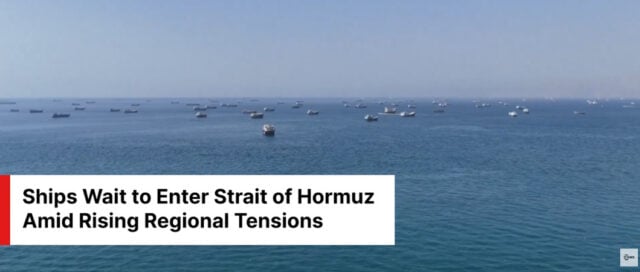
Furthermore, Rubio outlined a strict, unyielding U.S. negotiating position regarding economic leverage. He confirmed that the administration will not offer sanctions relief merely in exchange for Iran reopening the Strait of Hormuz—the vital maritime corridor closed to most commercial traffic since the war’s initial stages. Instead, Rubio emphasized that any relief will remain strictly “condition-based,” tied directly to Tehran permanently dismantling its uranium enrichment capabilities.
| Key U.S. Demand | Administration Policy Position |
| Strait of Hormuz | Iran must explicitly and permanently reopen the strait to all traffic before port blockades lift. |
| Sanctions Relief | Condition-based; explicitly tied to nuclear concessions, not just maritime reopening. |
| Uranium Stockpiles | Iran must agree to long-term limitations and dispose of its highly enriched uranium. |
| Regional Proxies | Halt material support to regional militant proxy networks (e.g., Hezbollah). |
Lawmakers Challenge War Powers and Intelligence Discrepancies
The hearings grew highly contentious as opposition lawmakers targeted the administration’s legal compliance and public framing of the conflict. Senator Tim Kaine (D-VA) fiercely questioned Rubio regarding the White House’s persistent refusal to hand over the Department of Justice’s Office of Legal Counsel (OLC) opinion used to justify the war, pointing out that the conflict has now exceeded 92 days without formal congressional approval.
[U.S.-Iran Conflict & Congressional Friction Timeline (2026)]

Feb 28: Joint U.S. and Israeli air strikes target Iranian defense infrastructure.
   │
   ▼
Apr 07: Initial temporary ceasefire brokered; backchannel talks commence.
   │
   ▼
May 04: U.S. deploys expanded naval presence to protect regional shipping.
   │
   ▼
Jun 02: Sec. Rubio grilled by Senate and House panels over OLC secrecy and war strategy.
The executive branch’s characterization of the war’s operational success also came under heavy scrutiny. During a sharp exchange with Senator Cory Booker (D-NJ), Rubio claimed that the kinetic war “is over now” due to the degradation of Iran’s defense capabilities.
However, congressional critics countered that this assessment directly contradicts recent U.S. intelligence briefings, which indicate that Iran still retains up to 70 percent of its prewar missile and mobile launcher stockpiles. Lawmakers expressed deep concern that the administration’s aggressive posturing—combined with escalating regional conflicts involving Hezbollah in Lebanon—threatens to collapse the tenuous April ceasefire entirely.
Intelligence Updates on Iran’s Postwar Leadership
When questioned about the status of the Iranian regime’s command structure, Rubio provided rare public intelligence updates regarding Iran’s Supreme Leader, Mojtaba Khamenei. The clerical leader took power after his predecessor was killed during the opening salvos of the war and had not been seen publicly since being wounded in a subsequent strike.
Rubio confirmed that U.S. intelligence indicates Mojtaba Khamenei is alive and “increasingly engaging” at some level in the ongoing government negotiations (The Guardian, 2026). He explained that the Supreme Leader is currently operating through a specialized advisory council composed of members of the Islamic Revolutionary Guard Corps (IRGC) and other hardline regime elements. Rubio noted that this insulated command structure, heavily reliant on secure couriers due to severe domestic security concerns, has significantly slowed the pace of diplomatic communications
As the back-to-back hearings concluded, the deep rift between the Trump administration and Capitol Hill remained palpable. While Secretary Rubio maintained that military pressure had successfully broken Iranian intransigence on the nuclear issue, a skeptical Congress made it clear they require far greater transparency and a definitive exit strategy before endorsing the administration’s regional objectives.
Sources and Links
- Associated Press / WKYC: Secretary of State Marco Rubio testifies before Congress for first time since Iran war began https://www.wkyc.com/article/news/nation-world/attack-on-iran/state-secretary-marco-rubio-congress-iran-war-talks-negotiations/507-fca9c474-6ff4-4220-9e38-693b44a6a7c8
- The Associated Press / KENS5: The Latest: Rubio will testify before Congress for the first time since the start of the Iran war https://www.kens5.com/article/syndication/associatedpress/the-latest-rubio-will-testify-before-congress-for-the-first-time-since-the-start-of-the-iran-war/616-10b8438c-fcf8-4ec1-ba31-0dba515927b9
- The Times of Israel: Rubio says Iran opening up on nuclear issue, as Trump insists talks ‘continuous’ https://www.timesofisrael.com/rubio-says-iran-opening-up-on-nuclear-issue-as-trump-insists-talks-continuous/
- The Washington Post: Rubio details U.S. demands as Iran peace talks falter https://www.washingtonpost.com/national-security/2026/06/02/rubio-meet-with-congress-iran-ceasefire-falters/
- CBS News 24/7: Rubio on Iran: “War is over now” https://www.youtube.com/watch?v=qOy9JFQl54k
- U.S. Senator Tim Kaine Press Office: Kaine Presses Rubio on Administration’s Refusal to Provide Congress with Legal Justification for Iran War https://www.kaine.senate.gov/press-releases/video-kaine-presses-rubio-on-administrations-refusal-to-provide-congress-with-legal-justification-for-iran-war
- The Guardian: Middle East crisis: Rubio says opening the strait of Hormuz is first condition in talks with Iran https://www.theguardian.com/world/live/2026/jun/02/iran-us-israel-lebanon-trump-netanyahu-hezbollah-beirut-hormuz-talks-oil-latest-news-updates
- The Spokesman-Review: Rubio grilled on Iran, says U.S. won’t swap sanctions relief for strait https://www.spokesman.com/stories/2026/jun/02/rubio-grilled-on-iran-says-us-wont-swap-sanctions-/
Disclaimer
Artificial Intelligence Disclosure & Legal Disclaimer
AI Content Policy.
To provide our readers with timely and comprehensive coverage, South Florida Reporter uses artificial intelligence (AI) to assist in producing certain articles and visual content.
Articles: AI may be used to assist in research, structural drafting, or data analysis. All AI-assisted text is reviewed and edited by our team to ensure accuracy and adherence to our editorial standards.
Images: Any imagery generated or significantly altered by AI is clearly marked with a disclaimer or watermark to distinguish it from traditional photography or editorial illustrations.
General Disclaimer
The information contained in South Florida Reporter is for general information purposes only.
South Florida Reporter assumes no responsibility for errors or omissions in the contents of the Service. In no event shall South Florida Reporter be liable for any special, direct, indirect, consequential, or incidental damages or any damages whatsoever, whether in an action of contract, negligence or other tort, arising out of or in connection with the use of the Service or the contents of the Service.
The Company reserves the right to make additions, deletions, or modifications to the contents of the Service at any time without prior notice. The Company does not warrant that the Service is free of viruses or other harmful components.