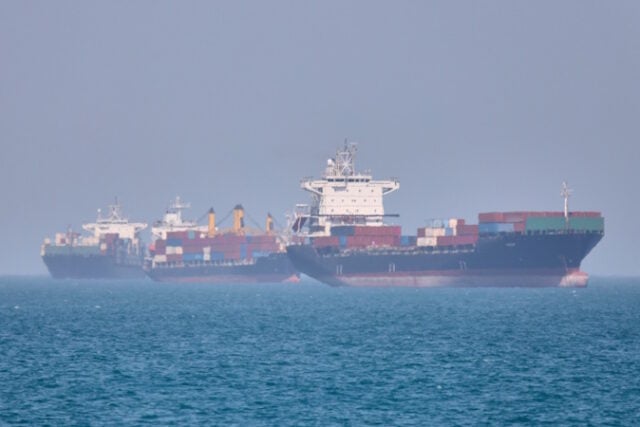
WASHINGTON — The fragile ceasefire between the United States and the Islamic Republic of Iran suffered its most severe breakdown to date overnight, as both nations traded direct military strikes across the Persian Gulf. The renewed outbreak of hostilities has shattered weeks of tentative diplomatic progress, plunged the strategic shipping lanes of the Middle East back into open conflict, and sent shockwaves through global energy markets.
The military escalation began late Wednesday evening when the U.S. military launched a series of what the Pentagon described as “defensive” strikes against Iranian military assets near the blockaded Strait of Hormuz. According to U.S. Central Command, American forces successfully shot down four one-way attack drones and subsequently pulverized an active Iranian ground control station near the coastal city of Bandar Abbas that was preparing to launch a fifth drone.
The Iranian response was swift and geographically expansive. Hours later, the Islamic Revolutionary Guard Corps (IRGC) announced it had fired a barrage of retaliatory ballistic missiles and attack drones targeting American military infrastructure in the region. The U.S. military confirmed on Thursday morning that Kuwaiti air defenses, alongside regional American assets, were forced to intercept multiple incoming Iranian missiles launched across the Persian Gulf. Washington has officially condemned the attack on Kuwait—one of its most vital non-NATO allies in the region—characterizing the missile strikes as an “egregious ceasefire violation” that directly threatens the sovereignty of neighboring Gulf states.
The rapid unraveling of the security situation coincides with an extraordinary diplomatic flare-up at the White House. During an intense cabinet meeting on Wednesday, President Donald Trump sparked international shockwaves by explicitly threatening to “blow up” the Sultanate of Oman, a longstanding U.S. strategic partner, if it cooperates with Tehran to impose transit fees on commercial vessels passing through the Strait of Hormuz. The combination of direct military confrontation and unprecedented presidential rhetoric has immediately disrupted the global energy supply chain, forcing oil benchmarks to spike by more than 2% in early morning trading.

The Battle of the Strait: Overnight Strikes and the Kuwaiti Interceptions
According to detailed operational briefings provided by the Pentagon and regional military command centers, the overnight exchange of fire represents the most dangerous breach of the bilateral truce signed on April 8.
The chain reaction began on Monday and culminated late Wednesday night when U.S. surveillance networks detected immediate threats near the Strait of Hormuz, a narrow waterway that has been heavily blockaded by Iranian forces since full-scale war broke out on February 28 following joint U.S. and Israeli airstrikes. U.S. officials stated that the IRGC had positioned mobile drone launch units and minelaying vessels along the coast, posing an imminent danger to the minimal international commercial traffic attempting to navigate the passage.
[U.S. Surveillance Detects Drone Threat at Bandar Abbas]
                         │
                         ▼
[U.S. Defensive Strikes Destroy 4 Drones & Ground Station]
                         │
                         ▼
[IRGC Launches Retaliatory Ballistic Missile Barrage]
                         │
                         ▼
[Kuwaiti & U.S. Air Defenses Intercept Missiles over Kuwait]
In response, American forces executed precision strikes against the IRGC Ground Forces’ positions around the Bandar Abbas International Airport. The targeted facilities included an operations hub responsible for directing unmanned aerial vehicle (UAV) networks. While the Pentagon maintained that the operation was strictly a defensive measure to preserve the overarching ceasefire, Tehran viewed the action as an unprovoked violation of the truce.
By the early hours of Thursday morning, the IRGC Ground Forces’ missile unit launched its counter-offensive. While state-run Iranian media agencies, including IRNA and Tasnim, initially refused to specify the exact coordinates of their targets, the Kuwaiti Ministry of Defense quickly confirmed that its territory had come under a coordinated missile and drone assault. Air defense systems at major military installations—including Camp Arifjan, a massive logistical hub south of Kuwait City housing thousands of U.S. service members, and Ali Al Salem Air Base—were activated to intercept the incoming threats.
Though Kuwaiti officials reported that the majority of the projectiles were successfully destroyed in mid-air, falling shrapnel caused minor structural damage, renewing anxieties in a nation that has suffered heavily throughout the 2026 war. Casualties have mounted since Iran began targeting Kuwait in late February, with historical figures indicating at least 7 American soldiers and 4 Kuwaiti service members killed in earlier waves of the conflict. This latest violation has effectively forced regional air defense units back onto maximum alert.
“We’ll Have to Blow Them Up”: Trump’s Extraordinary Threat to Oman
As the military situation deteriorated in the Gulf, a parallel political crisis erupted in Washington. The focal point of the current peace negotiations has been the permanent status of the Strait of Hormuz, through which roughly 20% of the world’s traded petroleum and liquified natural gas historically passes. Desperate to salvage an economy shattered by relentless American bombardment and suffocating sanctions, the Iranian government has sought to establish a new regulatory framework for the waterway.
According to regional intelligence reports published earlier this week, Iranian diplomats have been actively lobbying the Sultanate of Oman to establish a joint regulatory mechanism. The proposed plan would involve Iran and Oman jointly controlling maritime navigation through the strait and charging a mandatory “environmental fee” or transit toll on all passing commercial vessels, effectively turning an international waterway into a revenue-generating asset for Tehran.
When questioned by reporters during a White House cabinet meeting about whether his administration would entertain a short-term compromise allowing Oman and Iran to manage the passage, President Trump rejected the premise with characteristically blunt and escalatory language.
“No, the strait is going to be open to everybody,” Trump declared, leaning forward at the cabinet table. “Nobody’s going to control it. We’re going to watch over it. We’ll watch over it. But nobody’s going to control it. That’s part of the negotiation that we have.”
Trump then turned his focus directly to Muscat, issuing a direct military threat against a country that has served as a strategic defense partner to the United States for over fifty years and has frequently acted as the primary diplomatic mediator between Washington and Tehran.
“Oman will behave just like everybody else or we’ll have to blow them up,” Trump added in a casual aside. “They understand that, they’ll be fine.”
The remarks immediately sent shockwaves through diplomatic circles. The White House did not issue an immediate clarification or retraction, and the U.S. State Department subsequently published the official video and verbatim transcript of the president’s remarks without edit. Foreign policy analysts noted that Trump may have committed a verbal error, pointing to an earlier portion of the same briefing where the 79-year-old president mixed up Iran and Venezuela, claiming that Caracas “no longer has a navy, no longer has an air force” following the U.S. military intervention in South America in January.
However, regardless of whether the statement was a slip of the tongue or an intentional warning, the rhetorical attack drew swift condemnation from Middle Eastern officials. In Tehran, a senior Iranian foreign ministry representative issued an official statement denouncing the U.S. president’s comments, accusing Washington of practicing gangster diplomacy and actively threatening the sovereignty of neutral regional mediators.
Oil Markets Rallied on Fragmented Peace Talks and Supply Vulnerability
The combined impact of the overnight combat and Trump’s inflammatory rhetoric has completely erased the market optimism generated over the weekend, when the White House hinted that a 60-day comprehensive peace agreement was in its final stages.
Global energy markets opened sharply higher on Thursday morning as traders rushed to price in the renewed risk of a prolonged, indefinite closure of the Persian Gulf shipping lanes. The current baseline for maritime transit remains incredibly depressed; data gathered by financial institutions indicates that the number of active oil and gas tankers transiting the Strait of Hormuz fluctuates at just three to four vessels per day, a catastrophic drop from the pre-war average of approximately 130 ships daily.
| Crude Oil Benchmark | Contract Month | Early Morning Price (per Barrel) | Percentage Change |
| West Texas Intermediate (WTI) | July (CL.1) | $90.68 | +2.00% |
| Brent Crude | July (BRN00) | $96.40 | +2.50% |
| Brent Crude | August (BRNQ26) | $94.46 | +2.10% |
Energy analysts at global banks like UBS noted that while a handful of tankers bound for major Asian hubs like China and India have successfully slipped through the passage by operating under strict radar silence, overall crude and refined product loadings within the Persian Gulf remain at historic lows.
The sudden price surge underscores the deep structural anxiety permeating Wall Street and European financial capitals. While President Trump asserted on Wednesday that he is perfectly comfortable executing a “wait-out” strategy to force Iran into total capitulation before the upcoming U.S. midterm elections in November, market experts warn that the global economy remains highly exposed. Commodities researchers at Citi and Wood Mackenzie have continuously cautioned that if the Strait of Hormuz remains blockaded or heavily contested through the end of the year, the severe depletion of global petroleum stocks could drive Brent crude prices well past $120 a barrel, with worst-case scenarios approaching $200.
Diplomatic Limbo and Domestic Political Backlash
The return to open warfare comes at a moment of intense domestic political vulnerability for the Trump administration. The war, while successful in devastating Iran’s conventional military infrastructure and its highly enriched uranium stockpiles during the initial waves of Operation Epic Fury, has grown deeply unpopular among the American public due to the resulting surge in domestic fuel and consumer prices.
Furthermore, Trump is facing significant blowback from hawkish factions within his own party. Over the weekend, when rumors circulated that the administration was prepared to sign a conditional ceasefire that would lift frozen assets and ease economic sanctions in exchange for an Iranian non-enrichment guarantee, Republican leadership mounted a fierce public resistance. Senator Roger Wicker, chairman of the Senate Armed Services Committee, publicly blasted the potential deal, labeling the proposed 60-day truce a “disaster” that would render the sacrifices of American troops meaningless.
International relations experts argue that the overnight strikes on Bandar Abbas and the aggressive posturing toward Oman may be an intentional effort by Trump to project unyielding strength to satisfy his domestic political base and quiet conservative critics. However, this high-stakes brinkmanship carries immense risk. By launching strikes during active negotiations and threatening neutral intermediaries, the administration risks permanently alienating regional allies like Kuwait and Oman, while convincing Iranian negotiators that Washington cannot be trusted to uphold any finalized diplomatic treaty.
As smoke clears over the military bases in Kuwait and the littoral launch pads of southern Iran, the short-lived hope for an imminent peace has vanished, replaced once more by the volatile realities of a region on the absolute precipice of total war.
News Sources and References Used
- The Guardian
- Trump threatens to ‘blow up’ US ally Oman amid talks over strait of Hormuz — https://www.theguardian.com/us-news/2026/may/27/donald-trump-oman-threat-strait-hormuz
- First Thing: Trump threatens to ‘blow up’ US ally Oman if it does not ‘behave’ over strait of Hormuz — https://www.theguardian.com/us-news/2026/may/28/first-thing-trump-threatens-oman-strait-of-hormuz
- Middle East crisis live: Iran official condemns Trump threat to ‘blow up’ Oman — https://www.theguardian.com/world/us-israel-war-on-iran/2026/may/28/all
- Oil prices fall after Trump says Iran negotiations in final stages — https://www.theguardian.com/business/2026/may/20/trump-iran-war-oil-prices
- Associated Press (via Las Vegas Sun) US military says Iran fired missiles at Kuwait in the latest challenge to the fragile ceasefire — https://lasvegassun.com/news/2026/may/27/us-military-says-iran-fired-missiles-at-kuwait-in-/
- TIME MagazineTrump Threatens to ‘Blow Up’ Oman Over Strait of Hormuz — https://time.com/article/2026/05/28/us-iran-oman-trump-war-threat-strait-hormuz-peace-deal/
- MarketWatch (via Dow Jones Newswires / Morningstar) Oil prices rise after fresh round of strikes between U.S. and Iran, pushing peace deal into doubt — https://www.morningstar.com/news/marketwatch/20260528135/oil-prices-rise-after-fresh-round-of-strikes-between-us-and-iran-pushing-peace-deal-into-doubt
- CTV News (via Agence France-Presse) Trump appears to threaten to ‘blow up’ ally Oman — https://www.ctvnews.ca/world/mideast-conflict/article/trump-appears-to-threaten-to-blow-up-ally-oman/
- The Aviationist Report Claims Iranian F-5 Bombed U.S. Base in Kuwait During Opening Phase of War — https://theaviationist.com/2026/04/26/report-claims-iranian-f-5-bombed-us-base/
- Wikipedia 2026 Iranian strikes on Kuwait — https://en.wikipedia.org/wiki/2026_Iranian_strikes_on_Kuwait
Disclaimer
Artificial Intelligence Disclosure & Legal Disclaimer
AI Content Policy.
To provide our readers with timely and comprehensive coverage, South Florida Reporter uses artificial intelligence (AI) to assist in producing certain articles and visual content.
Articles: AI may be used to assist in research, structural drafting, or data analysis. All AI-assisted text is reviewed and edited by our team to ensure accuracy and adherence to our editorial standards.
Images: Any imagery generated or significantly altered by AI is clearly marked with a disclaimer or watermark to distinguish it from traditional photography or editorial illustrations.
General Disclaimer
The information contained in South Florida Reporter is for general information purposes only.
South Florida Reporter assumes no responsibility for errors or omissions in the contents of the Service. In no event shall South Florida Reporter be liable for any special, direct, indirect, consequential, or incidental damages or any damages whatsoever, whether in an action of contract, negligence or other tort, arising out of or in connection with the use of the Service or the contents of the Service.
The Company reserves the right to make additions, deletions, or modifications to the contents of the Service at any time without prior notice. The Company does not warrant that the Service is free of viruses or other harmful components.