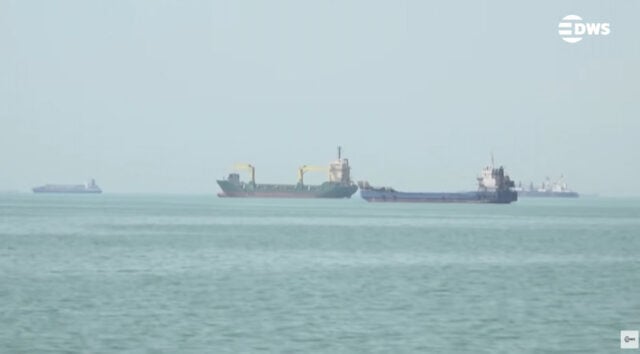
WASHINGTON — In a sharp and sudden escalation that threatens to shatter a fragile regional truce, the United States military carried out a series of what it termed “self-defense” airstrikes against Iranian military targets in southern Iran. The targeted operations, which unfolded near the strategically vital naval hub of Bandar Abbas, represent the most significant flare-up in direct kinetic engagements since a tentative ceasefire went into effect earlier this spring. According to U.S. Central Command (CENTCOM), the precision strikes were launched to neutralize imminent threats to American personnel and international shipping vessels operating in and around the heavily contested Strait of Hormuz.
The sudden burst of military activity comes at an extraordinarily delicate moment for the White House. President Donald Trump simultaneously announced on social media that backchannel diplomatic negotiations with Tehran to permanently end the months-long war are “proceeding nicely.” However, in a characteristic maneuver that has caught both domestic lawmakers and foreign allies off guard, the president has explicitly tied any final peace deal with Iran to a massive, mandatory expansion of the Abraham Accords. He is demanding that six major Muslim-majority nations—including Saudi Arabia and Turkey—immediately normalize diplomatic relations with Israel as a prerequisite for a lasting regional settlement.
Kinetic Action in Southern Iran
The military action commenced in the early hours of Monday following intense surveillance tracking by U.S. naval assets. According to CENTCOM spokesperson Captain Tim Hawkins, American forces executed targeted strikes on multiple surface-to-surface and surface-to-air missile (SAM) sites, alongside kinetic interventions against Iranian maritime vessels.

The primary theater of operations centered on Bandar Abbas, a coastal city that serves as the headquarters of the Islamic Revolutionary Guard Corps (IRGC) Navy. Pentagon officials stated that the strikes were triggered by two specific provocations:
- Illicit Mine Laying: U.S. reconnaissance assets detected two fast-attack Iranian military boats actively attempting to emplace naval mines across critical commercial shipping lanes in the Strait of Hormuz.
- Radar Lock-On: A surface-to-air missile site located on the Iranian coast activated its targeting systems, locking onto U.S. military aircraft operating in international airspace.
“U.S. forces conducted self-defense strikes in southern Iran today to protect our troops from threats posed by Iranian forces,” Captain Hawkins said in an official statement. “U.S. Central Command continues to defend our forces while using restraint during the ongoing ceasefire.”
Local media in southern Iran reported massive explosions near the coastal defense lines, with state-run news outlets confirming significant damage to infrastructure but claiming the strikes represented an unprovoked violation of Iranian sovereignty. Pentagon officials, conversely, emphasized that the actions were entirely defensive, designed to prevent a return to the catastrophic maritime blockades that paralyzed global energy markets earlier this year.
The Broader Context of the 2026 War
To understand the volatile nature of Monday’s strikes, they must be viewed through the lens of the wider 2026 Iran War, a conflict that erupted on February 28, 2026. Code-named Operation Epic Fury by the United States and Operation Roaring Lion by Israel, the war began with a massive, surprise joint aerial campaign targeting Iranian command infrastructure, nuclear facilities, and air defense networks. The initial, devastating wave resulted in the death of Iran’s Supreme Leader Ali Khamenei and multiple top-tier IRGC commanders, plunging the regional regime into unprecedented chaos.
Iran responded by launching hundreds of ballistic missiles and thousands of suicide drones against U.S. military bases, Israel, and commercial hubs across allied Gulf Arab states. The ensuing two months of unrestricted warfare led to thousands of military and civilian casualties, displaced millions of people across the Middle East, and resulted in a “dual blockade.” The United States Navy implemented a strict blockade of Iranian ports, while Iran retaliated by effectively shuttering the Strait of Hormuz—a maritime chokepoint through which roughly 20 percent of the world’s petroleum transits daily.
Though President Trump eventually extended a temporary truce to allow for diplomatic mediation in Doha and Islamabad, the underlying tensions have remained at a low boil. Monday’s strikes serve as a stark reminder that the ceasefire is highly volatile and that tactical commanders on both sides remain authorized to use lethal force at the slightest sign of hostile intent.
Trump’s Ultimatums: Tying Peace to the Abraham Accords
Even as smoke cleared from the missile sites in Bandar Abbas, the diplomatic track took an aggressive and unexpected turn. Posting on his Truth Social platform, President Trump revealed that while negotiations brokered by Qatar and Pakistan are actively hammering out details regarding Iran’s enriched uranium stockpiles and frozen assets, no final signature will be granted by Washington unless the geopolitical landscape of the Middle East is fundamentally rewritten.
Trump announced that he is “mandatorily requesting” that a broad coalition of Muslim-majority nations immediately sign onto the Abraham Accords framework. Specifically, the president called on Saudi Arabia, Qatar, Pakistan, Turkey, Egypt, and Jordan to formally enter the normalization pact alongside Israel.
The inclusion of several of these nations in the demand has raised eyebrows among international diplomats. Egypt and Jordan have maintained formal, legally binding peace treaties with Israel for decades (signed in 1979 and 1994, respectively), while Turkey has officially recognized the state of Israel since 1949. Analysts suggest the administration is pushing these nations to upgrade their existing, often cold, diplomatic ties into the highly integrated economic, technological, and security framework defined by the modern Accords.
In an even more radical proposition, Trump suggested that if the ongoing negotiations yield a comprehensive settlement, Iran itself could eventually join the treaty. “If Iran signs its Agreement with me… it would be an Honor to have them also be part of this unparalleled World Coalition,” Trump wrote. He claimed that bringing these nations into a singular alignment would yield “true Power, Strength, and Peace to the Middle East for the first time in 5,000 years,” resulting in a document “respected like no other that has ever been signed, anywhere in the World.”
The president made it clear that participation is not optional for nations wishing to benefit from the lifting of wartime blockades and economic sanctions. “It should start with the immediate signing by Saudi Arabia and Qatar, and everybody else should follow suit,” Trump declared. “If they don’t, they should not be part of this deal, as it shows bad intentions.”
Understanding the Abraham Accords
The Abraham Accords are a series of joint diplomatic, economic, and security agreements originally brokered by the United States during the first Trump administration in the fall of 2020. Named to symbolize the shared patriarchal heritage of Judaism and Islam, the historic treaties initially enabled the United Arab Emirates (UAE) and Bahrain to establish full, normalized diplomatic and commercial relations with Israel, marking the first time an Arab nation had recognized Israel in over a quarter-century. The framework subsequently expanded to include Morocco, Sudan, and Kazakhstan, creating an interconnected regional block centered on technological collaboration, joint tourism, and intelligence sharing—largely designed as a unified geopolitical counterweight against Iranian regional dominance.
Diplomatic Pushback and Skepticism
The administration’s sudden decision to introduce the Abraham Accords into an already delicate wartime negotiation has sparked fierce debate in Washington and across foreign capitals. While some administration officials, including Secretary of State Marco Rubio, have expressed optimism about the current framework on the table—citing solid progress on opening the maritime straits and capping Iran’s nuclear capabilities—others view the new mandates as a dangerous complication.
Domestic and International Realities
The proposal has drawn sharp skepticism from seasoned foreign policy experts and regional analysts who point out that the current atmosphere, marred by active destruction and high casualties across Iran, Lebanon, and Gaza, is fundamentally hostile to normalization initiatives.
| Country | Current Official Stance on Israel | Primary Obstacle to Signing |
| Saudi Arabia | No formal diplomatic relations | Demands a verified, clear pathway to a sovereign Palestinian state. |
| Pakistan | No formal diplomatic relations | Deep domestic political opposition; state policy tied to Palestinian resolution. |
| Qatar | Hosts Hamas political office; acts as mediator | Refuses formal normalization outside of a comprehensive two-state solution. |
| Iran | Official policy demands eradication of Israel | State ideology is explicitly anti-Zionist; supreme military structure built on regional resistance. |
Dan Shapiro, a former U.S. Ambassador to Israel, noted that while expanding the Abraham Accords remains a vital long-term goal for regional stability, tying it directly to the immediate termination of a hot war is “needlessly complicated and unrealistic.” He argued that publicly demanding sovereign regional leaders to fall into line under the threat of continued military pressure rarely yields stable, enduring treaties.
Similarly, in Islamabad, political analysts confirmed that Pakistan’s foundational diplomatic posture regarding Israel remains entirely unaltered by the U.S. president’s social media declarations. Domestic pressure within Saudi Arabia also makes it highly improbable that the Kingdom would bypass its long-standing requirement for a Palestinian state, especially at a time when regional Arab sentiment is intensely inflamed by the visual toll of the 2026 war.
Even within the president’s own party, there is notable friction. Hardline congressional Republicans, such as Senator Lindsey Graham, have criticized elements of the emerging deal, warning that if Washington backs down from its military posture simply because protecting the Strait of Hormuz is logistically difficult, Iran will emerge from the conflict perceived as a dominant regional bully.
The Path Forward: Escalation or Settlement?
The juxtaposition of Monday’s events perfectly illustrates the high-stakes, dual-track strategy currently defining American foreign policy in the Middle East. On one track, the Pentagon is utilizing direct, unhesitating military force to draw a hard line against tactical provocations, demonstrating that the U.S. Navy will forcefully dismantle any attempt by the IRGC to re-mine international waters or threaten American reconnaissance flights.
On the other track, the White House is attempting to leverage that very same military leverage to force a sweeping, generational realignment of the entire region. By demanding that major Islamic powers sign a permanent peace pact with Israel as the price for ending the war, the administration is aiming for nothing short of a total diplomatic victory.
Whether this gambit will succeed, or if the “self-defense” strikes around Bandar Abbas are merely the prelude to a total collapse of the ceasefire and a return to open, regional warfare, remains an open and deeply volatile question. For now, warships from the U.S. Navy’s Nimitz-class carrier groups continue to patrol the waters of the Arabian Sea, their crews remaining on the highest state of alert.
Sources and Links:
- The Jerusalem Post / Fox News: US strikes Iranian boats, missile launch sites in ‘self defense’, says CENTCOM
- The Times of Israel: Trump says ‘mandatory’ for Muslim nations involved in Iran deal to join Abraham Accords
- The Washington Post: As new Iran deal faces sharp criticism, Trump seeks to widen Abraham Accords
- PBS NewsHour: Trump says Iran deal should include additional countries joining Abraham Accords
- Associated Press / ClickOnDetroit: Trump says Iran deal should include additional countries joining Abraham Accords
- Wikipedia: 2026 Iran war Context and Timeline
- Britannica: Operation Epic Fury and 2026 Regional Dynamics
Disclaimer
Artificial Intelligence Disclosure & Legal Disclaimer
AI Content Policy.
To provide our readers with timely and comprehensive coverage, South Florida Reporter uses artificial intelligence (AI) to assist in producing certain articles and visual content.
Articles: AI may be used to assist in research, structural drafting, or data analysis. All AI-assisted text is reviewed and edited by our team to ensure accuracy and adherence to our editorial standards.
Images: Any imagery generated or significantly altered by AI is clearly marked with a disclaimer or watermark to distinguish it from traditional photography or editorial illustrations.
General Disclaimer
The information contained in South Florida Reporter is for general information purposes only.
South Florida Reporter assumes no responsibility for errors or omissions in the contents of the Service. In no event shall South Florida Reporter be liable for any special, direct, indirect, consequential, or incidental damages or any damages whatsoever, whether in an action of contract, negligence or other tort, arising out of or in connection with the use of the Service or the contents of the Service.
The Company reserves the right to make additions, deletions, or modifications to the contents of the Service at any time without prior notice. The Company does not warrant that the Service is free of viruses or other harmful components.