WASHINGTON / TEHRAN — The world is holding its collective breath. Following nearly three months of intense military conflict in the Persian Gulf, the United States and Iran have reportedly hammered out an agreement in principle to halt hostilities and avoid global economic catastrophe. Yet, as diplomats in Islamabad, Muscat, and Doha burn the midnight oil to codify the text, the reality on the water remains stubbornly dangerous. A strict American-led naval blockade continues to choke Iranian ports, and the strategic Strait of Hormuz remains heavily guarded. Despite the physical gridlock, global energy markets have staged a stunning preemptive retreat, with oil and gas prices plummeting on the sheer optimism that the war’s end is finally inches away.
The diplomatic breakthrough comes at a critical hour. Operation Epic Fury—the U.S. and Israeli air campaign launched on February 28, 2026, against Iranian military facilities—provoked a swift retaliatory closure of the Strait of Hormuz by Tehran, setting off a worldwide energy panic. Now, after weeks of back-and-forth draft exchanges mediated by Pakistani Prime Minister Shehbaz Sharif, a fragile framework has materialized. According to regional and American officials, the emerging deal focuses on an immediate cessation of hostilities, a gradual phased reopening of the Strait of Hormuz, and a mechanism for Iran to give up its highly enriched uranium (HEU) stockpile.

The political posturing, however, remains razor-sharp. On Sunday morning, U.S. President Donald Trump took to social media to confirm that while “negotiations are proceeding in an orderly and constructive manner,” he had explicitly instructed his representatives “not to rush into a deal in that time is on our side.” He insisted that the U.S. naval blockade will remain in “full force and effect until an agreement is reached, certified, and signed,” tempering the weekend’s immense diplomatic euphoria with a stark reminder of the military leverage Washington still wields.
The Shadow of the Blockade and the Strait
On the high seas, the signs of peace are far harder to find than they are in diplomatic communiqués. For over a month, U.S. Navy warships and allied vessels have maintained a tight cordon around Iran’s maritime trade hubs, crippling the Islamic Republic’s ability to export crude oil through normal channels. Even as political negotiators hint at a comprehensive 60-day implementation window to finalize terms, American officials maintain that sanctions relief is strictly contingent on verifiable atomic concessions.
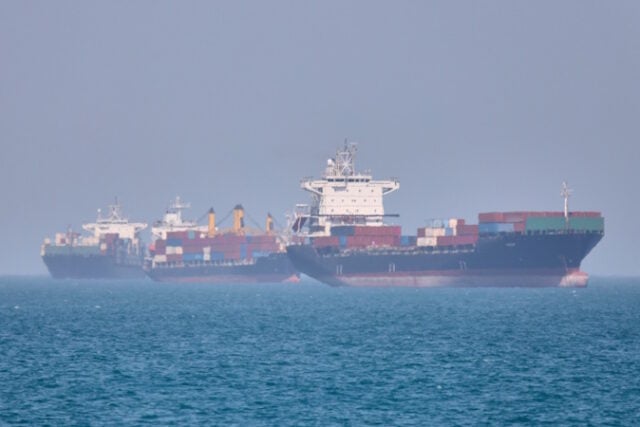
Concurrently, the Strait of Hormuz—the vital chokepoint through which one-fifth of the world’s petroleum transits—remains caught in an uneasy, highly regulated stasis. While the Iranian Revolutionary Guards Corps (IRGC) navy claimed that 33 vessels successfully crossed the waterway over a 24-hour window after receiving strict bilateral permits, commercial shipping lines are treating the passage as an active combat zone. The potential presence of naval mines and the risk of sudden escalation mean that Lloyds of London war-risk insurance premiums remain at all-time highs.
The friction points under negotiation are deeply rooted in national sovereignty. Iranian Foreign Ministry spokespersons have repeatedly argued that the governance of the Strait of Hormuz remains an internal matter for coastal states like Iran and Oman, rejecting any unilateral American oversight. Tehran’s latest counterproposals have consistently demanded an immediate, unconditional lifting of the naval blockade as a prerequisite for formalizing nuclear concessions. Conversely, the White House has held firm: the blockade stays until the ink on a signed treaty is dry and international inspectors can verify the status of Iran’s nuclear material.
A Preemptive Plunge in Global Energy Markets
While politicians debate and warships patrol, the financial world has chosen not to wait for the official press conference. Traded commodities, usually bound to the rigid physical realities of supply and demand, have succumbed entirely to the powerful currents of geopolitical sentiment.
Late on Sunday, as details of the tentative agreement leaked across global news desks, energy benchmarks experienced an immediate, dramatic sell-off:
- West Texas Intermediate (WTI): Crude for July delivery plummeted over 5%, crashing below $92 a barrel.
- Brent Crude: The global benchmark slipped heavily, dropping beneath the psychological threshold of $96 a barrel.
- U.S. Equity Futures: Stock indexes reacted with immediate relief, with Dow Jones Industrial Average futures surging over 200 points (0.5%), mirrored by healthy gains in the S&P 500 and Nasdaq-100.
This sudden drop offers immense psychological relief to a global economy that was rapidly hurtling toward a “non-linear adjustment”—the economic euphemism for widespread market chaos and systemic recession. Before the peace leaks, the spot market for crude had bounced uncomfortably around the $100 mark. Commercial inventories were depleting at a historic clip, forcing the International Energy Agency (IEA) to repeatedly sound alarms that global fuel reserves were approaching dangerous crisis thresholds.
Global Energy Sentiment Shift (May 2026)
===========================================================
Pre-Leak Environment:       Crude near $100/bbl | High Volatility
Post-Leak Speculation:      WTI < $92/bbl       | Brent < $96/bbl
===========================================================
Economic Driver: Market optics and anticipated supply restoration
override the ongoing physical naval blockade.
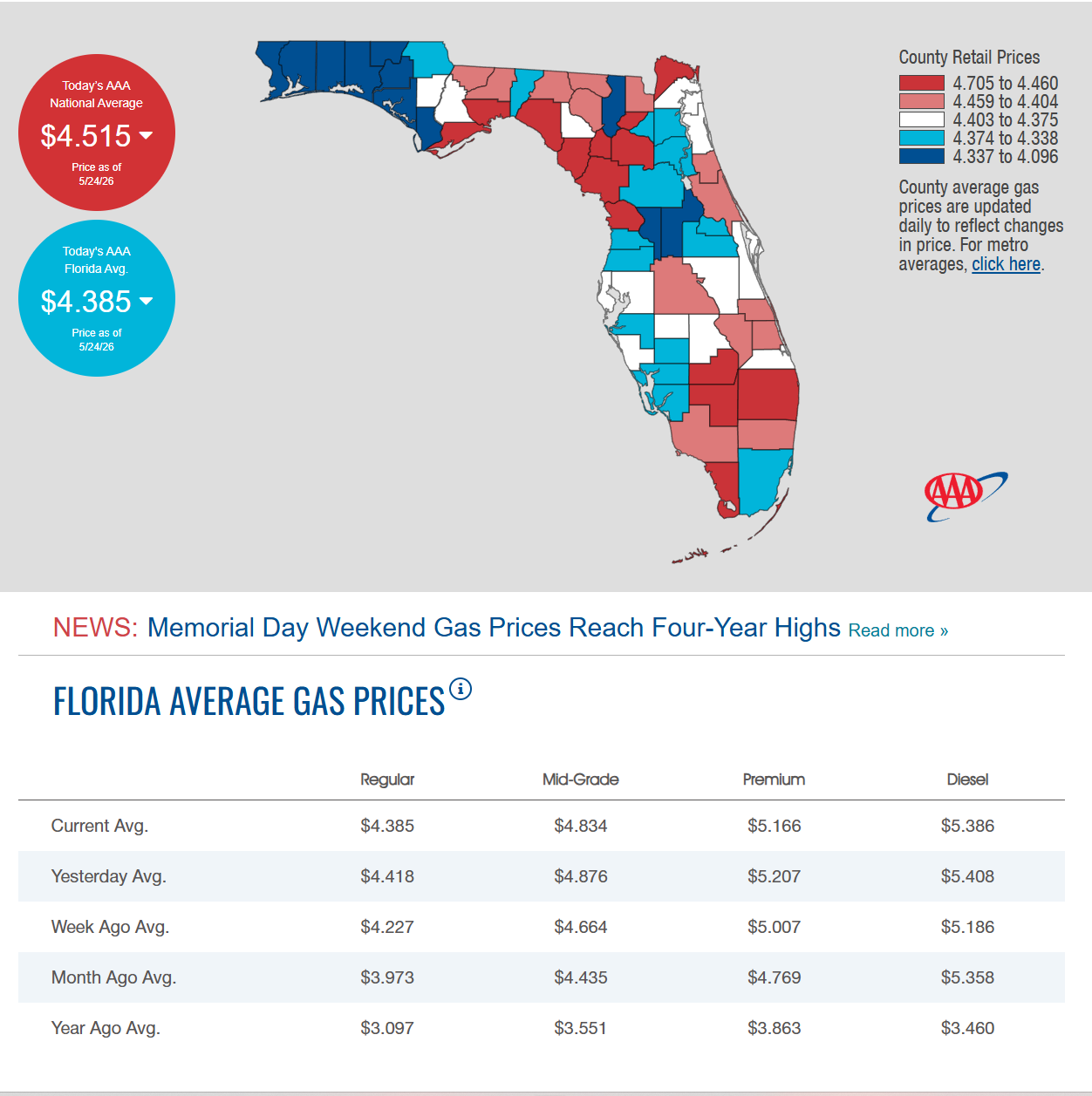
The relief, however, may prove to be a mirage for regular consumers at the pump. Energy analysts are actively warning drivers that a drop in crude futures does not equate to an immediate return to cheap gasoline. Prior to the late-February strikes, the U.S. national average for unleaded gasoline hovered around a comfortable $3.00 a gallon. Following the outbreak of the war, prices spiked by roughly 53%, peaking at a national average of $4.55 a gallon.
Petroleum analysts from firms like GasBuddy and Dow Jones Energy stress that while pump prices might retreat a few cents in the coming days purely on the positive optics of an ending war, a full normalization of retail prices could take anywhere from six months to two years. The reasoning is structural: unsnarling disrupted maritime supply chains, evaluating potentially damaged energy infrastructure across the Persian Gulf, and rebuilding depleted domestic stockpiles takes significant time. Diesel fuel production, which has been structurally tight in the United States for years, is expected to lag significantly behind gasoline in its recovery.
Inside the Sealed Rooms: The 60-Day Nuclear Crucible
If a deal is finalized, the true test of this diplomatic gamble will unfold during a grueling, proposed 60-day transition period. The centerpiece of the American demand remains completely unyielding: Iran must entirely surrender its stockpile of highly enriched uranium.
According to data compiled by the International Atomic Energy Agency (IAEA), Iran currently possesses approximately 440.9 kilograms (972 pounds) of uranium enriched up to 60% purity. This chemical state rests just a short, highly technical step away from the 90% threshold required to fashion a viable nuclear warhead. Under the broad contours of the draft agreement, Tehran would supposedly consent to hand over this material. The logistical blueprint suggests a dual-track resolution where a portion of the 60% uranium would be chemically diluted inside Iran, while the remainder would be shipped securely to a neutral third country—with Russia reportedly offering to act as the primary repository.
Yet, the internal political dynamics within both capitals threaten to derail the framework before it can even be signed. In Tehran, negotiators face immense pressure from the regime’s hardline factions. Complicating matters further, intelligence reports leaked via CBS News indicate that Iran’s Supreme Leader has been operating from a highly restricted, undisclosed location with heavily secured, limited communication channels. This internal isolation has caused severe logistical friction and lag times in getting final sign-offs on critical clauses. The IRGC-linked Tasnim News Agency has continued to broadcast defiant messaging, insisting that Iran has not officially accepted any binding nuclear restrictions at this stage of the Pakistani-mediated talks.
Iran's Enriched Uranium Stockpile (IAEA Data)
-----------------------------------------------------------
Current HEU Mass:          440.9 Kilograms (972 Pounds)
Current Enrichment Level:  60% Purity
Proposed Solution:         Phased dilution & third-country transfer
Sign-off Status:           Agreed in principle; pending supreme approval
-----------------------------------------------------------
In Washington, President Trump faces an entirely different flavor of domestic blowback. A vocal contingent of congressional Republicans, alongside key regional allies like Israeli Prime Minister Benjamin Netanyahu, has expressed immediate skepticism over the emerging arrangement. Critics argue that allowing any nuclear material to remain on Iranian soil leaves Tehran with a dangerous, permanent breakout capacity. Senator Thom Tillis publicly challenged the administration’s wartime rhetoric on CNN, questioning how a regime previously described by defense officials as heavily degraded could now secure a deal that permits domestic uranium dilution.
To soothe these anxieties, the White House has engaged in frantic backchannel diplomacy with Jerusalem. Prime Minister Netanyahu noted that any final accord must permanently eliminate the regional nuclear threat, emphasizing that the United States has reaffirmed Israel’s absolute right to launch preemptive actions in self-defense against imminent threats, particularly regarding Hezbollah operations in southern Lebanon.
The Fragile Path Forward
The coming hours will decide whether May 24, 2026, marks the beginning of a historic geopolitical de-escalation or merely another false dawn in a half-century of bitter hostility. The world’s markets have made their bet, pricing in a peace that has yet to be formally signed. They are gambling on the belief that economic necessity will ultimately force both Washington and Tehran to choose a synchronized retreat over an unravelling global order.
For now, the world remains suspended in this paradox: a war winding down on paper, an economy celebrating in advance, and an array of warships silently maintaining their crosshairs on the horizon.
Sources and Links:
- MarketWatch / Dow Jones: “Oil prices tumble as deal to end Iran war appears close, though Trump says there’s no rush” (Reported by Mike Murphy, May 24, 2026).MarketWatch Source Link
- The Guardian: “With oil markets nearing the danger zone, a US-Iran deal can’t come soon enough” (Analysis by Heather Stewart, May 24, 2026).The Guardian Business Link
- The Guardian: “Even if the Iran war ended today, US fuel prices aren’t likely to normalize this year” (Reported by Debbie Carlson, May 23, 2026; including data from AAA, GasBuddy, and Dow Jones Energy).The Guardian Fuel Analysis Link
- PBS NewsHour / Associated Press: “Trump says not to rush as U.S. nears potential Iran deal” (Reported by Samy Magdy, Melanie Lidman, and Darlene Superville, May 24, 2026).PBS NewsHour Link
- The House of Commons Library (UK Parliament Research): “US-Iran ceasefire and nuclear talks in 2026” (Briefing published April 24, 2026).House of Commons Research Link
- Al Jazeera English: “Iran war updates: Trump instructs negotiators ‘not to rush into a deal’” (Live Blog, May 24, 2026).Al Jazeera Live Coverage Link
- Iran International: “Live – Clouds gather over US-Iran talks after burst of optimism” (Sourcing CBS News, Tasnim News Agency, and US State Department statements, May 24, 2026). Iran International Live Blog Link
- Institute for the Study of War (ISW) / Critical Threats Project (CTP): “Iran Update Special Report” (Strategic and military analysis, May 23, 2026). ISW Research Link
Disclaimer
Artificial Intelligence Disclosure & Legal Disclaimer
AI Content Policy.
To provide our readers with timely and comprehensive coverage, South Florida Reporter uses artificial intelligence (AI) to assist in producing certain articles and visual content.
Articles: AI may be used to assist in research, structural drafting, or data analysis. All AI-assisted text is reviewed and edited by our team to ensure accuracy and adherence to our editorial standards.
Images: Any imagery generated or significantly altered by AI is clearly marked with a disclaimer or watermark to distinguish it from traditional photography or editorial illustrations.
General Disclaimer
The information contained in South Florida Reporter is for general information purposes only.
South Florida Reporter assumes no responsibility for errors or omissions in the contents of the Service. In no event shall South Florida Reporter be liable for any special, direct, indirect, consequential, or incidental damages or any damages whatsoever, whether in an action of contract, negligence or other tort, arising out of or in connection with the use of the Service or the contents of the Service.
The Company reserves the right to make additions, deletions, or modifications to the contents of the Service at any time without prior notice. The Company does not warrant that the Service is free of viruses or other harmful components.