The world is currently suspended in a state of agonizing geopolitical stasis. As of May 9, 2026, the silence emanating from Tehran is perhaps the loudest sound in the Middle East. For days, the Biden-turned-Trump administration has been signaling that a “final” proposal to end the current hostilities is on the table, delivered via intermediaries in Qatar and Pakistan. While the White House expresses a cautious, if weary, optimism that a letter could arrive “tonight,” the situation on the water tells a far more violent story.
Photos of USS Truxtun (DDG 103), USS Rafael Peralta (DDG 115), and USS Mason (DDG 87) operating in the Middle East. The three destroyers are currently sailing in the Arabian Sea supporting the blockade against Iran. As of today, CENTCOM forces have redirected 57 commercial… pic.twitter.com/iFHp1HHMac
— U.S. Central Command (@CENTCOM) May 8, 2026
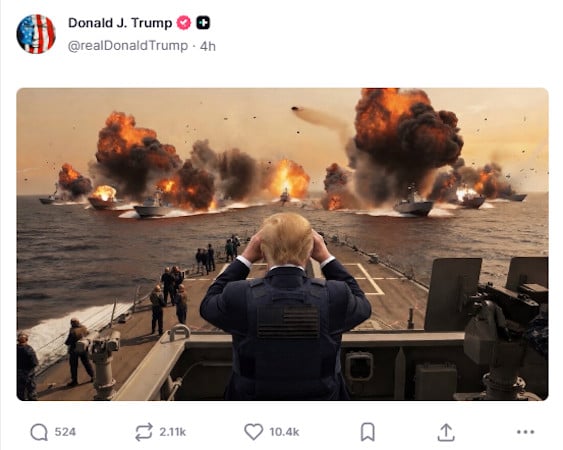
The tension has reached a fever pitch following a series of maritime escalations that have effectively turned the Strait of Hormuz into a graveyard of commercial shipping and a flashpoint for a potential world war. The core of the current standoff lies in a high-stakes “tit-for-tat” doctrine officially adopted by the Islamic Revolutionary Guard Corps (IRGC). Iran has reportedly warned the United States that for every American strike on Iranian assets—be they ships, infrastructure, or personnel—Iran will respond with a direct attack of equal or greater magnitude on a U.S. ship or regional site.
The Proposal: A High-Stakes Gamble
The proposal currently sitting in the hands of the Iranian leadership is being characterized as a comprehensive framework to dismantle the cycle of violence that began in earnest earlier this year. According to diplomatic leaks and statements from Secretary of State Marco Rubio, the plan involves several key pillars:

- A 15-year moratorium on uranium enrichment: A return to stringent nuclear controls, potentially including the dilution or removal of highly enriched stockpiles to a third party like Russia.
- The Reopening of Global Arteries: Iran would be required to cease all mining of the Strait of Hormuz and provide the exact locations of existing mines to international de-mining teams.
- Sanctions Relief and De-blockading: In exchange, the U.S. would end its month-long maritime blockade of Iranian ports, which has crippled the Iranian economy and led to severe domestic shortages.
President Trump, speaking from the White House, has framed the offer as a “humanitarian gesture” intended to free the thousands of ships currently trapped in the Persian Gulf. However, the rhetoric from Tehran remains defiant. Foreign Minister Abbas Araghchi has accused the U.S. of “reckless military adventures” even as negotiations continue, claiming that Iran has used the recent “ceasefire” to restock its ballistic missile arsenal.
Retaliation as a Policy: “A Ship for a Ship”
The most alarming development in the last 48 hours is the crystallization of Iran’s “Mirror Doctrine.” The IRGC Navy issued a stark warning Saturday morning: any attempt by the U.S. to “guide” ships through the Strait or to strike Iranian tankers will be met with “heavy assault.”
This is not a hollow threat. On Friday, U.S. Central Command (CENTCOM) forces fired on and disabled two Iranian-flagged tankers that were allegedly attempting to breach the American blockade. Satellite imagery from Kharg Island has since confirmed a massive 71-square-kilometer oil slick, a grim visual testament to the environmental and economic cost of this conflict. In response to these strikes, Iranian military commanders have reinforced their position that the U.S. Fifth Fleet and its regional bases—particularly those in Bahrain and the UAE—are now active targets.
The Domestic Crisis Inside Iran
The pressure on Tehran to accept the deal is not just military; it is internal. Reports are surfacing of foreign militias, including Iraq’s Hashd al-Shaabi and Afghan groups, patrolling the streets of Tehran. These fighters, who reportedly do not speak Persian, have been seen manning checkpoints and conducting vehicle searches. This indicates a deep-seated fear within the Iranian regime of domestic unrest. The economy is in a tailspin, and the presence of foreign enforcers suggests that the government’s traditional security apparatus may be stretched thin or considered unreliable in the face of a starving populace.
Conversely, the U.S. is facing its own pressures. Global energy prices have skyrocketed since the Strait of Hormuz was effectively closed to unapproved traffic. The “Maritime Freedom Construct,” a joint State and Defense Department initiative, aims to combine diplomatic pressure with military escorts, but the risk of a full-scale regional war remains the primary deterrent against a more aggressive U.S. push.
The Role of Global Intermediaries
The survival of the current fragile ceasefire—described by observers as “tenuous at best”—rests largely on the shoulders of Qatar and Pakistan. Prime Minister Shehbaz Sharif of Pakistan has stated that his government is in contact with both capitals “day and night.” Meanwhile, Qatari officials have been hosting high-level meetings in Rome and Miami, serving as the physical conduit for the “Trump Plan.”
The international community, including Russia and China, has begun to shift its tone. While Moscow still offers to facilitate the nuclear aspect of the deal by taking enriched uranium, there is a growing consensus that the status quo is unsustainable for the global economy.
Conclusion: The Midnight Hour
As of Saturday night, the world remains in a state of suspended animation. If Iran accepts the proposal, it could lead to the most significant de-escalation in the Middle East in decades. If they reject it, or if they follow through on their “attack for an attack” warning following the disabling of their tankers on Friday, the conflict enters a new, much darker phase.
The U.S. has made its move. The ships are in position, the proposal is on the desk, and the blockade remains in force. Now, the answer lies in a letter that may—or may not—arrive by morning.
Sources Used and Links:
- NDTV Profit: US Awaits Iran Answer After Hormuz Clashes Strain Ceasefire
- Fox News: Live Updates: Iran says it will respond to US peace offer ‘at the appropriate time’
- PBS NewsHour: Fragile Iran ceasefire appears to hold as Iran warns the U.S. against attacks on its oil tankers and other ships
- AP News: Iran warns the US against attacks on its oil tankers and other ships but ceasefire appears to hold
- The Guardian: US awaiting response from Iran over proposals for ceasefire deal, says Rubio
- Washington Post: Iran threatens retaliation after Trump says U.S. will guide ships in Strait of Hormuz
- Security Council Report: Middle East Crisis: Closed Consultations* : What’s In Blue
- Institute for the Study of War (ISW): Iran Update Special Report, May 7, 2026
Disclaimer
Artificial Intelligence Disclosure & Legal Disclaimer
AI Content Policy.
To provide our readers with timely and comprehensive coverage, South Florida Reporter uses artificial intelligence (AI) to assist in producing certain articles and visual content.
Articles: AI may be used to assist in research, structural drafting, or data analysis. All AI-assisted text is reviewed and edited by our team to ensure accuracy and adherence to our editorial standards.
Images: Any imagery generated or significantly altered by AI is clearly marked with a disclaimer or watermark to distinguish it from traditional photography or editorial illustrations.
General Disclaimer
The information contained in South Florida Reporter is for general information purposes only.
South Florida Reporter assumes no responsibility for errors or omissions in the contents of the Service. In no event shall South Florida Reporter be liable for any special, direct, indirect, consequential, or incidental damages or any damages whatsoever, whether in an action of contract, negligence or other tort, arising out of or in connection with the use of the Service or the contents of the Service.
The Company reserves the right to make additions, deletions, or modifications to the contents of the Service at any time without prior notice. The Company does not warrant that the Service is free of viruses or other harmful components.