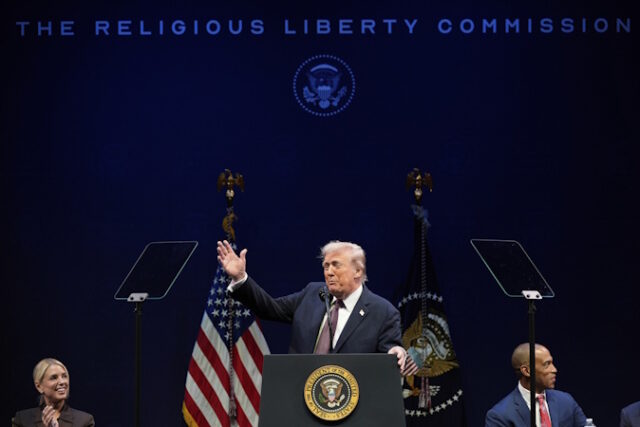
In a move that has sent ripples through the American legal and social landscape, the Trump administration has officially inaugurated the President’s Commission on Religious Liberty. The initiative, long a cornerstone of the President’s second-term agenda, represents a significant shift in how the federal government interacts with religious institutions and the foundational principle of the separation of church and state. By elevating the voices of conservative Christian leaders to an official advisory capacity, the administration has signaled its intent to redefine the boundaries of religious expression and governmental support for faith-based initiatives.
The commission’s formation comes at a pivotal moment in American history, as the country navigates a complex cultural divide. For many conservative Christians, this represents the culmination of decades of advocacy for a “seat at the table” and the protection of what they term “traditional American values.” For others, including civil rights organizations and secular advocacy groups, the move raises profound concerns about the erosion of the Establishment Clause of the First Amendment.
According to a report from The Associated Press, the commission’s early activities suggest an ambitious agenda that goes far beyond mere advisory roles. As reported, “Rejecting church and state separation is on the wish list for Trump’s religious liberty commission,” indicating a fundamental desire to reintegrate religious instruction and values into the mechanisms of public policy and education. This shift marks a departure from the strict neutrality that has characterized federal policy for much of the last half-century.
A New Vision for Federal Policy
The commission is tasked with reviewing existing federal regulations and identifying areas where “religious freedom” is perceived to be under threat. This includes a broad mandate to examine everything from healthcare mandates to educational funding and tax exemptions. Central to the commission’s “wish list” is the repeal or further weakening of the Johnson Amendment, which prohibits tax-exempt organizations, including churches, from endorsing or opposing political candidates.

During the commission’s inaugural meeting in Washington D.C., leaders emphasized that the American experiment was never intended to be a secular one. They argued that the “wall of separation,” a phrase coined by Thomas Jefferson, has been misinterpreted by modern courts to exclude faith from the public square. The administration’s supporters contend that by protecting the rights of religious organizations to operate according to their conscience, the government is actually upholding the true spirit of liberty.
However, the implications of this shift are far-reaching. In the realm of education, the commission has signaled its support for “school choice” initiatives that would allow public tax dollars to flow more freely to private religious schools. Proponents argue this empowers parents to choose the best environment for their children, while critics maintain it drains essential resources from the public school system and forces taxpayers to fund religious instruction.
The Role of The Associated Press in Uncovering the Agenda
The transparency of this new body has been a point of contention. Much of what is known about the commission’s specific goals has come from investigative reporting. The Associated Press has been instrumental in detailing the specific policy changes being discussed behind closed doors. Their reporting highlights a growing list of priorities that include federal protections for businesses that wish to deny services based on religious objections to same-sex marriage or gender identity.
“The Associated Press” noted that the commission is not merely a symbolic gesture but a functional arm of the executive branch intended to “streamline the integration of religious perspectives into every department of government.” This includes the creation of “Religious Liberty Liaisons” within agencies like the Department of Health and Human Services and the Department of Labor, ensuring that faith-based concerns are considered in every regulatory decision.
Judicial Influence and the 2026 Midterms
The timing of the commission’s launch is significant, coming just months before the 2026 midterm elections. The administration is banking on this initiative energizing its core base of evangelical and conservative Catholic voters. For many in this demographic, protecting religious liberty is the single most important issue, surpassing economic concerns and foreign policy.
Furthermore, the commission serves as a bridge to the judiciary. With a Supreme Court already trending toward a more expansive view of religious rights, the commission’s findings are expected to provide the legal groundwork for future litigation. Legal scholars anticipate that the administration will use the commission’s reports to justify executive orders that test the limits of current constitutional interpretations.
The push for a more “faith-centered” government is also reflected in judicial appointments. The administration continues to prioritize candidates who share the commission’s view that the First Amendment was intended to protect religion from the state, rather than protect the state from religion. This judicial strategy ensures that the commission’s legacy will likely outlast the current administration.
Resistance and the Legal Battle Ahead
The response from the opposition has been swift and organized. A coalition of civil liberties groups, including the ACLU and Americans United for Separation of Church and State, has already announced plans to challenge the commission’s recommendations in court. They argue that the commission essentially functions as a taxpayer-funded lobbying group for a specific religious viewpoint, which they claim violates the Constitution.
Critics also point to the potential for discrimination. If religious organizations are granted broad exemptions from civil rights laws, they argue, it will become legal to discriminate against LGBTQ+ individuals, religious minorities, and those with differing moral convictions. The concern is that “religious liberty” is being used as a shield to justify exclusionary practices that were previously deemed illegal.
The debate has also sparked a rift within religious communities themselves. Many “Mainline” Protestant denominations and progressive faith leaders have spoken out against the commission, arguing that true religious freedom requires a neutral government that does not favor one faith—or one interpretation of a faith—over another. They fear that the administration’s focus on a specific brand of conservative Christianity will alienate millions of Americans who hold different spiritual beliefs.
Economic and Social Implications
Beyond the legal and political battles, the commission’s work has potential economic consequences. By promoting policies that favor faith-based providers in healthcare and social services, the administration could shift billions of dollars in federal contracts. This has raised questions about the quality and inclusivity of services provided under such a framework. For instance, if a religious hospital receives federal funding but refuses to provide certain reproductive health services based on its “conscience,” the burden often falls on the most vulnerable populations who have few other options.
In the workplace, the commission is exploring ways to expand the “ministerial exception,” which allows religious organizations to exempt certain roles from employment discrimination laws. Expanding this definition could leave thousands of employees without legal recourse if they are fired for reasons unrelated to their job performance, such as their marital status or personal healthcare decisions.
Conclusion: A Nation at a Crossroads
As the President’s Commission on Religious Liberty begins its work in earnest, the United States finds itself at a crossroads. The administration’s bold move to redefine the relationship between church and state is either a long-overdue correction or a dangerous departure from democratic norms, depending on one’s perspective. What is certain is that the commission’s influence will be felt in every corner of American life, from the classroom to the courtroom.
The Associated Press’s reporting continues to be a vital resource for understanding the nuances of this policy shift. By bringing the “wish list” of the commission into the light of public scrutiny, journalists are ensuring that the debate over the future of American democracy remains robust and informed. As the 2026 midterms approach, the impact of this commission will likely be a defining issue for voters, as they decide what role they want faith to play in the halls of power.
The struggle over the “wall of separation” is far from over. In many ways, it has only just begun. The next two years will reveal whether this commission is the start of a new era of “faith-based governance” or if the constitutional safeguards of the past will hold firm against a rapidly changing political tide. For now, the administration remains undeterred, moving forward with an agenda that seeks to place religious values at the very heart of the American government.
Sources and Links:
- The Associated Press: Trump’s religious liberty commissioners share wish lists of policy changes
Disclaimer
Artificial Intelligence Disclosure & Legal Disclaimer
AI Content Policy.
To provide our readers with timely and comprehensive coverage, South Florida Reporter uses artificial intelligence (AI) to assist in producing certain articles and visual content.
Articles: AI may be used to assist in research, structural drafting, or data analysis. All AI-assisted text is reviewed and edited by our team to ensure accuracy and adherence to our editorial standards.
Images: Any imagery generated or significantly altered by AI is clearly marked with a disclaimer or watermark to distinguish it from traditional photography or editorial illustrations.
General Disclaimer
The information contained in South Florida Reporter is for general information purposes only.
South Florida Reporter assumes no responsibility for errors or omissions in the contents of the Service. In no event shall South Florida Reporter be liable for any special, direct, indirect, consequential, or incidental damages or any damages whatsoever, whether in an action of contract, negligence or other tort, arising out of or in connection with the use of the Service or the contents of the Service.
The Company reserves the right to make additions, deletions, or modifications to the contents of the Service at any time without prior notice. The Company does not warrant that the Service is free of viruses or other harmful components.