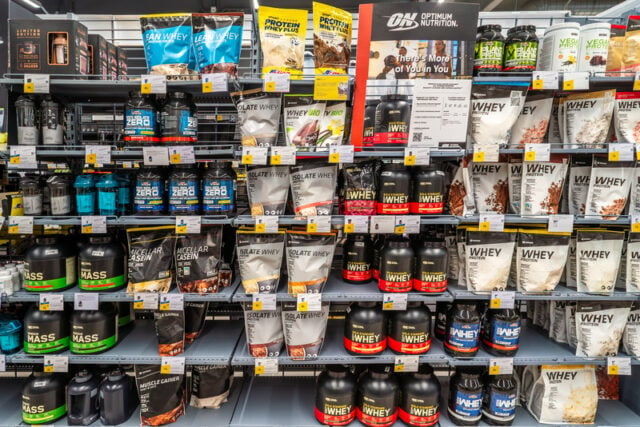
In May 2026, the local supplement store feels more like a relic of a bygone era than a hub for health. The towering aisles once filled with five-pound tubs of whey isolate and pea protein blends are now sparsely populated, often replaced by rows of “coming soon” signs or overpriced, boutique alternatives. What was once a staple of the fitness community has become a scarce commodity, traded like gold on the secondary market. The “Protein Apocalypse” of 2026 isn’t just a headline; it is a structural shift in the global food economy that has collided head-on with a social media-fueled obsession with “proteinification.”
The Perfect Storm: Why the Whey Ran Dry
To understand the current shortage, one must look at the convergence of biological, geopolitical, and medical factors that began coalescing in late 2024. The primary catalyst was a sudden and severe bottleneck in processing capacity. While raw milk production remained relatively stable in early 2025, the infrastructure required to convert that milk into high-purity Whey Protein Isolate (WPI) and Whey Protein Concentrate (WPC80) reached a breaking point.
Global dairy giants like Glanbia and Tirlán have committed hundreds of millions of euros to expand facilities in New Mexico and Ireland, but these projects are not expected to deliver significant relief until late 2026 or early 2027. In the interim, the industry is operating on razor-thin margins and “forward contracts” that have sucked the spot market dry. If you aren’t a multi-billion dollar food conglomerate, getting a shipment of whey in 2026 requires a miracle or a massive bank account.
Adding fuel to the fire was the 2024-2025 outbreak of Highly Pathogenic Avian Influenza (HPAI) in dairy cattle. Initially a poultry problem, the virus jumped to bovine herds across Texas, Kansas, and eventually Wisconsin. The resulting “herd status” programs and mandatory interstate testing for lactating cows slowed the movement of livestock and caused localized dips in milk yield, creating a jittery market that sent prices soaring.

The GLP-1 Factor: A New Floor for Demand
While supply crumbled, demand didn’t just grow—it evolved. The widespread adoption of GLP-1 receptor agonists, such as semaglutide and tirzepatide, fundamentally altered the protein landscape. By 2026, nearly 12% of the U.S. population was utilizing these medications for weight management.
Medical guidelines for these patients are clear: to prevent the loss of lean muscle mass during rapid weight loss, protein intake must be drastically increased. This created a massive, non-negotiable demand from a demographic that may previously have avoided protein shakes. Unlike the bodybuilder who might skip a scoop to save money, the GLP-1 patient views protein as a medical necessity. This “medicalization” of whey protein has created a permanent new floor for global demand, leaving traditional athletes competing with medical patients for the same limited supply.
The Death of the Viral “Protein Craze”
For the last three years, social media platforms like TikTok and Instagram have been dominated by the “proteinification” of everything. From “Proffee” (protein coffee) to the “Ninja Creami” obsession that turned every kitchen into a high-protein ice cream lab, the cultural demand for protein reached a fever pitch. Brands responded by putting protein in pasta, bread, chocolate bars, and even cereal.
However, the 2026 shortage has brought this craze to a grinding halt. Small-scale “clean label” brands that relied on the spot market for their whey and pea protein have been priced out. The viral recipes that required two scoops of isolate per serving are now prohibitively expensive, with the cost per gram of protein doubling since 2024.
Social media influencers, once the primary drivers of protein consumption, have pivoted to “protein-frugality” or alternative sources. We are seeing a resurgence in whole-food protein sources—cottage cheese, Greek yogurt, and eggs—but even these markets are feeling the heat as consumers flee the supplement aisle for the dairy case. The “protein in everything” trend is being replaced by “protein where it counts,” as manufacturers prioritize their most profitable lines and discontinue experimental high-protein snacks.
The Global Sourcing War
The shortage has also triggered a geopolitical tug-of-war. In March 2026, disruptions in the Middle East reshaped the commodity landscape overnight. Shipping delays in the Red Sea added significant “logistics premiums” to European and Asian whey exports. China, historically a massive buyer of American whey, has shifted its focus to European markets, further tightening the supply for EU consumers.
In the United States, the price of WPC80—the workhorse of the supplement industry—hit record highs in early 2026. What cost €5,000 per metric ton in 2023 is now approaching €20,000 in some regional markets. For the average consumer, this translates to a 2lb tub of protein powder costing upwards of $70, a price point that was unthinkable just a few years ago.
The Rise of Plant-Based Alternatives and Blends
As whey becomes a luxury good, the plant-based market has attempted to fill the void, though not without its own struggles. Pea protein, once the cheap alternative, has seen its own price hikes as B2B demand from the “vegan shift” in Europe and North America intensifies. Manufacturers are increasingly turning to “protein blends”—mixing whey with collagen, soy, or pea protein—to maintain a semblance of affordability.
These “franken-powders” are becoming the new norm. Transparency is often the first casualty of a shortage; many brands have moved toward “proprietary blends” to hide the fact that they are reducing the amount of expensive whey isolate in favor of cheaper fillers.
Conclusion: The Future of Macros
As we look toward the second half of 2026, the protein market remains in a state of “fragile stability.” While new processing plants are on the horizon, the structural demand from the medical sector and the ongoing fallout from agricultural bio-shocks mean that the days of cheap, abundant protein powder are likely over.
The food craze of the early 2020s has matured into a somber realization: protein is a finite, high-value resource. Whether you are an athlete, a weight-loss patient, or a casual consumer, the way you view your “macros” has been forever changed by the great shortage of 2026. The era of the “protein-everything” diet has ended, replaced by a more disciplined, whole-food-centric approach to nutrition.
Sources Used and Links:
- The Whey Protein Apocalypse: Supply Cannot Keep Up with Surging Demand – Outwork Nutrition
- Whey Protein Shortages – What Supplement Brands Need to Know – Intermountain Nutrition
- Sports nutrition brands explain rising whey prices to consumers – Vesper
- Highly Pathogenic Avian Influenza (HPAI) in Dairy Cattle – Wisconsin Department of Agriculture, Trade and Consumer Protection
- Livestock, Dairy, and Poultry Outlook: September 2025 – USDA Economic Research Service
- Trends 2026 – Dairy Council of California
- Pea Protein Market Size, Share, Industry Trends, Forecast, 2034 – Fortune Business Insights
- Plant-Based Protein Market Analysis 2026 to 2036 – Future Market Insights
- Whey Powder Prices, Trend, Chart, Index and Forecast 2026 – IMARC Group
- Low Cost Protein 2026: Save Money Without Sacrificing Quality – ALLMAX Nutrition
Disclaimer
Artificial Intelligence Disclosure & Legal Disclaimer
AI Content Policy.
To provide our readers with timely and comprehensive coverage, South Florida Reporter uses artificial intelligence (AI) to assist in producing certain articles and visual content.
Articles: AI may be used to assist in research, structural drafting, or data analysis. All AI-assisted text is reviewed and edited by our team to ensure accuracy and adherence to our editorial standards.
Images: Any imagery generated or significantly altered by AI is clearly marked with a disclaimer or watermark to distinguish it from traditional photography or editorial illustrations.
General Disclaimer
The information contained in South Florida Reporter is for general information purposes only.
South Florida Reporter assumes no responsibility for errors or omissions in the contents of the Service. In no event shall South Florida Reporter be liable for any special, direct, indirect, consequential, or incidental damages or any damages whatsoever, whether in an action of contract, negligence or other tort, arising out of or in connection with the use of the Service or the contents of the Service.
The Company reserves the right to make additions, deletions, or modifications to the contents of the Service at any time without prior notice. The Company does not warrant that the Service is free of viruses or other harmful components.