The Octagon and the Oval: A Dual-Front Diplomacy
On the evening of May 6, 2026, the intersection of professional combat sports and global geopolitics reached a fever pitch. President Donald Trump, surrounded by a phalanx of Secret Service agents and UFC fighters, held an impromptu Q&A with the press corps. The setting—a high-energy press event for an upcoming June championship—served as the backdrop for a startlingly candid update on the two-month-old conflict with the Islamic Republic of Iran.
Comments on Iran begin begin at 8:31 in.
“We’re very close,” Trump told reporters, his voice rising above the ambient noise of the arena. “It’s a one-page deal. Just one page. Fourteen points. Simple, clean, and very powerful. If they sign it, we have peace. If they don’t, the bombing starts again, and it will be at a level that this world has never seen before.”

The President’s rhetoric, a characteristic blend of “Art of the Deal” optimism and “Fire and Fury” brinkmanship, comes at a moment when the world is gasping for economic relief. Since the joint U.S.-Israeli strikes on February 28, 2026, initiated the conflict, the global energy market has been in a state of suspended animation, waiting to see if the fragile April 8 ceasefire would hold or if the Middle East would descend into a terminal escalation.
The “One-Page” Solution: 14 Points to Peace
The “one-page agreement” mentioned by the President is a Memorandum of Understanding (MoU) currently being handled by a small team of negotiators, including Vice President JD Vance, Jared Kushner, and envoy Steve Witkoff. According to leaked reports from Axios and confirmed by White House sources, the document seeks to bypass the “legalistic quagmire” of previous nuclear deals in favor of a blunt, transactional framework.
The core tenets of the 14-point memorandum reportedly include:
- Enrichment Moratorium: Iran must immediately halt all uranium enrichment activities.
- Stockpile Removal: The entirety of Iran’s highly-enriched uranium (HEU) is to be shipped out of the country, with the United States or a mutually agreed-upon third party (possibly Pakistan or China) taking custody.
- Economic Relief: In exchange, Washington would lift a significant portion of the primary sanctions that have paralyzed the Iranian economy.
- Frozen Assets: The release of billions of dollars in Iranian funds currently held in international accounts.
- The “Hormuz Clause”: A permanent reopening of the Strait of Hormuz to international shipping, under the guarantee of international monitors.
While the Trump administration portrays the deal as “fair” and “the only way out,” Tehran’s response has been fractured. State-affiliated media, such as Defa Press, have dismissed the 14 points as “enemy propaganda” and “unacceptable,” particularly the demand to remove the uranium stockpile. Iranian officials under the leadership of Mojtaba Khamenei have signaled they will only accept a deal that recognizes their “legitimate right to peaceful nuclear energy.”
Kinetic Reality: The M/T Hasna Incident
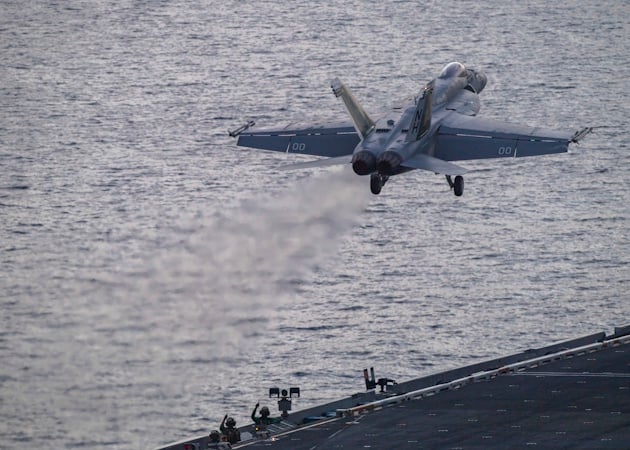
Despite the talk of peace, the reality on the water remains violent and decisive. On the morning of May 6, while the President prepared for his press engagement, a U.S. Navy F/A-18 Super Hornet launched from the USS Abraham Lincoln (CVN 72) took aim at an Iranian-flagged oil tanker, the M/T Hasna.
According to a statement from U.S. Central Command (CENTCOM), the Hasna was unladen but was attempting to violate the naval blockade by sailing toward an Iranian port in the Gulf of Oman. After multiple radio warnings were ignored, the Super Hornet used its 20mm M61 Vulcan cannon to disable the tanker’s rudder, effectively neutralizing the vessel without sinking it or causing an environmental disaster.
This “kinetic enforcement” of the blockade is part of Project Freedom, an operation designed to demonstrate that the U.S. can and will control access to Iranian ports regardless of the status of the Strait of Hormuz. Though Trump officially “paused” the offensive portion of the operation on Tuesday to allow for negotiations, CENTCOM has made it clear that the blockade is “non-negotiable” until a signature is on the page.
The Economic Toll: Gas, Crude, and the Survival of the Global Supply Chain
 The war has not just been fought with missiles and cannons; it is being felt at every gas pump and airport terminal in the world. The closure of the Strait of Hormuz—which typically carries 20% of the world’s crude oil and liquid natural gas (LNG)—has sent shockwaves through the global economy.
1. Crude Oil Prices
The spot price for Brent Crude has been a rollercoaster. At the start of the week, it spiked toward $120 per barrel. However, following the news of the “one-page deal” and the President’s optimistic comments today, prices retraced to approximately $100 per barrel. Analysts at Goldman Sachs suggest that a permanent reopening of the Strait could see a further $15 drop, while a resumption of hostilities could send prices past the $150 mark.
2. Gasoline and Diesel
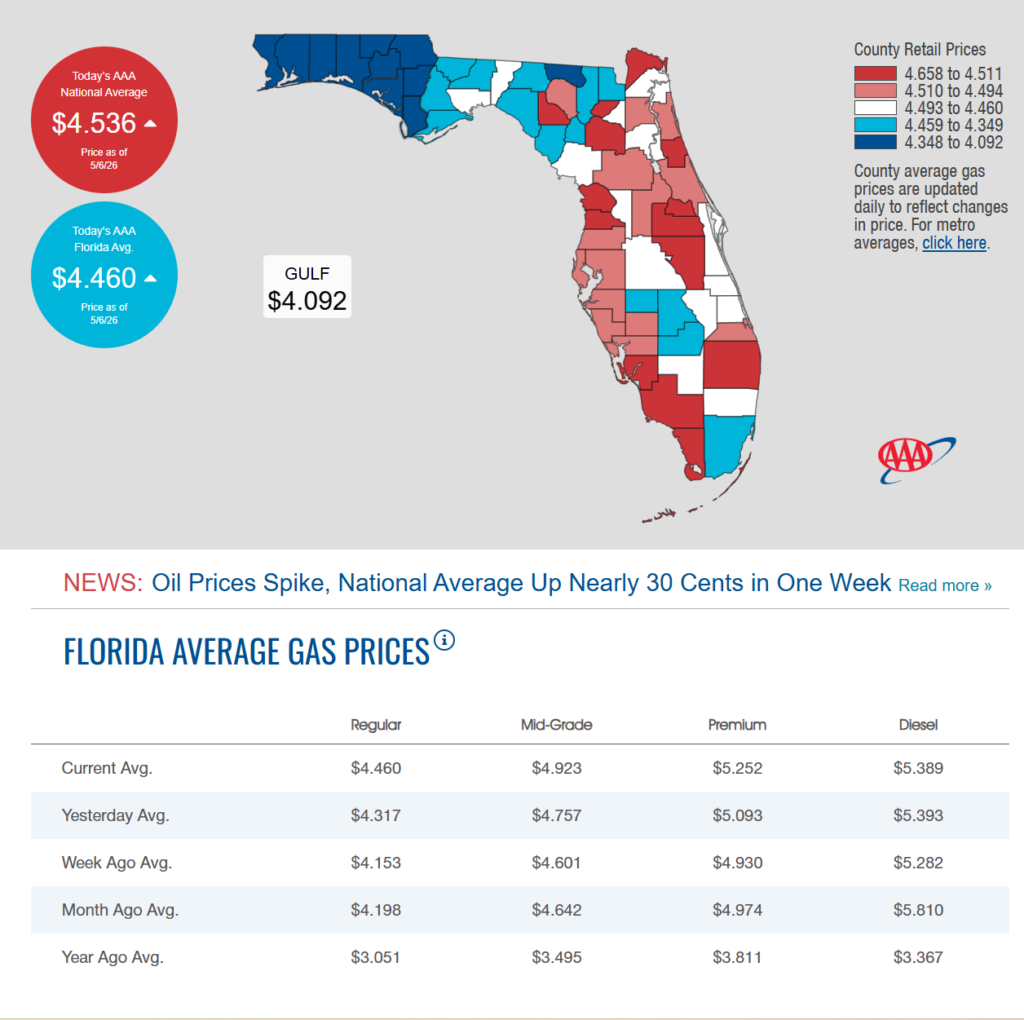
In the United States, the average price of a gallon of gasoline has surged to nearly $4.50, a 50% increase since the conflict began on February 28. Diesel prices have followed a similar trajectory, impacting the cost of trucking and logistics, which in turn has spiked food prices. The “war surcharge” on shipping and insurance has made nearly every consumer good more expensive.
3. Jet Fuel and Aviation
The aviation industry is perhaps the hardest hit. With jet fuel prices skyrocketing and flight paths over the Persian Gulf and parts of the Indian Ocean deemed “high risk,” ticket prices have doubled for international routes. Major carriers have reported a significant contraction in quarterly earnings, leading to calls for a government-subsidized fuel relief package if the war extends into the summer.
International Mediation: The China-Pakistan Axis
As the U.S. applies “maximum pressure” through its blockade and the threat of renewed bombing, other global powers are working feverishly to prevent a total regional collapse. Chinese Foreign Minister Wang Yi has met with Iranian officials, expressing that China is “deeply distressed” by the losses suffered by the Iranian people and the disruption of regional peace.
Pakistan has emerged as the primary neutral ground for these talks. The failed April negotiations in Islamabad, led by Vice President Vance, laid the groundwork for the current “one-page” approach. Pakistani Prime Minister Shehbaz Sharif remains “cautiously hopeful,” even as his country deals with the influx of refugees and the economic fallout of the maritime shutdown.
Conclusion: The Week Ahead
The President has set a deadline of “one week” for the Iranians to respond to the 14-point memorandum. Between now and then, the world remains in a state of high-tensile wait. If the deal is signed, it will be heralded as a masterclass in coercive diplomacy. If it fails, the “bombing” that the President promised at the UFC presser will likely target Iran’s remaining nuclear infrastructure and command-and-control centers, potentially turning a contained conflict into a generational war.
For now, the M/T Hasna sits disabled in the Gulf of Oman—a floating monument to the current stalemate between the signature and the sword.
Sources Used and Links:
- U.S. Central Command (CENTCOM): U.S. Forces Disable Vessel in Gulf of Oman
- PBS News: U.S. and Iran appear to move closer to ending their war
- Navy Times: US forces fire at, disable Iran-flagged tanker
- Times of Israel: US, Iran said closing in on framework for permanent deal
- The Guardian: Rubio insists US is ‘very fortunate’ as Iran war pushes gas price near $4.50
- Goldman Sachs Insights: How Will the Iran Conflict Impact Oil Prices?
- Bangor Daily News (via Palm Beach Post): Trump watches UFC fights ‘impassively’ after Iran talks unsuccessful
- Hindustan Times: US disables Iran oil tanker attempting to break Hormuz blockade
Disclaimer
Artificial Intelligence Disclosure & Legal Disclaimer
AI Content Policy.
To provide our readers with timely and comprehensive coverage, South Florida Reporter uses artificial intelligence (AI) to assist in producing certain articles and visual content.
Articles: AI may be used to assist in research, structural drafting, or data analysis. All AI-assisted text is reviewed and edited by our team to ensure accuracy and adherence to our editorial standards.
Images: Any imagery generated or significantly altered by AI is clearly marked with a disclaimer or watermark to distinguish it from traditional photography or editorial illustrations.
General Disclaimer
The information contained in South Florida Reporter is for general information purposes only.
South Florida Reporter assumes no responsibility for errors or omissions in the contents of the Service. In no event shall South Florida Reporter be liable for any special, direct, indirect, consequential, or incidental damages or any damages whatsoever, whether in an action of contract, negligence or other tort, arising out of or in connection with the use of the Service or the contents of the Service.
The Company reserves the right to make additions, deletions, or modifications to the contents of the Service at any time without prior notice. The Company does not warrant that the Service is free of viruses or other harmful components.