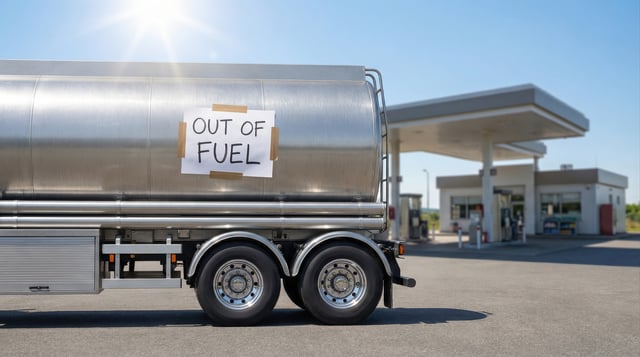
The spring of 2026 has brought with it a structural shock to the global economy that few predicted would be this severe. As of May 2, 2026, the transportation sector—the very arteries of global commerce—is experiencing a level of turbulence not seen since the early 1970s. Following the outbreak of hostilities involving the United States, Israel, and Iran on February 28, 2026, the energy market has been thrown into a tailspin. With the effective closure of the Strait of Hormuz, through which nearly 20% of the world’s oil and gas flows, the cost of moving people and goods has transitioned from a manageable expense to an existential threat.
Aviation in the Crosshairs: The End of Cheap Travel?
For the airline industry, 2026 was supposed to be a year of stabilization. Instead, it has become a year of drastic survival. According to data from the International Air Transport Association (IATA), global average jet fuel prices surged to $195.19 per barrel in late March, a staggering 96.4% increase in just thirty days.
The Profit Margin Paradox
Before the crisis, the industry was projecting record earnings. However, the reality of May 2026 is far bleaker. IATA has warned that while total revenues might look high due to increased ticket prices, net profit margins have withered to roughly 3.9%. This “structurally fragile profitability” means that airlines have virtually no cushion to absorb the spike in Jet A-1 fuel costs.
United Airlines CEO Scott Kirby recently issued a memo preparing the company for oil prices to reach $175 per barrel and remain elevated through 2027. If this projection holds, United’s annual fuel bill could double its best-ever annual profit, creating an $11 billion headwind. Consequently, United has already begun cutting unprofitable flights and suspending service to high-risk or low-demand regions, including Tel Aviv and Dubai.

The Rise of the Stealth Surcharge
For travelers, the most visible impact is the return of the fuel surcharge, often in “stealth” form. Airlines are moving away from simple fare increases to complex, distance-based grids and explicit surcharges.
- Emirates has implemented surcharges as high as $1,023 per leg for business and first-class travel to the Americas.
- Asiana Airlines is charging up to $405 per leg for North American business-class routes.
- Air France-KLM has labeled these as “contractual adjustments,” adding approximately $54 to long-haul economy round-trips.
These surcharges are designed to be flexible; they are reviewed monthly, allowing airlines to react to the extreme volatility of the 2026 market without having to refile entire fare structures every week.
The Ground Game: Diesel Distress in Trucking
While airlines dominate the headlines, the backbone of the domestic economy—the trucking industry—is facing a “full-blown financial crisis.” Diesel fuel, the lifeblood of freight, peaked at over $5.80 per gallon in April 2026.
The Technological Divide
The current crisis has created a massive performance gap between legacy fleets and modern operations. According to Fleet Advantage, a fleet running 100 trucks from the 2022 model year is now paying over $1.2 million more per year in expenses compared to a fleet using 2028-spec high-efficiency equipment. For many small-to-mid-sized carriers, this cost burden is insurmountable.
The 3PL provider TA Services reported that spot load requests grew by 70% year-over-year in the first quarter of 2026. Shippers, desperate to move goods, are finding that contract rates are no longer honored as carriers choose the highest-paying “spot” loads to cover their fuel costs. This has created a bottleneck in flatbed and refrigerated freight, sectors essential for construction and food distribution.
The Domino Effect: From Gas Pump to Grocery Store
The “domino effect” of these rising prices is not a future projection—it is the current reality of the 2026 consumer. Because nearly everything we consume is moved at least once by a truck or a plane, the fuel shock is acting as a massive, regressive tax on the global population.
Food and Fertilizer
The closure of the Strait of Hormuz hasn’t just stopped oil; it has choked the trade of seaborne fertilizer. With fertilizer costs jumping by one-third in early 2026, the World Bank has warned of a 24% jump in global commodity prices. This leads to a second wave of inflation: even if fuel prices were to stabilize tomorrow, the cost of the next harvest has already been baked in at a higher price point.
Demand Destruction
Economists are now tracking a phenomenon known as “demand destruction.” As gasoline crossed the $4.00 per gallon mark in the U.S. this spring, consumer sentiment dropped sharply. Analysts at Bloomberg Intelligence have slashed 2026 earnings growth forecasts for consumer staples to just 2.2%, down from an original estimate of 7%. Major retailers like Nike have already predicted sales drops of up to 4% as households divert their budgets to pay for heating and commuting.
Strategic Resets: The 2026 Pivot
As a response to these permanent shifts, the industry is undergoing two major strategic resets: Nearshoring and Sustainable Aviation Fuel (SAF).
- The Nearshoring Boom: Long-haul logistics are becoming prohibitively expensive. In response, North American companies are moving production closer to the final consumer. Mexico has become the center of this shift, with the Laredo freight corridor handling record volumes as companies abandon Asian manufacturing in favor of regional trucking routes that are less exposed to global maritime shocks.
- The SAF Hedge: While Sustainable Aviation Fuel currently accounts for less than 1% of total consumption, it is no longer being viewed merely as an environmental goal. In 2026, airlines are treating SAF as a strategic hedge. Because SAF is not tied to the price of crude oil, it offers a way for carriers to decouple a portion of their operating costs from Middle Eastern geopolitics.
Conclusion: A New Economic Geography
The fuel crisis of 2026 has proven that the era of “frictionless” global trade is over. The future of airlines is one of higher costs, fewer routes, and a “premiumization” of travel where only the highest-margin flights remain viable. For deliveries, the future is regionalized and high-tech, as the cost of “older” logistics models becomes too heavy to bear.
The domino effect that started at the Strait of Hormuz has reached every kitchen table in the world. As we look toward 2027, the primary question for businesses is no longer about growth, but about resilience in a world where the price of energy is no longer a footnote, but the lead story.
Sources Used and Links:
- United Airlines Predicts Oil Prices to Remain Elevated Through 2027 | TravelPulse (March 21, 2026) – https://www.travelpulse.com/news/airlines-airports/united-airlines-predicts-oil-prices-to-remain-elevated-through-2027-plans-flight-reductions
- Rising Jet Fuel Prices An Emerging US Airline Ratings Risk | S&P Global (March 5, 2026) – https://www.spglobal.com/ratings/en/regulatory/article/rising-jet-fuel-prices-an-emerging-us-airline-ratings-risk-s101673545
- Surge in Diesel Prices Tightens U.S. Trucking Capacity | SupplyChainBrain (April 29, 2026) – https://www.supplychainbrain.com/articles/43971-surge-in-diesel-prices-tightens-us-trucking-capacity
- World Bank Warns: Energy Prices May Surge 24% In 2026 | YouTube / LiveMint (April 29, 2026) – https://www.youtube.com/watch?v=DuVyf_0KqWo
- EIA Hikes US Jet Fuel Price Outlook by 30% | Argus Media (April 7, 2026) – https://www.argusmedia.com/en/news-and-insights/latest-market-news/2810932-eia-hikes-us-jet-fuel-price-outlook-by-30pc
- Short-Term Energy Outlook – April 2026 | U.S. Energy Information Administration (EIA) – https://www.eia.gov/outlooks/steo/archives/apr26.pdf
- Rising Fuel Costs Reshape Aviation and Global Tourism | Tourism and Society Think Tank (April 7, 2026) – https://eng.tourismandsocietytt.com/news-and-newsletter/2026/2026-april/ultimas-noticias/rising-fuel-costs-reshape-aviation-and-global-tourism
- JetBlue to Cut Capacity, Increase Ticket Prices as Jet Fuel Costs Surge | Financial Express (April 28, 2026) – https://www.financialexpress.com/business/airlines-aviation/jetblue-to-cut-capacity-increase-ticket-prices-as-jet-fuel-costs-surge-widens-quarterly-loss/4221061/
- Soaring Gas Prices and Disrupted Supply Chains | Darden Report Online (March 27, 2026) – https://news.darden.virginia.edu/2026/03/27/soaring-gas-prices-and-disrupted-supply-chains-will-ripple-out-to-increase-costs-in-every-store-and-sector-of-the-economy/
- The Growing List of Airlines Adding Fuel Surcharges | Travel Market Report (April 8, 2026) – https://www.travelmarketreport.com/air/articles/the-growing-list-of-airlines-adding-fuel-surcharges-this-month
- Airlines Add Fuel Surcharges as Jet Costs Surge | eTurboNews (April 7, 2026) – https://eturbonews.com/airlines-fuel-surcharges-2026-flight-prices-rise/
- US–Mexico Cross-Border Logistics: Nearshoring Trends for 2026 | The Cooperative Logistics Network (December 15, 2025) – https://blog.thecooperativelogisticsnetwork.com/2025/12/15/why-us-mexico-cross-border-logistics-will-define-2026-freight-opportunities/
- Supply Shock, Demand Destruction Cause Consumer Outlook Cuts | Bloomberg Professional (April 9, 2026) – https://www.bloomberg.com/professional/insights/markets/supply-shock-demand-destruction-cause-consumer-outlook-cuts/
Disclaimer
Artificial Intelligence Disclosure & Legal Disclaimer
AI Content Policy.
To provide our readers with timely and comprehensive coverage, South Florida Reporter uses artificial intelligence (AI) to assist in producing certain articles and visual content.
Articles: AI may be used to assist in research, structural drafting, or data analysis. All AI-assisted text is reviewed and edited by our team to ensure accuracy and adherence to our editorial standards.
Images: Any imagery generated or significantly altered by AI is clearly marked with a disclaimer or watermark to distinguish it from traditional photography or editorial illustrations.
General Disclaimer
The information contained in South Florida Reporter is for general information purposes only.
South Florida Reporter assumes no responsibility for errors or omissions in the contents of the Service. In no event shall South Florida Reporter be liable for any special, direct, indirect, consequential, or incidental damages or any damages whatsoever, whether in an action of contract, negligence or other tort, arising out of or in connection with the use of the Service or the contents of the Service.
The Company reserves the right to make additions, deletions, or modifications to the contents of the Service at any time without prior notice. The Company does not warrant that the Service is free of viruses or other harmful components.