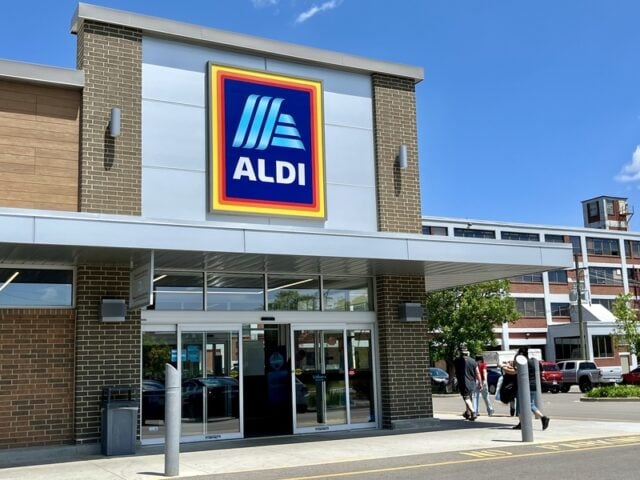
In the competitive landscape of the 2026 grocery market, the distinction between “discount” and “premium” has largely evaporated, replaced by a universal demand for transparency and health. At the center of this revolution sits ALDI, a retailer that once built its reputation solely on rock-bottom prices but has since become the benchmark for “Clean Label” standards. The cornerstone of this transformation was a landmark decision to remove over forty controversial ingredients from its entire private label assortment—a move that redefined the relationship between affordability and nutritional integrity.
The Genesis of the Clean Label Initiative
The journey toward a cleaner pantry began over a decade ago when Aldi US recognized a seismic shift in consumer psychology. Shoppers were no longer just looking at the price tag; they were scrutinizing the fine print on the back of the box. By late 2015, Aldi had successfully removed all certified synthetic colors, added Monosodium Glutamate (MSG), and partially hydrogenated oils (PHOs) from its exclusive brand food products, which make up roughly 90% of its inventory.
This was not a superficial marketing gimmick. Unlike traditional supermarkets that carry thousands of third-party brands, Aldi’s business model relies on its own labels (such as Simply Nature, Fit & Active, and Specially Selected). This gives the retailer unprecedented control over its supply chain, allowing it to mandate strict ingredient standards across its entire ecosystem without the bureaucratic friction of negotiating with global food conglomerates.
The Anatomy of the 40+ Ingredients
The “40+ ingredients” removed by Aldi can be categorized into three primary groups, each targeted for its perceived or proven negative impact on human health and wellness.

1. Certified Synthetic Colors
Synthetic dyes have long been used to make processed foods appear more vibrant and appealing. However, increasing evidence has linked these additives to behavioral issues in children, including hyperactivity and Attention Deficit Hyperactivity Disorder (ADHD) (Warner, 2024). Aldi’s ban covered the full spectrum of FDA-certified colors, replacing them with natural alternatives derived from beet juice, turmeric, and paprika. The removed dyes included:
- Red 40, Red 3, and Red 2: Often found in cereals and fruit snacks.
- Yellow 5 and Yellow 6: Common in cheeses and crackers.
- Blue 1 and Blue 2: Frequent in confectionery and beverages.
- Green 3, Orange B, and Citrus Red 2.
2. Partially Hydrogenated Oils (PHOs)
Known as the primary source of artificial trans fats, PHOs were once the industry standard for extending the shelf life of baked goods and snacks. However, the scientific consensus identifies trans fats as a major contributor to cardiovascular disease (Warner, 2024). By eliminating PHOs from its private labels, Aldi removed a significant risk factor from its customers’ diets long before federal mandates forced the hand of other manufacturers.
3. Added Monosodium Glutamate (MSG)
While MSG is a naturally occurring amino acid found in foods like tomatoes and parmesan, its use as a concentrated additive has been a point of contention for sensitive consumers. Aldi’s decision to remove added MSG from its core products addressed concerns regarding “Chinese Restaurant Syndrome” and general food sensitivities, further aligning the brand with “whole food” philosophies.
The Scientific Imperative: Why Ingredients Matter
The push for cleaner labels is rooted in a growing body of research highlighting the long-term health consequences of ultra-processed food (UPF) additives. Recent studies indicate that artificial colorants and preservatives can increase the risk of mental health disorders and metabolic syndrome (Warner, 2024). Furthermore, the degree of processing in children’s foods is a critical factor in nutritional quality; many UPFs fail to meet the nutrient profile criteria recommended by global health organizations (Richonnet et al., 2021).
By removing these markers of ultra-processing, Aldi effectively improved the Nutri-Score and health value of its products. This is particularly vital in the context of the 2026 market, where environmental and health reporting has become a standard expectation for retailers (Deconinck et al., 2023).
| Ingredient Category | Scientific Concern | Aldi’s Natural Alternative |
| Synthetic Dyes | Linked to ADHD and behavioral issues in children. | Fruit and vegetable juices (e.g., beet, carrot). |
| Trans Fats (PHOs) | Increased risk of heart disease and systemic inflammation. | Natural fats and non-hydrogenated vegetable oils. |
| Added MSG | Potential for headaches and allergic-type reactions. | Natural seasonings, sea salt, and spices. |
Market Disruption: The “Hybrid Consumer”
Aldi’s strategy tapped into the rise of the “Hybrid Consumer”—shoppers with higher incomes who still seek value but refuse to compromise on quality or ethics (Katt & Meixner, 2020). By offering “Whole Foods quality at Walmart prices,” Aldi successfully siphoned market share from both ends of the retail spectrum.
Research into purchase intentions suggests that for many modern consumers, health consciousness and environmental concern now carry more weight than price consciousness alone (Katt & Meixner, 2020). Aldi’s ingredient removal acted as a “trust signal,” assuring shoppers that a low price did not signify “cheap” or “dangerous” ingredients. This trust has been further solidified by Aldi’s commitment to other sustainability goals, such as moving toward 100% cage-free egg sourcing by 2026 (Caputo & Sun, 2026).
Operational Execution: Reformulating Without Inflation
One of the most impressive feats of Aldi’s initiative was its ability to maintain its low-price leadership despite the higher costs typically associated with natural ingredients. This was achieved through:
- Scale: By applying these standards across all 2,000+ US stores, Aldi leveraged massive purchasing power to lower the cost of natural dyes and oils.
- Simplification: Removing complex chemical additives often simplifies the manufacturing process, reducing the number of suppliers needed for a single product.
- Transparency: Utilizing blockchain-like technologies for supply chain traceability allows Aldi to ensure compliance with its strict ingredient list while maintaining operational efficiency (Petropoulos et al., 2025).
Looking Ahead: The Grocery Landscape in 2026
As we look at the grocery industry today in May 2026, Aldi’s 2015 “Clean Label” pivot appears prophetic. What was once a bold, differentiating move has become the industry floor. Retailers who failed to reformulate their private labels have found themselves marginalized by a consumer base that views artificial additives as obsolete.
Aldi continues to push boundaries, recently expanding its bans to include specific synthetic preservatives like BHA and BHT in certain product lines and eliminating PFAS (forever chemicals) from its food packaging (Illinois EPA, 2024). These efforts reflect a holistic approach to “clean living” that encompasses not just the food itself, but the containers it comes in and the environment it was sourced from.
Conclusion
Aldi’s decision to remove over 40 ingredients from its private labels was a masterclass in brand evolution. It proved that a discount retailer could lead the way in public health, challenging the notion that “healthy” must always mean “expensive.” By prioritizing the long-term well-being of its customers over the short-term convenience of cheap chemical additives, Aldi secured its place as a leader in the global grocery market—a position it continues to hold firmly as we navigate the health-conscious world of 2026.
Sources Used and Links:
- Archives of Disease in Childhood (BMJ): Artificial food additives: hazardous to long-term health?
- MDPI (Nutrients): Nutritional Quality and Degree of Processing of Children’s Foods Assessment on the French Market
- MDPI (Foods): Analysis of the Purchase Intention for Organic Food in a Discount Setting
- Oxford Academic (European Review of Agricultural Economics): The rise of environmental impact reporting in food systems
- Taylor & Francis (arXiv/Journal of Production Research): Operations & Supply Chain Management: Principles and Practice
- MSU College of Agriculture and Natural Resources: Global Cage-Free Markets Report – March 2026
- Illinois Environmental Protection Agency: Illinois Materials Management & Recycling Opportunities
References
Caputo, V., & Sun, H. (2026). Global cage-free markets: Hospitality sector report. MSU College of Agriculture and Natural Resources.
Deconinck, K., Jansen, M., & Barisone, C. (2023). Fast and furious: The rise of environmental impact reporting in food systems. European Review of Agricultural Economics, 50(4), 1310–1337. https://doi.org/10.1093/erae/jbad018
Cited by: 43
Katt, F., & Meixner, O. (2020). Is it all about the price? An analysis of the purchase intention for organic food in a discount setting by means of structural equation modeling. Foods, 9(4), 458. https://doi.org/10.3390/foods9040458
Cited by: 126
Petropoulos, F., Akkermans, H., Aksin, O. Z., et al. (2025). Operations & supply chain management: Principles and practice. arXiv. https://doi.org/10.48550/arxiv.2503.05749
Cited by: 34
Richonnet, C., Mosser, F., Favre, E., Robert, M., Martin, F., & Thiebaut, I. (2021). Nutritional quality and degree of processing of children’s foods assessment on the French market. Nutrients, 14(1), 171. https://doi.org/10.3390/nu14010171
Cited by: 37
Warner, J. O. (2024). Artificial food additives: Hazardous to long-term health? Archives of Disease in Childhood, 109, 882–885. https://doi.org/10.1136/archdischild-2023-326565
Cited by: 95
Disclaimer
Artificial Intelligence Disclosure & Legal Disclaimer
AI Content Policy.
To provide our readers with timely and comprehensive coverage, South Florida Reporter uses artificial intelligence (AI) to assist in producing certain articles and visual content.
Articles: AI may be used to assist in research, structural drafting, or data analysis. All AI-assisted text is reviewed and edited by our team to ensure accuracy and adherence to our editorial standards.
Images: Any imagery generated or significantly altered by AI is clearly marked with a disclaimer or watermark to distinguish it from traditional photography or editorial illustrations.
General Disclaimer
The information contained in South Florida Reporter is for general information purposes only.
South Florida Reporter assumes no responsibility for errors or omissions in the contents of the Service. In no event shall South Florida Reporter be liable for any special, direct, indirect, consequential, or incidental damages or any damages whatsoever, whether in an action of contract, negligence or other tort, arising out of or in connection with the use of the Service or the contents of the Service.
The Company reserves the right to make additions, deletions, or modifications to the contents of the Service at any time without prior notice. The Company does not warrant that the Service is free of viruses or other harmful components.