By Terri Malloy
Mayo Clinic researchers report that a highly targeted, noninvasive form of radiation therapy reduced episodes of a life-threatening heart rhythm disorder by nearly 80% in a first-in-human early feasibility study of patients with few remaining treatment options.
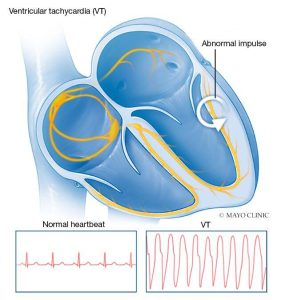
The findings, presented as late-breaking research at the Heart Rhythm Society conference on April 26 and published in the Heart Rhythm Journal, suggest proton beam therapy could offer a new approach for patients with ventricular tachycardia (VT), a dangerous, fast heart rhythm disorder that can lead to sudden cardiac death.
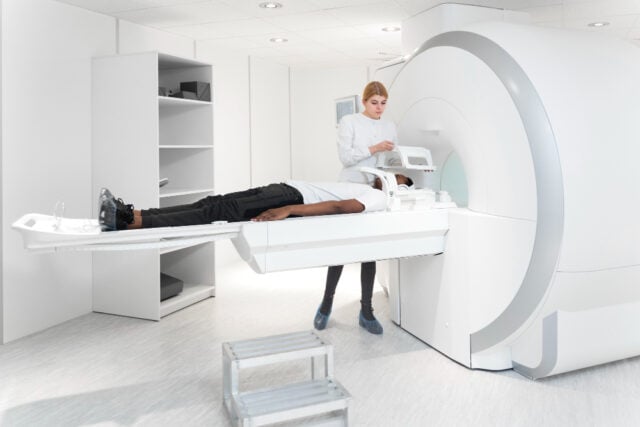
Researchers treated seven patients with advanced heart disease and difficult-to-treat VT who had not responded to prior catheter ablations and antiarrhythmic medications. Patients experienced a 79% reduction in VT episodes, decreasing from an average of 7.2 episodes per month before treatment to 1.5 afterward. The therapy was delivered in a single, noninvasive session with proton beams directed to the area of the heart causing VT.

There were no serious treatment-related side effects during follow-up of up to two years, and key measures of heart function remained largely stable.
“These patients with challenging arrhythmias often run out of treatment options,” says Konstantinos Siontis, M.D., a Mayo Clinic cardiologist and heart rhythm specialist who is the study’s lead investigator. “We’re seeing that a completely noninvasive approach may significantly reduce episodes of ventricular tachycardia.”
Cardiac radioablation is an emerging treatment that uses radiation to target the areas of the heart responsible for abnormal electrical signals causing VT. This study builds on extensive previous preclinical Mayo Clinic research evaluating the use of proton beam therapy for this purpose. Compared with conventional radiation approaches, proton therapy allows for more precise targeting, helping limit radiation exposure to nearby healthy heart tissue and surrounding organs.
“These findings are encouraging because they demonstrate that we can precisely target the heart tissue responsible for VT while minimizing radiation exposure to the rest of the heart,” says Kenneth Merrell, M.D., a radiation oncologist at Mayo Clinic and study co-author. “This is an early, first-in-human experience using proton therapy for cardiac radioablation.”
Patients in the study had advanced heart failure and remained at risk for complications related to their underlying disease. Some participants died or required a heart transplant during follow-up due to their advanced heart disease.
“Our results support continued investigation of proton beam therapy in larger clinical trials,” Dr. Siontis says. “The goal is to better understand which patients may benefit most and to confirm long-term safety and effectiveness.”
A complete list of authors is available in the study.
Disclaimer
Artificial Intelligence Disclosure & Legal Disclaimer
AI Content Policy.
To provide our readers with timely and comprehensive coverage, South Florida Reporter uses artificial intelligence (AI) to assist in producing certain articles and visual content.
Articles: AI may be used to assist in research, structural drafting, or data analysis. All AI-assisted text is reviewed and edited by our team to ensure accuracy and adherence to our editorial standards.
Images: Any imagery generated or significantly altered by AI is clearly marked with a disclaimer or watermark to distinguish it from traditional photography or editorial illustrations.
General Disclaimer
The information contained in South Florida Reporter is for general information purposes only.
South Florida Reporter assumes no responsibility for errors or omissions in the contents of the Service. In no event shall South Florida Reporter be liable for any special, direct, indirect, consequential, or incidental damages or any damages whatsoever, whether in an action of contract, negligence or other tort, arising out of or in connection with the use of the Service or the contents of the Service.
The Company reserves the right to make additions, deletions, or modifications to the contents of the Service at any time without prior notice. The Company does not warrant that the Service is free of viruses or other harmful components.