The Precipice: April 2026
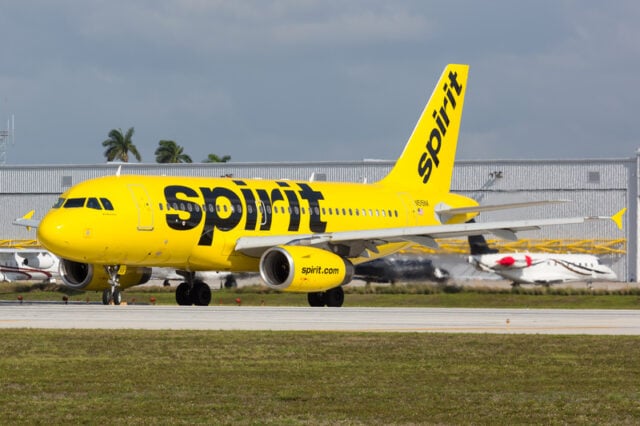
As of Tuesday, April 21, 2026, the familiar bright yellow tails of Spirit Airlines are teetering on the edge of a permanent grounded status. Following years of financial turbulence, a blocked merger, and a grueling “Chapter 22” double-bankruptcy cycle, the United States government is now facing a pivotal decision: allow the nation’s largest ultra-low-cost carrier (ULCC) to liquidate or step in with a historic federal rescue package.
The atmosphere in Washington is thick with tension. Sources indicate that Spirit has floated a desperate proposal to the U.S. government, offering an equity stake in the airline in exchange for an emergency cash infusion. This “equity-for-survival” play marks the most dramatic moment in American aviation since the CARES Act of the early 2020s.
The Perfect Storm: Fuel, War, and Bankruptcy
To understand how Spirit arrived at this moment, one must look at the devastating “perfect storm” of 2025 and early 2026. While Spirit successfully emerged from its first Chapter 11 filing in early 2025, that reorganization was largely a “balance sheet reset” that failed to address deep-seated operational inefficiencies.
By August 2025, the carrier was forced back into bankruptcy court for a second time. The restructuring plan for this “Chapter 22” was built on the assumption of stabilizing jet fuel prices and a return to domestic travel growth. However, the geopolitical landscape shifted violently in February 2026 with the outbreak of conflict in Iran. The subsequent closure of the Strait of Hormuz and instability in global oil markets sent jet fuel prices skyrocketing.

By mid-April 2026, jet fuel hit averages of $4.60 per gallon—nearly double the pre-war rate. For an airline like Spirit, which operates on razor-thin margins and caters to price-sensitive leisure travelers, this spike was catastrophic. JPMorgan analysts recently calculated that at these prices, Spirit’s operating margin has collapsed to a projected negative 20% for the 2026 fiscal year. With a cash balance of only roughly $337 million remaining against hundreds of millions in looming fuel and debt obligations, the airline’s runway has effectively ended.
The “Spirit Effect” and Consumer Choice
Economists and travel industry experts have long pointed to the “Spirit Effect”—the phenomenon where the presence of a ULCC in a market forces larger legacy carriers to lower their own fares. If Spirit were to liquidate, the ripple effects on the American consumer would be immediate and severe.
In hubs like Orlando (MCO) and Fort Lauderdale (FLL), Spirit accounts for a massive share of passenger traffic. In 2025, Spirit carried over 6 million passengers through Orlando alone, making it the airport’s third-largest carrier. A total shutdown would leave millions of travelers stranded and remove the primary downward pressure on domestic airfares.
Without Spirit, travel experts warn that “budget” flying might become a relic of the past. The remaining “Big Four” (Delta, United, American, and Southwest) would face significantly less competition for price-sensitive routes, potentially leading to a 20-30% increase in average domestic ticket prices by the end of 2026.
The Political Debate: Trump vs. The “Moral Hazard”
The possibility of a bailout has become a political lightning rod. President Donald Trump, speaking in a CNBC interview on April 21, suggested that federal intervention might be necessary to protect the roughly 14,000 jobs Spirit provides.
“Spirit’s in trouble and I’d love somebody to buy Spirit,” the President stated. “Maybe the federal government should help that one out.” This signal from the White House has put the Department of Transportation (DOT) on high alert, with Transportation Secretary Sean Duffy reportedly reviewing options for a potential lifeline.
However, the opposition is vocal. Critics argue that a Spirit bailout represents a classic “moral hazard.” They contend that Spirit’s failure is not merely a result of external shocks like fuel prices, but a fundamental flaw in its business model and a history of mismanagement.
“The U.S. government shouldn’t bail out Spirit,” says aviation analyst Scott Hamilton. “Spirit was such a basket case even before the current Iran War began. Giving them hundreds of millions now would be throwing good money after bad.”
The Pratt & Whitney Engine Crisis
Beyond fuel and finance, Spirit has been plagued by a technical nightmare: the Pratt & Whitney Geared Turbofan (GTF) engine recalls. Since late 2023, Spirit has been forced to ground dozens of its A320neo aircraft due to microscopic contaminants in the engine parts.
At its peak, more than 40 planes—nearly a fifth of Spirit’s fleet—were sitting idle. While Pratt & Whitney has provided some compensation, the lost revenue and the inability to deploy its most fuel-efficient aircraft during a fuel crisis served as a knockout blow to Spirit’s recovery efforts. The supply chain issues associated with these engines have persisted into 2026, leaving Spirit with a “glider” fleet that consumes cash while generating zero revenue.
The Economic Reality of Liquidation
If Washington declines a bailout, the liquidation process would likely begin within days. This would involve:
- Mass Layoffs: 14,000 employees, including pilots, flight attendants, and ground crew, would lose their jobs.
- Asset Fire Sale: Spirit’s fleet of Airbus aircraft would likely be snatched up by competitors or lessors, though the grounded A320neos remain a liability.
- Consumer Losses: Thousands of travelers with unredeemed vouchers or future bookings would be left as “unsecured creditors,” likely receiving pennies on the dollar for their lost tickets.
Credit card companies are already bracing for a surge in chargeback requests, and travel insurance providers have warned that policies purchased after the liquidation rumors began likely won’t cover the losses.
The Path Forward: Bailout, Merger, or End?
As of this evening, the DOT is meeting with budget carrier executives to discuss a “managed transition.” One possibility is a government-backed merger, though the Justice Department’s successful block of the JetBlue-Spirit merger in 2024 remains a significant legal hurdle. Alternatively, the government could provide a “bridge loan” to keep the airline operational through the busy summer travel season, hoping that fuel prices stabilize or a private buyer emerges.
For now, Spirit continues to fly. But for the millions of Americans who rely on the “Yellow Bus” to visit family or take a vacation, the future has never looked more uncertain. The decision made in the coming hours will define the American aviation landscape for the next decade.
Sources Used and Links:
- Associated Press: Trump raises prospect of federal support or merger as Spirit Airlines struggles with costs and debt (April 21, 2026) – Link
- TravelTourister: Spirit Airlines Under Liquidation Watch: Emergency Equity Stake Offered to US Govt (April 21, 2026) – Link
- NewsWest9: Spirit Airlines should ‘maybe’ get help from the federal government, Trump says (April 21, 2026) – Link
- Leeham News and Analysis: Pontifications: Don’t give Spirit a bailout (April 19, 2026) – Link
- Washington Examiner: Spirit Airlines future is uncertain as bankruptcy pressures mount (April 17, 2026) – Link
- TravelPulse: Spirit Airlines Could Liquidate Amid Surging Fuel Costs, Reports Say (April 16, 2026) – Link
- WFTV Orlando: Spirit Airlines reportedly on the verge of a shut-down, here’s how it could impact Orlando (April 17, 2026) – Link
- Inc. Magazine: Spirit Airlines Could Shut Down Within Days. What Travelers Need to Know (April 17, 2026) – Link
- Holland & Knight: 2025 Aviation Bankruptcy Update (February 5, 2026) – Link
Disclaimer
Artificial Intelligence Disclosure & Legal Disclaimer
AI Content Policy.
To provide our readers with timely and comprehensive coverage, South Florida Reporter uses artificial intelligence (AI) to assist in producing certain articles and visual content.
Articles: AI may be used to assist in research, structural drafting, or data analysis. All AI-assisted text is reviewed and edited by our team to ensure accuracy and adherence to our editorial standards.
Images: Any imagery generated or significantly altered by AI is clearly marked with a disclaimer or watermark to distinguish it from traditional photography or editorial illustrations.
General Disclaimer
The information contained in South Florida Reporter is for general information purposes only.
South Florida Reporter assumes no responsibility for errors or omissions in the contents of the Service. In no event shall South Florida Reporter be liable for any special, direct, indirect, consequential, or incidental damages or any damages whatsoever, whether in an action of contract, negligence or other tort, arising out of or in connection with the use of the Service or the contents of the Service.
The Company reserves the right to make additions, deletions, or modifications to the contents of the Service at any time without prior notice. The Company does not warrant that the Service is free of viruses or other harmful components.