WASHINGTON — As the world enters the seventh week of the most significant military engagement in the Middle East in recent history, whispers of a dramatic second high-stakes summit between President Donald J. Trump and Iranian leadership are circulating through the corridors of power in Washington and Islamabad. Following the abrupt collapse of the peace talks in Islamabad over the weekend, which saw Vice President J.D. Vance and special envoy Jared Kushner depart without a formal agreement, the global community is now watching the clock as the United States military begins its aggressive “enforcement phase” of a naval blockade in the Strait of Hormuz.
The “2026 Iran War,” which officially ignited on February 28 following a massive joint U.S.-Israeli air campaign targeting Iran’s nuclear and military command infrastructure, has reached a critical inflection point. While the initial “shock and awe” phase decimated several of Iran’s above-ground enrichment facilities and led to reports of the death of Supreme Leader Ali Khamenei, the subsequent maritime conflict in the Strait of Hormuz has paralyzed global trade and sent shockwaves through every major stock and commodity exchange on the planet.
The Islamabad Breakdown and the Rumor of a Redux
On Sunday, April 12, Vice President J.D. Vance stood on the tarmac in Islamabad, Pakistan—the primary mediator for this conflict—and delivered a blunt assessment of the failed negotiations. “The bad news is that we have not reached an agreement,” Vance told reporters before boarding Air Force Two. “They have chosen not to accept our terms.”
The sticking point, according to administration sources, remains the “irreversible dismantling” of Iran’s nuclear enrichment capabilities. While the U.S. side offered a conditional lifting of the crushing “maximum pressure” sanctions and the release of billions in frozen Iranian assets, Tehran has refused to abandon its “civilian” enrichment rights, a position hardened by the devastation caused to its infrastructure over the last 45 days.

However, less than 48 hours after Vance’s departure, the narrative began to shift. On Tuesday, April 14, President Trump took to Truth Social, claiming that “top persons” in Iran had reached out to express a renewed interest in a deal. “They want to make a deal, and we are very willing to make a deal,” the President wrote, contrasting his usual fire-and-brimstone rhetoric with the transactional pragmatism that has defined his second term.
Sources within the Pakistani Foreign Ministry suggest that a second, direct meeting—potentially between Trump and a high-level Iranian representative—could be scheduled within the next ten days, provided a temporary ceasefire is maintained. The rumor alone has been enough to pull the global economy back from a total freefall, though the underlying fundamentals remain grim.
Market Reactions: The “War Premium” and Volatile Hopes
The mere whisper of a “Summit 2.0” has caused a schizophrenic reaction in the financial markets. On Tuesday, global markets saw a desperate “relief rally,” but the gains were tempered by the reality of the ongoing blockade.
Precious Metals: Gold at Record Heights Gold has traditionally been the ultimate safe haven, and the 2026 conflict has pushed it into uncharted territory. Spot gold jumped 1.1% on Tuesday to $4,791.65 per ounce. In the domestic futures markets, the June 2026 contract on the Multi Commodity Exchange (MCX) rose significantly, reflecting a market that is deeply skeptical of a quick resolution. Investors are currently weighing the “peace dividend”—which would see gold prices retreat—against the “war premium” that keeps prices buoyed as long as the Strait of Hormuz remains a contested combat zone. Silver has seen similar volatility, as industrial demand for the metal remains crippled by the global manufacturing slowdown caused by the energy crisis.
Crude Oil and Gas Prices: The $100+ Barrel Reality The energy sector remains the most sensitive indicator of the conflict’s health. Since the Iranian Islamic Revolutionary Guard Corps (IRGC) effectively closed the Strait of Hormuz on February 28, oil prices have surged. While specific daily fluctuations vary, crude oil remains firmly above the $100-per-barrel mark, with analysts warning of $150 or even $200 should the blockade remain in place through the summer.
Gas prices across the United States have followed suit. In South Florida and the Eastern seaboard, consumer prices at the pump have spiked by over 40% in just six weeks, filtering through the entire economy and driving core inflation to levels not seen in decades. The rumor of a ceasefire summit caused a brief dip in oil futures on Tuesday morning, but prices rebounded as soon as the U.S. Central Command (CENTCOM) confirmed that the naval blockade of Iranian ports would proceed as scheduled.
The Battle for the Strait: Shipping and the Blockade
The Strait of Hormuz, a maritime choke point through which 20% of the world’s oil and 25% of its liquefied natural gas (LNG) normally flows, is currently a graveyard of international commerce.
Since the war began, shipping traffic through the Strait has dropped by approximately 70%, with a virtual halt to all standard commercial transits by late March. The IRGC has used a combination of drone boats, anti-ship missiles, and sea mines to turn the narrow channel into a gauntlet. Reports indicate that at least 16 merchant ships have been damaged, with 12 seafarers killed or missing since the commencement of hostilities.
During the brief two-week ceasefire that expired on April 8, Iran attempted to formalize a “toll” system, charging ships upwards of $1 million per transit. President Trump’s response was characteristically aggressive, declaring the tolls illegal and announcing a U.S. naval blockade of Iranian ports starting April 13.
Currently, the flow of ships is fragmented:
- Iranian Ports: Effectively blockaded by U.S. carrier strike groups. CENTCOM has stated that only non-Iranian cargo is permitted “freedom of navigation,” but insurance costs have made it nearly impossible for commercial tankers to find coverage for the route.
- The Shadow Fleet: Small numbers of “dark fleet” tankers continue to attempt transits, often using spoofed AIS signals or “zombie” vessel identities to evade detection.
- The Northern Corridor: A small IRGC-controlled lane remains active but is used almost exclusively for Iranian domestic logistics and highly sanctioned transfers to select regional partners.
Demands of the Combatants: A Wide Chasm
For a second summit to succeed, the two sides must bridge a gap that currently looks like a canyon.
The United States’ Demands (The Trump-Vance Doctrine):
- Nuclear Nullification: An absolute commitment that Iran will never seek nuclear weapons, verified by “anywhere, anytime” inspections.
- Strait Neutrality: The immediate and unconditional reopening of the Strait of Hormuz to all international shipping without tolls or Iranian interference.
- Missile Moratorium: Strict limits on Iran’s ballistic missile program, which has been used to target U.S. bases in Iraq and the UAE over the last month.
- Regional De-escalation: A cessation of support for proxy groups in Lebanon, Yemen, and Iraq.
Iran’s Demands (The Provisional Leadership’s 10-Point Plan):
- Sanctions Erasure: The immediate lifting of all U.S. and international sanctions.
- Asset Liquidation: The release of over $100 billion in frozen Iranian assets currently held in foreign accounts.
- Force Withdrawal: The withdrawal of U.S. combat forces from the Persian Gulf and the broader region.
- Enrichment Recognition: The recognized right to enrich uranium for “peaceful civilian energy and medical purposes.”
- War Reparations: Compensation for the infrastructure destroyed during the U.S.-Israeli air strikes in March.
The Looming Deadline
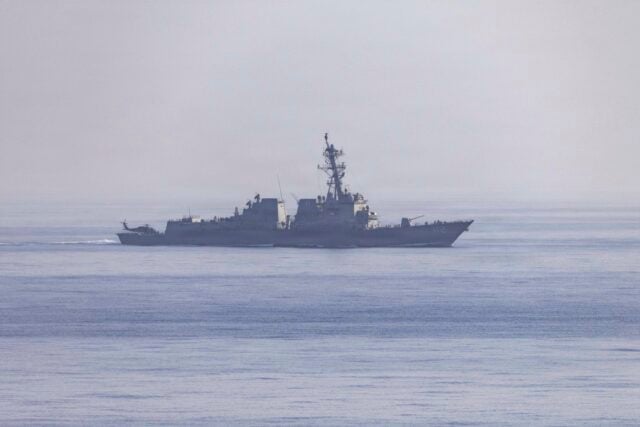
As of Tuesday night, April 14, 2026, the situation remains a stalemate. The U.S. Navy is moving minesweeping assets into the Strait, and President Trump has warned that he is prepared to “blast Iran into the Stone Age” if they attempt to block the clearing operations.
However, the “Trump Factor”—his penchant for the “Art of the Deal”—remains the wild card. While the military prepare for a potential full-scale amphibious assault, the State Department is quietly working with Pakistani intermediaries to see if the “top persons” mentioned by the President can deliver a proposal that avoids a total regional conflagration.
For the people of South Florida and the world, the cost of failure is visible at every gas station and in every grocery store. As the rumors of a second summit gain steam, the global economy holds its breath, waiting to see if 2026 will be remembered for the start of a Third World War or the most unlikely peace deal in history.
Sources Used and Links:
- 2026 Iran war ceasefire – Wikipedia: https://en.wikipedia.org/wiki/2026_Iran_war_ceasefire
- Trump claims U.S. will close Strait of Hormuz after Iran peace talks collapse – OPB: https://www.opb.org/article/2026/04/12/trump-claims-u-s-will-close-strait-of-hormuz-after-iran-peace-talks-collapse/
- Much remains unclear after U.S., Israel and Iran agree to a 2-week ceasefire – PBS NewsHour: https://www.pbs.org/newshour/world/much-remains-unclear-after-u-s-israel-and-iran-agree-to-a-2-week-ceasefire
- Iran Update Special Report, April 14, 2026 – Institute for the Study of War: https://understandingwar.org/research/middle-east/iran-update-special-report-april-14-2026/
- 2026 Strait of Hormuz crisis – Wikipedia: https://en.wikipedia.org/wiki/2026_Strait_of_Hormuz_crisis
- Gold prices gain on weaker dollar amid hopes of more Iran ceasefire talks – Investing.com: https://www.investing.com/news/commodities-news/gold-firms-but-stays-rangebound-as-markets-look-to-iran-blockade-us-inflation-4611803
- Gold, Silver Rate Today Highlights: International gold, silver prices rise as oil drops on US-Iran peace talk hopes – Times of India: https://timesofindia.indiatimes.com/business/india-business/gold-silver-rate-today-live-updates-april-latest-gold-news/liveblog/130223019.cms
- The Fragile U.S.-Iran Ceasefire: Issues to Watch – CSIS: https://www.csis.org/analysis/fragile-us-iran-ceasefire-issues-watch
- April 7, 2026: Iran War Maritime Intelligence Daily – Windward: https://windward.ai/blog/april-7-maritime-intelligence-daily/
Disclaimer
Artificial Intelligence Disclosure & Legal Disclaimer
AI Content Policy.
To provide our readers with timely and comprehensive coverage, South Florida Reporter uses artificial intelligence (AI) to assist in producing certain articles and visual content.
Articles: AI may be used to assist in research, structural drafting, or data analysis. All AI-assisted text is reviewed and edited by our team to ensure accuracy and adherence to our editorial standards.
Images: Any imagery generated or significantly altered by AI is clearly marked with a disclaimer or watermark to distinguish it from traditional photography or editorial illustrations.
General Disclaimer
The information contained in South Florida Reporter is for general information purposes only.
South Florida Reporter assumes no responsibility for errors or omissions in the contents of the Service. In no event shall South Florida Reporter be liable for any special, direct, indirect, consequential, or incidental damages or any damages whatsoever, whether in an action of contract, negligence or other tort, arising out of or in connection with the use of the Service or the contents of the Service.
The Company reserves the right to make additions, deletions, or modifications to the contents of the Service at any time without prior notice. The Company does not warrant that the Service is free of viruses or other harmful components.