The Resurrection of a Retail Giant
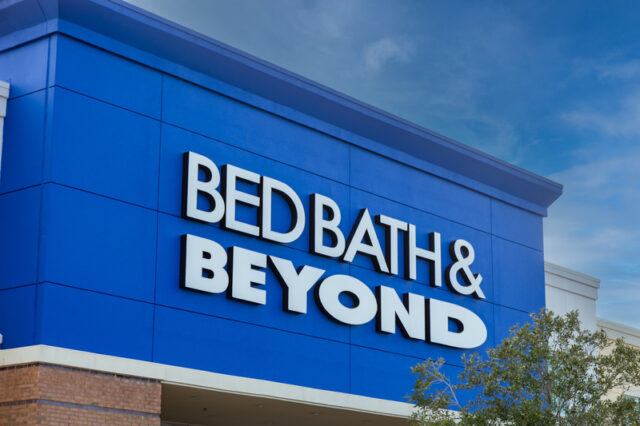
For years, the story of Bed Bath & Beyond was a cautionary tale—a slow-motion collapse of a “category killer” that failed to adapt to the digital age. By 2023, the blue-and-white signs were coming down, and the brand seemed destined for the history books. But today, in the spring of 2026, the narrative has shifted from a post-mortem to a masterclass in corporate resurrection. Under the banner of Beyond, Inc., the Bed Bath & Beyond brand isn’t just surviving; it’s aggressively expanding by swallowing up competitors and specialized service providers to build what CEO Marcus Lemonis calls the “Everything Home” ecosystem.
This isn’t your parents’ Bed Bath & Beyond. The coupon-clipping era of 20% off a single toaster has been replaced by a sophisticated, multi-pillar strategy that integrates high-margin home services, data-driven e-commerce, and a revamped physical footprint. Through a series of high-stakes acquisitions—most notably The Container Store and F9 Brands—the company is attempting to do the impossible: turn a bankrupt retail name into a tech-forward home services juggernaut.
The Strategic Pivot: From “Big Box” to “Asset-Light”
To understand the how of this comeback, one must first look at the foundation laid by the merger with Overstock.com. When Overstock purchased the Bed Bath & Beyond intellectual property in 2023, it shed the heavy weight of thousands of expensive leases and bloated inventory. This “asset-light” approach became the DNA of the new Beyond, Inc.
The “How” of the current comeback is rooted in a three-pillar framework:

- Omni-Channel Retail: Reviving the Bed Bath & Beyond and Overstock brands online while partnering with physical retailers like Kirkland’s Home to provide a “bricks-and-clicks” experience without the traditional overhead.
- Home Services & Products: Moving beyond selling towels to selling the bathroom itself. This includes flooring, cabinetry, and custom storage solutions.
- Protection & Financing: Integrating insurance, warranties, and home financing (HELOCs and mortgages) into the purchase flow.
The 2026 Acquisition Spree: A Deep Dive
The most aggressive phase of this comeback hit a fever pitch in April 2026. Beyond, Inc. moved with predatory speed to acquire distressed or undervalued assets that fit perfectly into its “Home Services” vision.
1. The Container Store and Elfa (April 2026)
In a landmark $150 million deal, Beyond, Inc. agreed to acquire The Container Store, along with its Swedish manufacturing unit Elfa and Closet Works. This move wasn’t just about getting into the storage bin business; it was about real estate and expertise.
- The Rebranding: Beyond plans to rebrand these locations as “The Container Store / Bed Bath and Beyond.” This gives the company over 100 “trophy locations” in premium markets.
- The Service Angle: By owning Elfa and Closet Works, Bed Bath & Beyond now owns the manufacturing and design of custom closet systems—a high-margin, professional service that retail-only competitors can’t easily match.
2. F9 Brands: The Flooring and Cabinetry Powerhouse (April 2026)
Just days after the Container Store deal, Beyond signed a Letter of Intent to acquire the assets of F9 Brands for approximately $150 million. This acquisition includes heavy hitters like Lumber Liquidators (LL Flooring), Cabinets To Go, and Southwind Building Products.
- The Logic: Flooring and cabinetry represent “high-ticket” items. While a customer might buy a $15 candle once a month, a $15,000 kitchen renovation offers significantly higher profit margins and allows Beyond to cross-sell financing and installation services.
3. Kirkland’s Home (Early 2026)
By finalizing its investment in Kirkland’s Home, Beyond secured a physical showroom for its products. Kirkland’s existing infrastructure allows Bed Bath & Beyond to have a physical presence where customers can touch and feel furniture before ordering it through the Beyond app.
4. Zulily and Buy Buy Baby (2024-2025)
Earlier acquisitions of Zulily and the brand rights to Buy Buy Baby served to capture specific customer demographics—moms and off-price shoppers—further feeding the massive data engine that Beyond is building.
The “Why”: Data, Margins, and Customer Lifetime Value
Why buy a flooring company when you’re known for bedsheets? The answer lies in the customer lifecycle.
The “Why” is a play for Customer Lifetime Value (CLV). In the old model, Bed Bath & Beyond only saw a customer when they needed a new blender. In the new model, Beyond aims to be present at every stage of homeownership:
- The Move: Buy Buy Baby and Zulily capture young families.
- The Organization: The Container Store solves the “messy house” problem.
- The Renovation: Lumber Liquidators and Cabinets To Go handle the big projects.
- The Protection: Beyond’s financing and warranty pillar ensures the relationship continues long after the renovation is done.
By owning the brands that service these different needs, Beyond creates a “walled garden” where a customer’s data from a flooring purchase helps predict when they might need new rugs or a home warranty.
The Leadership Factor: The Marcus Lemonis Effect
You can’t discuss this comeback without mentioning the “The Profit” himself. Marcus Lemonis, as Executive Chairman and CEO, has brought a level of “aggressive transparency” to the company. His strategy has been to simplify the balance sheet, cut fixed costs (like selling the corporate headquarters in Utah), and pivot the company toward being a technology and service platform rather than a mere shopkeeper.
Lemonis has been vocal about the “disciplined integration” of these brands. Unlike the retail mergers of the past that were often destroyed by culture clashes, Beyond is keeping the “best of breed” talent. For instance, appointing Brian LaRose (formerly of The Container Store and Petco) as the new CFO ensures that the financial integration of these complex physical-retail assets is handled by someone who knows them intimately.
Challenges on the Horizon
Despite the momentum, the path is not without thorns. Integrating five major acquisitions in a 24-month period is a Herculean task. The company is currently operating at a financial loss (with a negative EBITDA in recent quarters), and critics point to the “cash burn” associated with such rapid expansion.
Furthermore, the brand must overcome the “legacy fatigue” of the old Bed Bath & Beyond. Convincing a homeowner to trust a formerly bankrupt brand with a $20,000 kitchen remodel is a significantly higher hurdle than selling them a set of towels.
Conclusion: The New Blueprint for Retail
Bed Bath & Beyond is no longer a store; it is a platform. By buying up specialized companies, Beyond, Inc. is building a moat around the home. They are betting that the future of retail isn’t about having the most stores, but about having the most integrated relationship with the homeowner.
If this “Everything Home” ecosystem succeeds, it will provide a new blueprint for how “dead” brands can be resurrected: shed the physical baggage, buy high-margin expertise, and use data to glue it all together. The “Big Blue” of the past is gone, but the Beyond of the future is looking much more formidable.
Sources and Links:
- Beyond, Inc. Investor Relations: Letter to Shareholders: 2025 Year End and 2026 Outlook
- Beyond, Inc. Investor Relations: Letter to Shareholders: The Growth Phase (April 2026)
- Retail Dive: Bed Bath & Beyond agrees to acquire The Container Store for $150M
- Business Wire: Bed Bath & Beyond to Acquire F9 Brand Assets, Expanding National Home Services Platform
- FCNews: Southwind acquired by Bed, Bath & Beyond (F9 Brands Deal)
- CFO Dive: Beyond names new CFO with Container Store acquisition
- Investing.com: Beyond Inc. to acquire F9 Brands for nearly $150 million
- PrivSource: Beyond Inc. Acquires Zulily Brand Assets
- Kirkland’s IR: Kirkland’s Finalizes Strategic Investment from Beyond, Inc.
Disclaimer
Artificial Intelligence Disclosure & Legal Disclaimer
AI Content Policy.
To provide our readers with timely and comprehensive coverage, South Florida Reporter uses artificial intelligence (AI) to assist in producing certain articles and visual content.
Articles: AI may be used to assist in research, structural drafting, or data analysis. All AI-assisted text is reviewed and edited by our team to ensure accuracy and adherence to our editorial standards.
Images: Any imagery generated or significantly altered by AI is clearly marked with a disclaimer or watermark to distinguish it from traditional photography or editorial illustrations.
General Disclaimer
The information contained in South Florida Reporter is for general information purposes only.
South Florida Reporter assumes no responsibility for errors or omissions in the contents of the Service. In no event shall South Florida Reporter be liable for any special, direct, indirect, consequential, or incidental damages or any damages whatsoever, whether in an action of contract, negligence or other tort, arising out of or in connection with the use of the Service or the contents of the Service.
The Company reserves the right to make additions, deletions, or modifications to the contents of the Service at any time without prior notice. The Company does not warrant that the Service is free of viruses or other harmful components.