The Neon Era Fades into the Botanical
For decades, the American breakfast table was a vibrant, almost radioactive kaleidoscope of hues. We grew up on the electric blues of Trix and the neon-pink hearts of Lucky Charms—colors that existed nowhere in nature but everywhere in our Saturday morning memories. But as the sun rises on 2026, that technicolor landscape is undergoing a permanent, plant-based transformation.
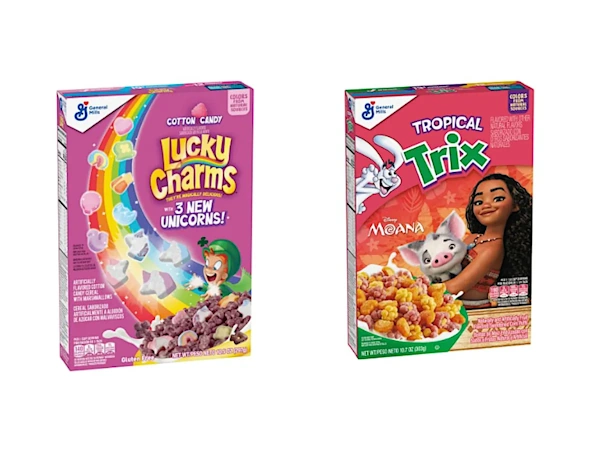
General Mills, the titan of the cereal aisle, has officially doubled down on its commitment to purge certified synthetic dyes from its portfolio. With the recent announcement of Lucky Charms Unicorn Cotton Candy and Tropical Trix featuring Disney’s Moana, the company is proving that “magically delicious” can also be “botanically sourced.” This isn’t just a marketing pivot; it is a calculated response to a decade of consumer pressure, shifting regulatory landscapes, and a significant leap in food science technology.
The New Vanguard: Cotton Candy and Tropical Vibes
The spearhead of this 2026 natural push comes in two distinct, flavor-forward packages. First, there is the Lucky Charms Unicorn Cotton Candy cereal. This version of the beloved classic swaps out traditional synthetic dyes for colors derived from fruits, vegetables, and spices. It features three new unicorn-shaped marshmallows and a sweet cotton candy profile that aims to prove natural colors don’t have to mean “boring.”
Simultaneously, Tropical Trix has sailed into the market in a collaboration with Disney’s Moana (perfectly timed for the live-action film release). Unlike the traditional fruit shapes that have ping-ponged between spheres and silhouettes over the years, this tropical iteration relies on natural juices and plant extracts to achieve its island-inspired palette. By launching these as new “flavor extensions” rather than immediate replacements for the “Classic” versions, General Mills is employing a clever “test and learn” strategy. They are giving consumers a chance to fall in love with the natural look before the artificial options vanish for good.

The Road to 2026: Why Now?
This movement is anchored in a strict timeline. General Mills has pledged to remove all certified colors from its entire U.S. cereal portfolio by summer 2026. Looking further ahead, the company aims to have its full U.S. retail portfolio—spanning snacks, baking mixes, and more—completely free of synthetic dyes by the end of 2027.
The company isn’t starting from scratch. Currently, about 85% of General Mills’ retail portfolio is already made without certified colors. Brands like Cheerios and Nature Valley have been “clean” for years. However, the remaining 15%—the Trixes and Lucky Charms of the world—represent the hardest climb. These cereals rely on visual pop to maintain their brand identity.
The urgency is also driven by external factors. We are seeing a “perfect storm” of regulatory and political pressure. In early 2025, Health and Human Services and the FDA issued voluntary guidelines for the food industry to phase out six specific synthetic dyes (including Red 40 and Yellow 5). Meanwhile, states like West Virginia and California have moved toward legislation that would effectively ban these additives in school foods or altogether. General Mills has already met its goal of removing certified colors from K-12 school foods, achieving this milestone months ahead of the 2026 deadline.
Learning from the “Trix Trauma” of 2016
History buffs of the cereal world will remember that this isn’t General Mills’ first rodeo with natural dyes. In 2016, the company made a high-profile attempt to take Trix all-natural. The result was… divisive, to say the least.
The “natural” Trix of 2016 lost its signature blue and green puffs because the food science of the time couldn’t find a stable, plant-based blue that wouldn’t turn the cereal a muddy gray. The reds and yellows were muted, looking more like autumnal potpourri than a kid’s breakfast. Sales slumped, and the “Trix Rabbit” looked decidedly less energetic. By 2017, General Mills bowed to public outcry and brought back “Classic Trix” with its artificial dyes intact.
So, what’s different in 2026?
- Technological Advancement: The stability of natural pigments—derived from sources like spirulina (blue), turmeric (yellow), and radish (red)—has improved significantly. Encapsulation techniques now allow these colors to remain vibrant even after being blasted through a cereal extruder or sitting in a milk bath.
- Product Positioning: By introducing the natural colors through new flavors like Cotton Candy or Tropical Moana, General Mills avoids the “New Coke” syndrome. They aren’t taking away a classic; they are offering a modern alternative.
- The “Clean Label” Norm: In 2016, natural colors were a trend. In 2026, they are the expectation. The modern parent is much more likely to trade a bit of neon glow for a shorter, more recognizable ingredient list.
The Science of the “Natural” Marshmallow
The “charm” in Lucky Charms has always been the marshmallows (or “marbits,” in industry speak). Replicating the vivid pinks and greens of a marshmallow using only plants is an architectural feat of food chemistry. Synthetic dyes are incredibly concentrated and heat-stable. Natural dyes, conversely, can be sensitive to the high temperatures required to process marshmallows.
To achieve the look of the new Unicorn Cotton Candy marbits, General Mills utilizes a palette of botanical concentrates. For example:
- Red/Pink: Often derived from beet juice or black carrot extract.
- Yellow/Orange: Sourced from annatto or turmeric.
- Blue/Purple: Increasingly achieved through spirulina or butterfly pea flower.
The challenge isn’t just the color; it’s the flavor. Turmeric is a brilliant yellow, but you don’t necessarily want your cotton candy cereal tasting like a curry. Modern refining processes have mastered the art of stripping the flavor out of the pigment, leaving only the visual punch.
A Competitive Landscape
General Mills isn’t the only player in this race. The entire “Big Cereal” industry is under the microscope. Competitors like Kraft Heinz have made similar pledges to strip artificial dyes by 2027. Even PepsiCo’s Frito-Lay division has experimented with “Simply” versions of Cheetos and Doritos that omit the iconic (and finger-staining) artificial oranges.
However, General Mills’ decision to maintain its “family favorite” status while evolving the ingredients is a delicate balancing act. They have to satisfy the “Wellness Warrior” parent without alienating the “Nostalgia Seeker” who just wants their cereal to look like it did in 1994.
The Cultural Shift: From “Fake” to “Fresh”
There is a certain irony in calling a cereal filled with marshmallow unicorns “natural,” and General Mills is savvy enough to navigate that wit. They aren’t claiming these cereals are health foods; they are claiming they are “better-for-you” indulgences. The shift away from certified colors reflects a broader cultural skepticism toward “ultra-processed” aesthetics.
In the mid-20th century, artificiality was a sign of progress—it meant science had “improved” on nature. Today, the reverse is true. We want our food to look like it came from the earth, even if it’s shaped like a magic hat. This transition is a victory for transparency. By 2027, the “No Artificial Colors” label won’t be a special badge; it will be the industry standard.
Looking Forward
As we approach the summer 2026 deadline, expect to see the “Classic” versions of Trix and Lucky Charms undergo their final transformations. The transition of the school portfolio was the first domino to fall; these new retail launches are the second.
For the Trix Rabbit, the chase for those “silly” colors is finally ending—not because he caught the kids, but because the colors themselves have changed. The future of breakfast is bright, but it’s a brightness fueled by the garden, not the laboratory. Whether the public fully embraces the slightly more muted “natural” look remains to be seen, but with innovations like the Unicorn Cotton Candy and Moana-themed puffs, General Mills is betting that the magic is in the taste, not the dye.
Sources Used and Links:
- General Mills Official News: “Lucky Charms and Trix Bring Bold Flavors to the Breakfast Table Through New Cereals Made with Colors from Natural Sources” (March 26, 2026). https://www.generalmills.com/
- Parade: “Lucky Charms and Trix Are Getting a Major Shakeup This Summer With Two New Flavors” (March 26, 2026).https://parade.com/news/lucky-charms-trix-new-cereal-flavors-moana-summer-2026
- Food Dive: “General Mills launches Trix, Lucky Charms cereals with natural colors” (March 31, 2026).https://www.fooddive.com/news/general-mills-launches-trix-lucky-charms-cereals-with-natural-colors/816010/
- General Mills Sustainability/Nutrition: “Certified Colors – General Mills Commitment and Progress” (Updated 2026).https://www.generalmills.com/food-we-make/nutrition-and-ingredients/certified-colors
- Milling & Grains (MillingMEA): “General Mills launches two breakfast cereals formulated with natural colors” (March 27, 2026). https://millingmea.com/general-mills-launches-two-breakfast-cereals-formulated-with-natural-colors/
- Stock Titan: “Lucky Charms and Trix Bring Bold Flavors to the Breakfast Table” (March 26, 2026). https://www.stocktitan.net/news/GIS/lucky-charms-and-trix-bring-bold-flavors-to-the-breakfast-table-43t4hwr1ikgh.html
Disclaimer
Artificial Intelligence Disclosure & Legal Disclaimer
AI Content Policy.
To provide our readers with timely and comprehensive coverage, South Florida Reporter uses artificial intelligence (AI) to assist in producing certain articles and visual content.
Articles: AI may be used to assist in research, structural drafting, or data analysis. All AI-assisted text is reviewed and edited by our team to ensure accuracy and adherence to our editorial standards.
Images: Any imagery generated or significantly altered by AI is clearly marked with a disclaimer or watermark to distinguish it from traditional photography or editorial illustrations.
General Disclaimer
The information contained in South Florida Reporter is for general information purposes only.
South Florida Reporter assumes no responsibility for errors or omissions in the contents of the Service. In no event shall South Florida Reporter be liable for any special, direct, indirect, consequential, or incidental damages or any damages whatsoever, whether in an action of contract, negligence or other tort, arising out of or in connection with the use of the Service or the contents of the Service.
The Company reserves the right to make additions, deletions, or modifications to the contents of the Service at any time without prior notice. The Company does not warrant that the Service is free of viruses or other harmful components.