DUBAI/WASHINGTON — In a day of rapid and violent escalation in the month-long conflict between the United States, Israel, and Iran, the global energy supply chain suffered a direct hit as a fully loaded Kuwaiti supertanker was struck by a projectile near the Strait of Hormuz. The incident, which occurred late Monday, March 30, 2026, coincided with a scorched-earth ultimatum from President Donald Trump, who warned Tehran that U.S. forces are prepared to systematically destroy Iran’s civilian utilities—including power plants and water desalination facilities—if a diplomatic breakthrough is not reached immediately.
U.S. forces continue to eliminate the Iranian regime’s ability to project power in meaningful ways outside of Iran’s borders. pic.twitter.com/R2T0F9JOrY
— U.S. Central Command (@CENTCOM) March 30, 2026
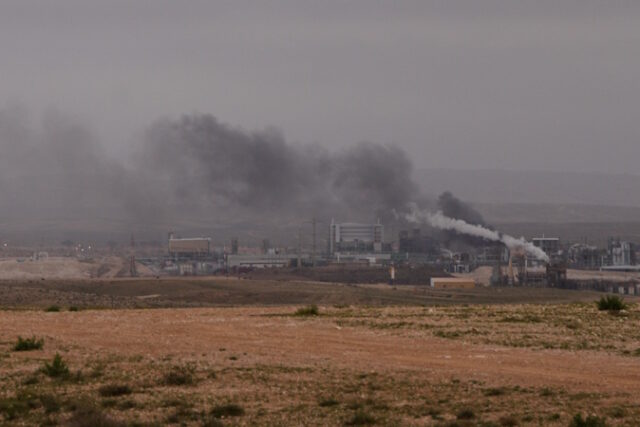
As smoke from the burning Al-Salmi tanker drifted toward the Dubai coastline, the Pentagon announced that Secretary of War Pete Hegseth would hold a high-stakes briefing at 8:00 a.m. on Tuesday. Sources within the administration suggest the briefing will detail the next phase of “Operation Epic Fury,” potentially authorizing strikes on the very infrastructure that sustains the Iranian civilian population.
The Attack on the Al-Salmi
The maritime crisis deepened at approximately 12:10 a.m. local time when the Al-Salmi, a Very Large Crude Carrier (VLCC) operated by the Kuwait Oil Tanker Co (KOTC), was hit while at anchor approximately 31 nautical miles northwest of Dubai. The 319,660-dwt vessel, which was fully loaded with crude oil and broadcasting its destination as China in an attempt to signal neutrality, was struck by what maritime experts and regional officials describe as a drone-launched projectile.

The strike caused significant damage to the vessel’s hull and ignited a massive fire on board. Despite the intensity of the flames, the Kuwait Petroleum Corporation (KPC) confirmed that all 24 crew members were accounted for and safe. However, the environmental stakes remain high; the KPC has issued a warning regarding a potential oil spill in the sensitive waters near the Dubai port anchorage. Emergency response and firefighting teams from the United Arab Emirates and Kuwait worked through the night to contain the blaze, which was visible from the upper floors of Dubai’s skyscrapers.
This latest strike follows a pattern of “shadow war” tactics used by Iranian forces to disrupt the de facto blockade of the Strait of Hormuz. Analysts note that the Al-Salmi is the second Kuwaiti vessel targeted in two weeks, following a strike on the LPG carrier Gas Al Ahmadiah on March 17. The targeting of Kuwaiti assets is seen by many as a retaliatory move against Gulf states that have quietly supported the U.S.-led air campaign.
The Trump Ultimatum: “Utilities for Peace”
While the Al-Salmi burned, President Donald Trump escalated the rhetoric from Washington. In an interview published Monday by the New York Post and later echoed in a series of social media posts, the President issued a final warning to the Iranian leadership. Moving beyond military and nuclear targets, Trump threatened to “obliterate” Iran’s civilian electricity plants, oil wells, and the critical Kharg Island export hub.
“They have a choice: they can open the Strait of Hormuz and agree to a deal tonight, or they can watch their country go dark,” Trump said. “We are talking about power, we are talking about water, we are talking about everything that keeps them running. It’s gone if they don’t move.”
The President’s threat to target desalination plants—which provide the bulk of the drinking water for Iran’s coastal regions—has drawn sharp criticism from international humanitarian groups, though the administration remains undeterred. White House Press Secretary Karoline Leavitt clarified on Monday that the U.S. goal is to force a “short-term” resolution by making the cost of continued resistance unbearable for the Iranian regime.
The Diplomatic Fog: Negotiations or “Jawboning”?
The administration continues to insist that secret negotiations are taking place, despite repeated denials from Tehran. President Trump confirmed on Monday that he has been in contact with Mohammad Bagher Qalibaf, the Speaker of the Iranian Parliament. Trump claimed that these “unidentified officials” had allowed several tankers to pass through the Strait last week as a “gift” and a sign of good faith.
However, the Iranian Foreign Ministry has called these reports “fabrications” designed to create internal division within Iran. Iranian Foreign Minister Abbas Araqchi reiterated on state television that the Strait of Hormuz remains “closed to our enemies” and that no deal will be reached while American and Israeli bombs are falling on Iranian soil.
The disconnect between Washington’s claims of progress and the reality of burning tankers in the Gulf has led some market analysts to describe Trump’s rhetoric as “jawboning”—an attempt to talk down oil prices and pressure the Iranian leadership without committing to a full-scale ground invasion.
The 8:00 AM Hegseth Briefing
The world’s attention now turns to the Pentagon. Secretary of War Pete Hegseth is scheduled to address the media at 8:00 a.m. Tuesday, March 31. (You can watch it here) This briefing is expected to be a pivotal moment in the conflict. Hegseth, who has advocated for “decisive and overwhelming lethality” since the start of Operation Epic Fury on February 28, is expected to present an assessment of the current damage to Iranian capabilities.
In previous briefings, Hegseth has touted the destruction of the Iranian Navy and the “decimation” of its air defenses. “The Iranian Air Force is no more, built for 1996, destroyed in 2026,” Hegseth stated earlier this month. The Tuesday briefing is likely to focus on the “most intense day of strikes yet,” potentially showcasing the first waves of attacks on the utility targets Trump threatened on Monday.
The Chairman of the Joint Chiefs of Staff, Gen. Dan Caine, is expected to join Hegseth to provide technical data on the degradation of Iran’s missile infrastructure. However, the briefing will also have to account for the fact that, despite a month of bombing, Iran still possesses the “swarm” capacity to hit tankers like the Al-Salmi with drones and short-range missiles.
Netanyahu: The “Halfway Point”
Adding to the complexity of the situation, Israeli Prime Minister Benjamin Netanyahu told Newsmax on Monday that the war has reached its “halfway point.” Netanyahu expressed confidence that the Iranian regime would eventually “collapse internally” under the weight of the military campaign and the economic strangulation.
“We are degrading their military capacity, their missile capacity, and their nuclear capacity,” Netanyahu said. “But more than that, we are weakening them from the inside. They are beyond the halfway point of their ability to sustain this.”
Netanyahu’s assessment contrasts with the views of some Gulf allies, including Saudi Arabia and the United Arab Emirates. While these nations are privately urging the U.S. to ensure Iran is “decisively defeated” so as not to leave a wounded but still dangerous adversary on their doorstep, they are also bearing the brunt of Iranian retaliation, as seen in the Al-Salmi strike and previous attacks on desalination plants in Kuwait.
Global Energy and Economic Fallout
The strike on the Al-Salmi and the threat to Iranian oil infrastructure have sent shockwaves through global energy markets. Although President Trump has downplayed the energy crisis, oil futures saw a sharp spike following the news of the fire near Dubai.
Shipping insurance rates for the Persian Gulf have reached historic highs, and many shipping lines are now avoiding the Strait of Hormuz entirely, despite Trump’s insistence that the waterway must be reopened. The “de facto blockade” maintained by Iran—using a combination of mines, drones, and the threat of coastal batteries—remains the regime’s most effective leverage against the U.S.-Israeli coalition.
Conclusion: A Tuesday at the Brink
As March 2026 comes to a close, the Middle East stands at its most dangerous crossroads in decades. The fire on the Al-Salmi serves as a grim reminder that despite the “Epic Fury” of the American air campaign, the Iranian military still has the reach to strike the world’s most vital energy artery.
The 8:00 a.m. briefing by Secretary Hegseth will likely signal whether the United States will follow through on President Trump’s threat to plunge Iran into a pre-industrial darkness. If the utilities are struck, the war moves from a tactical military engagement into a total conflict with unknown humanitarian and geopolitical consequences.
Sources Used and Links
- The Hindu: Iran-Israel war LIVE updates: Kuwait says Iranian attack sparks fire on fully loaded tanker at Dubai port; issues oil spill warning
- Seatrade Maritime: Kuwaiti VLCC on fire after attack off Dubai
- The Jerusalem Post: Live Updates: Latest from Israel, Iran, and the Middle East | The Jerusalem Post
- Argus Media: Trump delays attacks in Iran until 6 April | Latest Market News
- ClickOnDetroit (Associated Press): The Latest: Trump warns Iran energy sites face destruction without a quick deal
- War.gov: Transcript: Secretary of War Pete Hegseth and Chairman of the Joint Chiefs of Staff Gen. Dan Caine Hold a Press Briefing
- ABC10: Hegseth vows most intense day of US strikes yet as Iran aims to fight on
- SOF News: Iran War Weekly Update – 28 Mar 2026
- Institute for the Study of War (Understanding War): Iran Update Special Report, March 17, 2026
Disclaimer
Artificial Intelligence Disclosure & Legal Disclaimer
AI Content Policy.
To provide our readers with timely and comprehensive coverage, South Florida Reporter uses artificial intelligence (AI) to assist in producing certain articles and visual content.
Articles: AI may be used to assist in research, structural drafting, or data analysis. All AI-assisted text is reviewed and edited by our team to ensure accuracy and adherence to our editorial standards.
Images: Any imagery generated or significantly altered by AI is clearly marked with a disclaimer or watermark to distinguish it from traditional photography or editorial illustrations.
General Disclaimer
The information contained in South Florida Reporter is for general information purposes only.
South Florida Reporter assumes no responsibility for errors or omissions in the contents of the Service. In no event shall South Florida Reporter be liable for any special, direct, indirect, consequential, or incidental damages or any damages whatsoever, whether in an action of contract, negligence or other tort, arising out of or in connection with the use of the Service or the contents of the Service.
The Company reserves the right to make additions, deletions, or modifications to the contents of the Service at any time without prior notice. The Company does not warrant that the Service is free of viruses or other harmful components.