When people need HVAC help, it is easy to get pulled in by polished ads, slick trucks, and promises that sound like they were written by a committee that really loves the phrase “industry-leading solutions.” Big brands are good at looking reliable. Sometimes they are reliable. But when your air conditioning quits in July or your building’s heating starts acting up during a cold snap, glossy marketing is not what fixes the problem.
What usually matters more is local knowledge, real diagnostic skill, and a company that understands how systems behave in your area. That is why many property owners start with trusted HVAC services in Linden, NJ instead of assuming the biggest logo automatically means the best service. In HVAC, local expertise often beats brand recognition for one simple reason: comfort problems are local, building conditions are local, and service quality definitely feels local when you are the one paying the invoice.
Local technicians understand how buildings actually behave in the area
HVAC service is never just about the equipment itself. It is also about the building, the weather, the usage patterns, and the little quirks that make one property completely different from another.

A local technician sees those patterns every day. They understand how older homes in the area tend to perform. They know what common ductwork problems show up in local neighborhoods. They are familiar with seasonal humidity swings, common installation shortcuts, and the ways New Jersey weather puts pressure on both heating and cooling systems across the year.
That kind of familiarity matters more than people think. A national brand may have a recognizable name, but the technician arriving at your property still has to figure out what is happening in that specific environment. A local company often starts with a head start because they have already seen ten variations of the same issue nearby.
For example, if one side of a home never cools properly in summer, the answer is not always “you need a bigger system.” Sometimes it is poor return airflow, undersized duct sections, attic heat gain, thermostat location, or an installation issue that has been hiding in plain sight for years. Local experience helps narrow those possibilities faster, which is good news for both your comfort and your budget.
And frankly, that is what most people want. Not a speech. Not a branded folder. Just a correct diagnosis before the problem turns into a second mortgage.
Fast, accurate diagnosis beats polished sales language every time
One of the biggest differences between strong local HVAC companies and heavily marketed providers is the focus of the visit itself.
With some large operations, the service call can feel a little too close to a sales appointment. The technician may still be professional, but the process sometimes leans quickly toward upsells, replacements, and “limited-time opportunities” that somehow appear whenever your system is more than a few years old. Convenient, right?
A good local company usually has a stronger incentive to solve the actual issue because their reputation depends on word of mouth, repeat customers, and community trust. They cannot hide behind brand awareness forever. If they misdiagnose systems or push work people do not need, that travels fast.
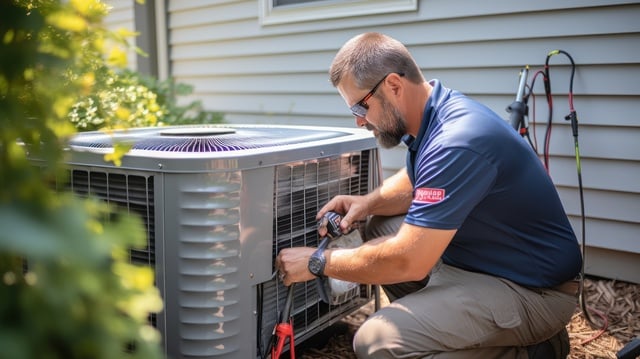
That is especially important when a homeowner or property manager is dealing with a cooling problem that may or may not be serious. Something as simple as a capacitor, clogged condensate line, dirty coil, or failing contactor can mimic bigger issues. If the problem is caught early, the fix may be straightforward. If it is misread or ignored, it can snowball into compressor damage, poor efficiency, and higher costs.
That is why local, detail-oriented help for AC repair in Linden often delivers more value than a company that spends more on advertising than on listening. Good diagnostics save money. Good diagnostics also save you from the deeply frustrating experience of paying for the wrong repair first.
Local companies tend to care more about relationships than volume
Big brands often operate on scale. That is not automatically bad. Large organizations can have structure, systems, and strong support teams. But scale can also create distance.
When service becomes volume-driven, customers sometimes feel like one more stop on a route. The goal becomes getting through the call, closing the ticket, and moving to the next job. That approach may work fine for some situations, but it is not ideal when you want honest guidance about repair priorities, system condition, long-term maintenance, or whether a unit really needs replacement.
Local HVAC companies usually live or die by relationships. They rely on people calling again, recommending them to friends, and keeping their number saved for the next season. That tends to create a different level of accountability.
When a company knows they are serving the same neighborhoods year after year, there is more reason to be direct, realistic, and helpful. They are more likely to explain what is urgent, what can wait, and what you should keep an eye on. They know that building trust today often matters more than squeezing every dollar out of one visit.
That relationship mindset is especially valuable for small commercial properties and mixed-use buildings. Owners and managers usually do not just need one repair. They need a reliable service partner who can help them think ahead, reduce downtime, and avoid those magical emergency breakdowns that somehow happen on the hottest Friday afternoon of the year.
A dependable HVAC company in New Jersey is not just there to react when something fails. The better ones help you make smarter decisions before failure becomes the main event.
Local knowledge helps with practical decisions, not just repairs
One underrated advantage of local expertise is better judgment.
HVAC decisions are rarely as simple as repair versus replace. Property owners want to know what makes financial sense, what is likely to fail next, whether efficiency improvements are worth it, and how much life the current system realistically has left. Those are practical questions, not brochure questions.
A technician who works locally and sees similar buildings all the time can often give more grounded advice. They know how certain equipment tends to age in the region. They know which issues are routine and which ones are signs of a system heading downhill. They also understand which comfort complaints are common in certain building types and which solutions actually help.
For instance, a property manager might assume recurring summer complaints mean the rooftop unit is undersized. A more experienced local technician may recognize that the real problem is neglected maintenance, airflow restrictions, economizer issues, or control problems. That changes the whole financial picture.
This is where local expertise becomes especially valuable. It reduces the chance of expensive overreactions. Sometimes the smartest move is a repair. Sometimes it is a phased plan. Sometimes replacement is the right call. But it should be based on the building and the system, not on a scripted sales pathway.
That kind of judgment is hard to fake. It comes from seeing real equipment in real buildings under real local conditions. In other words, the opposite of a marketing campaign.
Response time and follow-through matter more than branding when things go wrong
Nobody cares how impressive a company’s ad looked when the indoor temperature is climbing and the system is not keeping up.
In HVAC, service quality becomes very real, very fast. Can the company respond promptly? Do they communicate clearly? Do they show up prepared? Can they explain the issue in plain English? Do they fix the problem, or do they create a sequel?
These are the moments when local service often stands out. Smaller or locally focused companies are usually more attuned to the urgency of a comfort issue because they understand the community, the climate, and the impact of delays. They also tend to know that every service call affects their local reputation.
That matters for homeowners, but it matters even more for businesses. A stuffy office, overheated retail store, or uncomfortable customer-facing space can create operational headaches quickly. Delays cost time, productivity, and sometimes revenue. Fast response and real follow-through are worth more than national name recognition in those moments.
The funny thing is that marketing often trains people to choose visibility over fit. But HVAC is not a streaming subscription. You do not need the most famous option. You need the one that actually works when you need help.
Conclusion
Big-brand marketing can create confidence, but it is not the same thing as competence. In HVAC, the best service often comes from technicians and companies that understand local buildings, local weather patterns, common system issues, and the practical realities property owners deal with every season.
Local expertise usually means faster diagnosis, more relevant recommendations, stronger accountability, and a relationship that goes beyond a single service call. It also means you are more likely to get honest advice instead of a polished pitch disguised as a solution.
That does not mean every large brand is wrong or every local company is perfect. It means the name on the ad should not be the main thing guiding your decision. What matters is whether the company can solve the real problem efficiently, clearly, and with a good understanding of the environment your system works in every day.
In the end, HVAC is one of those services where results speak louder than branding. Warm air in winter, cool air in summer, reasonable utility bills, fewer surprise breakdowns, and a technician who knows what they are looking at — that is the kind of reputation that actually deserves attention.
Disclaimer
Artificial Intelligence Disclosure & Legal Disclaimer
AI Content Policy.
To provide our readers with timely and comprehensive coverage, South Florida Reporter uses artificial intelligence (AI) to assist in producing certain articles and visual content.
Articles: AI may be used to assist in research, structural drafting, or data analysis. All AI-assisted text is reviewed and edited by our team to ensure accuracy and adherence to our editorial standards.
Images: Any imagery generated or significantly altered by AI is clearly marked with a disclaimer or watermark to distinguish it from traditional photography or editorial illustrations.
General Disclaimer
The information contained in South Florida Reporter is for general information purposes only.
South Florida Reporter assumes no responsibility for errors or omissions in the contents of the Service. In no event shall South Florida Reporter be liable for any special, direct, indirect, consequential, or incidental damages or any damages whatsoever, whether in an action of contract, negligence or other tort, arising out of or in connection with the use of the Service or the contents of the Service.
The Company reserves the right to make additions, deletions, or modifications to the contents of the Service at any time without prior notice. The Company does not warrant that the Service is free of viruses or other harmful components.