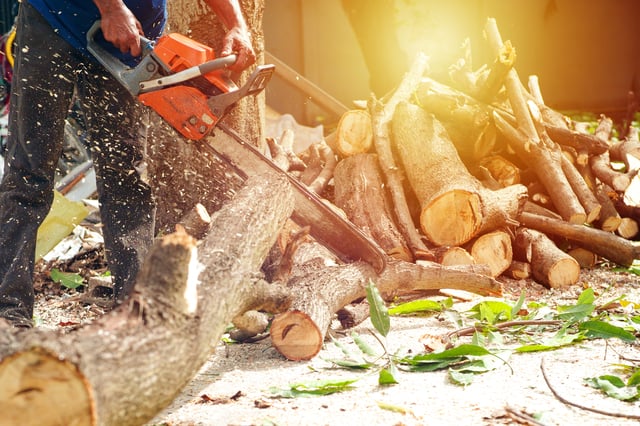
Cutting firewood at home has become easier as battery technology has improved. Petrol chainsaws were once the main option for this kind of work, but modern battery chainsaws can now handle many home firewood tasks without the noise, fumes, or engine maintenance. For many homeowners, they offer a simpler and more practical choice.
The best battery chainsaw depends on how much wood you cut, how thick your logs usually are, and how long you need the saw to run in one session. Some battery chainsaws are better for very light work, while others are made for regular firewood cutting. Before choosing one, consider bar length, battery voltage, runtime, and overall cutting capacity.
This guide looks at the main types of battery chainsaws used for firewood at home, so it is easier to understand which one fits your needs. Cutting conditions can vary by location, especially across Australia and New Zealand, where property size, timber type, and outdoor use can all affect what kind of saw works best. For anyone choosing a battery-powered chainsaw in AU or New Zealand, this breakdown can help narrow the options based on log size, cutting frequency, and the kind of work the saw needs to handle. It also makes it easier to see which features matter most for light jobs and which ones are better suited to more demanding firewood cutting. With the right type, homeowners can choose a saw that feels practical to use and better matched to the work they plan to do.
Mini Battery Chainsaws for Very Light Cutting
Mini battery chainsaws are small tools usually made for pruning, trimming, and light garden work. They often have short bars, usually around 4 to 6 inches, and are designed for cutting thin branches rather than logs.

These chainsaws are easy to carry, simple to store, and comfortable for quick jobs around the yard. They suit people who only need to cut kindling, small offcuts, or tree branches before turning them into smaller pieces.
However, they are not the best choice for proper firewood preparation. Their short bar length and lower power output limit what they can do. If you regularly cut logs for a fireplace, wood heater, or outdoor fire pit, a mini battery chainsaw will usually feel too small for the job.
Compact Battery Chainsaws for Occasional Home Firewood Use
Compact battery chainsaws usually come with bar lengths around 8 to 12 inches. These suit homeowners who cut small to medium pieces of firewood from time to time. They are a step up from mini saws and can handle more than basic pruning.
This type works well for trimming branches, cutting smaller fallen limbs, and preparing light firewood loads. They are often lighter than larger saws, which makes them easier to control and less tiring to use for longer periods.
For people who only cut a small amount of firewood each season, this type can be enough. Still, thicker logs and denser wood may push these saws to their limits. They are better for light to moderate work than heavy cutting.
Mid-Size Battery Chainsaws for Regular Firewood Cutting
Mid-size battery chainsaws are one of the best options for home firewood use. They usually have bar lengths between 12 and 14 inches and provide a good balance between power, weight, and control.
This type suits homeowners who cut firewood more regularly and need enough strength to handle medium-sized logs. A mid-size saw can usually manage most common household firewood tasks, especially when paired with a battery that provides decent runtime.
These chainsaws are often the most practical choice for general home use. They are large enough to handle real cutting work but still manageable for people who do not want the weight and bulk of a petrol saw. For many households, this is the type that makes the most sense.
High-Voltage Battery Chainsaws for Heavy Firewood Work
High-voltage battery chainsaws are designed for tougher jobs. These usually come with larger batteries, stronger motors, and bar lengths from 14 to 16 inches or more. They are better suited to cutting larger logs and working for longer periods.
This type is useful for homeowners with bigger properties, regular firewood needs, or heavier timber to process. The extra power helps the saw keep steady cutting speed through thicker wood, which makes the work easier and faster.
The downside is that these chainsaws are often heavier and more expensive. They may also be more than some households really need. Still, for serious firewood preparation at home, they can be the right choice.
Brushless Battery Chainsaws for Better Efficiency
Brushless battery chainsaws are not a separate size category, but they are an important type to consider. A brushless motor is designed to run more efficiently than a standard motor. This often means better battery use, less maintenance, and smoother performance.
For firewood cutting, a brushless chainsaw can be a better long-term option, especially for people who use the tool regularly. It helps improve runtime and gives more consistent cutting under load.
This type is often found in mid-size and higher-powered battery chainsaws. If two similar saws are available and one has a brushless motor, that feature is usually worth paying attention to.
Single-Battery Chainsaws for Standard Household Jobs
Single-battery chainsaws run on one battery pack and are common for general home use. They are often enough for smaller firewood jobs, branch cutting, and occasional weekend work.
Their main advantage is convenience. They are easy to use, simple to charge, and usually lighter than more powerful setups. For many homeowners, this is all they need.
The main limitation is runtime and cutting strength. If you have a large amount of wood to cut in one go, a single-battery setup may require more charging breaks or spare batteries.
Dual-Battery Chainsaws for Longer Runtime and More Power
Dual-battery chainsaws use two batteries at once. This setup helps increase power and can also improve runtime, depending on the design. These chainsaws are often better suited to people who want stronger cutting performance without moving to petrol.
For firewood cutting at home, dual-battery chainsaws can be a solid option when logs are thicker or the workload is heavier. They often feel closer to petrol saws in performance while still keeping the quieter and lower-maintenance benefits of battery power.
They do cost more, and the extra batteries add weight. Even so, for larger home firewood jobs, this type can be a very practical choice.
Which Type Is Best for Cutting Firewood at Home?
The best type depends on the amount of firewood you cut and the size of the wood you handle most often.
If you only cut small branches, kindling, or very light loads, a mini or compact battery chainsaw may be enough. If you cut firewood regularly, a mid-size chainsaw with a 12 to 14-inch bar is usually the better fit. If you deal with thicker logs or larger amounts of wood, a high-voltage or dual-battery chainsaw will likely suit you better.
Brushless motors are also worth considering because they help improve efficiency and everyday performance. For many homes, the best balance comes from a mid-size brushless battery chainsaw with enough runtime to finish the job without constant recharging.
Conclusion
Battery chainsaws now cover a wide range of home firewood needs. The main types include mini saws for light trimming, compact saws for occasional use, mid-size saws for regular cutting, and larger high-voltage or dual-battery saws for heavier work.
For most homeowners, the right choice comes down to bar length, battery power, and how often the saw will be used. Small models are fine for lighter jobs, but regular firewood cutting usually calls for something stronger. Choosing the right type makes the work easier, safer, and more practical in the long run.
Disclaimer
Artificial Intelligence Disclosure & Legal Disclaimer
AI Content Policy.
To provide our readers with timely and comprehensive coverage, South Florida Reporter uses artificial intelligence (AI) to assist in producing certain articles and visual content.
Articles: AI may be used to assist in research, structural drafting, or data analysis. All AI-assisted text is reviewed and edited by our team to ensure accuracy and adherence to our editorial standards.
Images: Any imagery generated or significantly altered by AI is clearly marked with a disclaimer or watermark to distinguish it from traditional photography or editorial illustrations.
General Disclaimer
The information contained in South Florida Reporter is for general information purposes only.
South Florida Reporter assumes no responsibility for errors or omissions in the contents of the Service. In no event shall South Florida Reporter be liable for any special, direct, indirect, consequential, or incidental damages or any damages whatsoever, whether in an action of contract, negligence or other tort, arising out of or in connection with the use of the Service or the contents of the Service.
The Company reserves the right to make additions, deletions, or modifications to the contents of the Service at any time without prior notice. The Company does not warrant that the Service is free of viruses or other harmful components.