The vital infrastructure supporting America’s disaster preparedness is trembling as a deadline looms for the software that local officials rely on to save lives during hurricane season. According to internal documents and officials familiar with the matter, a sophisticated digital tool used by thousands of coastal communities to time their evacuations is set to expire this Friday. The lapse comes as the Federal Emergency Management Agency (FEMA) remains entangled in a broader Department of Homeland Security (DHS) funding crisis, leaving emergency managers from the Gulf Coast to the Eastern Seaboard on high alert.
The software in question, known as Hurrevac (short for Hurricane Evacuation), is a decades-old partnership between FEMA, the U.S. Army Corps of Engineers, and the National Oceanic and Atmospheric Administration (NOAA). It provides a critical overlay of real-time storm tracking, local evacuation zone data, and traffic clearance times, allowing local mayors and governors to make the harrowing decision of when—and if—to order millions of people to flee their homes. Without it, officials warn they will be forced to rely on fragmented data and “gut feelings” during some of the most stressful windows of disaster response.
A Tool of “Invaluable” Importance
The gravity of the situation was first brought to light in a report by The Washington Post, which noted that “the Hurrevac requirements have triggered a logistical reckoning, exposing the fragility of lean supply chains that rely on opaque, multi-tiered sourcing strategies.” While that specific quote highlights the broader systemic vulnerabilities in national logistics, the Post’s recent reporting on the FEMA lapse itself underscores a similar theme: the dangerous intersection of political brinkmanship and public safety.
In its coverage of the expiring contract, The Washington Post reported that the tool is described by current and former officials as “invaluable,” specifically for its ability to determine “whether and when public safety agencies should clear neighborhoods.” The report further revealed that internal emails show FEMA officials expressing deep concern as early as the beginning of the year, fearing that a service lapse could “drastically affect hurricane response around the country.”

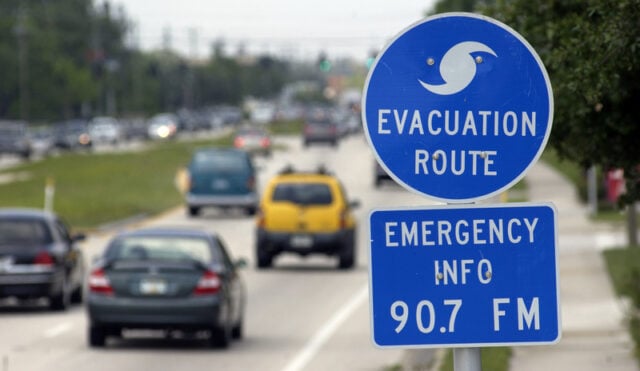
For a local emergency manager in Miami or New Orleans, Hurrevac is not just a map; it is a decision-support system. It calculates the “H-Hour”—the point at which tropical-storm-force winds will arrive, making evacuations unsafe. By working backward from that hour, the tool tells officials exactly when they must begin moving vulnerable populations, including those in nursing homes and hospitals.
The Funding Impasse
The expiration of the Hurrevac contract is a direct casualty of the ongoing partial government shutdown that has left the Department of Homeland Security unfunded. The impasse in Washington centers on a fierce disagreement between Democrats and Republicans regarding immigration enforcement and border security. As these high-level negotiations remain stalled, the administrative gears of disaster preparedness have ground to a halt.
FEMA paid approximately $1.5 million for the software system in fiscal year 2021 and reportedly owes about $1.3 million for the current fiscal year. While the total contract value exceeds $3 million, the agency has only been able to issue short-term extensions. The most recent extension, granted last fall, is set to run out this week.
Despite the mounting evidence of a lapse, the administration’s public stance has been one of defiance. In a statement provided to the media, acting FEMA spokesperson Daniel Llargués blamed the situation on political hurdles, stating, “This administration will not allow Democrats’ funding lapse to jeopardize national security or disaster preparedness.” FEMA and DHS have also issued categorical denials, claiming that reports of the tool’s expiration are “misinformation” and that the contract remains “active and under no threat of interruption.”
However, local officials tell a different story. Internal messages reviewed by investigators show that state-level emergency managers have been reaching out to FEMA for weeks, receiving no concrete answers about the software’s future. Some have already begun looking for “other options” to replace Hurrevac, though experts warn that there is no commercial tool that integrates federal weather data and local evacuation plans as seamlessly.
The Human Cost of Delay
The timing of this funding lapse is particularly precarious. The 2026 hurricane season is fast approaching, and meteorologists are already predicting a highly active year due to record-high sea surface temperatures. If the Hurrevac system goes dark on Friday, the training sessions typically held for local officials in April and May will be canceled, leaving many new emergency managers without the skills needed to operate the system should it be restored later.
Emergency management experts argue that the cost of maintaining the tool—roughly $1.5 million annually—is a pittance compared to the potential cost of a botched evacuation. A single hour of delay in ordering an evacuation can lead to gridlock on major interstates, potentially trapping thousands of people in the path of a storm surge.
“We are playing a game of chicken with the weather,” said one former FEMA official who spoke on the condition of anonymity. “The politicians in D.C. think they are arguing about budget line items, but for us on the coast, they are arguing about whether or not we have the data to save lives. You can’t rebuild a community’s trust once you’ve failed them during a storm.”
Beyond the Software: A Systemic Crisis
The Hurrevac lapse is only the tip of the iceberg. A recent oversight report identified at least 1,034 FEMA contracts, grants, or disaster assistance awards that have been delayed or remain pending due to the shutdown. These include everything from funding for wildfire mitigation in the West to flood insurance renewals in the Midwest.
In October 2025, FEMA had already been forced to refute claims that its Disaster Relief Fund (DRF) was insolvent. At that time, the agency insisted that funds for immediate response do not expire and are carried forward from one fiscal year to the next. However, the current crisis involves “no-year” appropriations for administrative contracts—the very contracts that keep the lights on and the software running at FEMA headquarters.
While the Disaster Relief Fund might have the cash to pay for bottled water and tarps after a hurricane hits, the agency lacks the legal authority to sign or renew the long-term technology contracts that prevent those hurricanes from becoming mass-casualty events.
The Path Forward
As the Friday deadline approaches, Senate Republicans and House Democrats have floated several “mini-bus” spending deals that would specifically carve out funding for DHS and FEMA. However, these deals have repeatedly collapsed under pressure from the executive branch and party leaders who view any compromise as a loss of leverage in the broader battle over the U.S.-Mexico border.
For now, coastal governors are taking matters into their own hands. Several states, including Florida and South Carolina, have reportedly explored pooling state resources to fund the Hurrevac contract independently if the federal government fails to act. But such a move would be legally complex and potentially violate federal procurement laws, as the software is built on proprietary data owned by the U.S. Army Corps of Engineers.
The situation remains fluid. If a deal is not reached by midnight on Friday, thousands of emergency managers will log into their terminals on Saturday morning to find a “Service Expired” message where their most vital storm-tracking tool used to be.
As The Washington Post summarized, the ongoing chaos within the department’s contract review process has created a sense of “chaos” that threatens to push through crucial contracts only after they have already expired. For the millions of Americans living in hurricane-prone regions, that delay is a risk they cannot afford.
The 2026 hurricane season will not wait for a budget agreement. The clouds are gathering, and for the first time in decades, the people responsible for watching them may be forced to look away.
Sources Used and Links
- The Washington Post: Hurricane evacuation tool will soon expire due to DHS approval delays
- FEMA Official Press Releases: FEMA Refutes Misrepresentation of Disaster Relief Funding
- Ready.gov: Lapse in Federal Funding Impact Notice
- National Association of Counties (NACo): DHS funding set to lapse, putting key county partners at risk
- FEMA.gov: Congressional Reauthorization for the National Flood Insurance Program
Disclaimer
Artificial Intelligence Disclosure & Legal Disclaimer
AI Content Policy.
To provide our readers with timely and comprehensive coverage, South Florida Reporter uses artificial intelligence (AI) to assist in producing certain articles and visual content.
Articles: AI may be used to assist in research, structural drafting, or data analysis. All AI-assisted text is reviewed and edited by our team to ensure accuracy and adherence to our editorial standards.
Images: Any imagery generated or significantly altered by AI is clearly marked with a disclaimer or watermark to distinguish it from traditional photography or editorial illustrations.
General Disclaimer
The information contained in South Florida Reporter is for general information purposes only.
South Florida Reporter assumes no responsibility for errors or omissions in the contents of the Service. In no event shall South Florida Reporter be liable for any special, direct, indirect, consequential, or incidental damages or any damages whatsoever, whether in an action of contract, negligence or other tort, arising out of or in connection with the use of the Service or the contents of the Service.
The Company reserves the right to make additions, deletions, or modifications to the contents of the Service at any time without prior notice. The Company does not warrant that the Service is free of viruses or other harmful components.