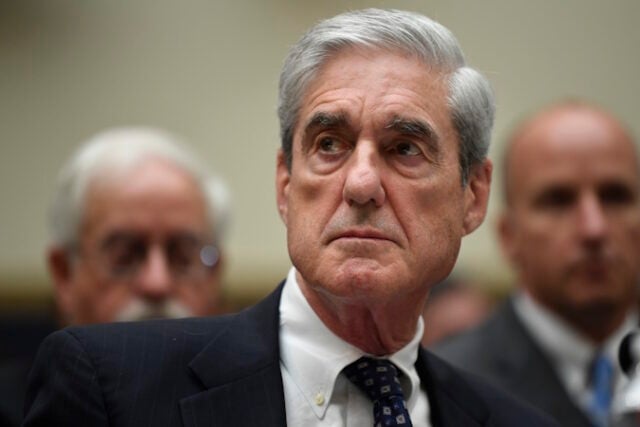
WASHINGTON — Robert S. Mueller III, the stoic and deeply disciplined career public servant who steered the FBI through the aftermath of the September 11 attacks and later emerged from retirement to lead the high-stakes investigation into Russian interference in the 2016 election, died Friday, March 20, 2026. He was 81.
His family confirmed the news in a statement released Saturday morning, requesting privacy as they mourn a man whose life was defined by an almost monastic devotion to the rule of law and the institutions of American justice. While no specific cause of death was immediately provided, it was disclosed in late 2025 that Mueller had been battling Parkinson’s disease since 2021, a diagnosis that had gradually curtailed his public appearances and limited his mobility in his final years.
A Legacy of Service: From Vietnam to the Justice Department
Born in New York City on August 7, 1944, Mueller’s trajectory was shaped by an old-school sense of duty. After graduating from Princeton University, he chose to enlist in the U.S. Marine Corps rather than seek a deferment during the Vietnam War. Serving as a rifle platoon leader, Mueller was awarded the Bronze Star for heroism and a Purple Heart after being wounded in combat. These early experiences in the jungles of Vietnam forged the “Marine-first” identity that characterized his entire professional life—buttoned-down, punctual to the minute, and fiercely loyal to the chain of command.
Following his military service, Mueller earned a law degree from the University of Virginia. He spent the next three decades moving between high-profile prosecutorial roles and private practice, though he famously grew restless in the private sector. He was known for taking “demotions” to return to the front lines of prosecution, at one point leaving a senior Justice Department post to work as a homicide prosecutor in Washington, D.C., because he missed the trial work.

Mueller eventually rose to become the Assistant Attorney General for the Criminal Division under President George H.W. Bush, where he oversaw the prosecutions of Panamanian leader Manuel Noriega and the suspects in the Lockerbie bombing of Pan Am Flight 103.
The FBI and the Shadow of 9/11
In a twist of historical fate, Mueller was sworn in as the sixth Director of the FBI on September 4, 2001—just one week before the terrorist attacks that would fundamentally transform the United States. Almost overnight, Mueller was tasked with pivoting the Bureau from a traditional domestic law enforcement agency focused on white-collar crime and organized syndicates into a global counterterrorism intelligence organization.
He served 12 years as Director, a tenure so respected for its stability that President Barack Obama requested that he stay on for an additional 2 years beyond the statutory 10-year limit. During his leadership, Mueller navigated the controversies of the Patriot Act, the expansion of federal surveillance, and the relentless pressure to prevent a second “9/11.” To his supporters, he was the ultimate institutionalist; to his critics, he presided over a period of government overreach. Yet, his integrity remained largely unquestioned across the political aisle for over a decade.
The Russia Investigation: A Polarizing Final Act
Mueller’s most significant—and most divisive—chapter began in May 2017. Following the firing of FBI Director James Comey by President Donald Trump, Deputy Attorney General Rod Rosenstein appointed Mueller as Special Counsel to investigate Russian interference in the 2016 presidential election and potential coordination with the Trump campaign.
For two years, Mueller became the silent center of a political hurricane. While the nation obsessed over every headline, Mueller himself never leaked, never tweeted, and never gave a single interview. His team eventually issued a 448-page report that detailed a “sweeping and systematic” Russian effort to influence the election and outlined ten instances where President Trump may have obstructed justice.
However, Mueller’s refusal to reach a definitive “prosecutorial judgment” on obstruction—citing Department of Justice policy against indicting a sitting president—left the report open to political interpretation. While it resulted in 34 indictments, including top Trump aides like Paul Manafort and Michael Flynn, the investigation failed to provide the “collusion” smoking gun many of the president’s detractors expected. Conversely, Trump and his allies characterized the entire endeavor as a “witch hunt.”
Mueller’s final public appearances, including a 2019 congressional testimony, showed a man who appeared weary of the partisan fray. He insisted that “the report is my testimony,” adhering to his lifelong belief that a prosecutor should speak only through their work.
Final Years and National Reaction
Following his second retirement, Mueller largely receded from public life. News of his Parkinson’s diagnosis in 2025 provided context for his fading voice and slower gait during his final years in the capital.
The reaction to his death on Saturday reflected the deep fissures of the era he helped define. While current Department of Justice officials and former colleagues praised him as a “paragon of integrity,” President Donald Trump took a different tone. In a post on social media on Saturday, Trump wrote: “Robert Mueller just died. Good, I’m glad he’s dead. He can no longer hurt innocent people!”
Despite the vitriol of his final decade in the spotlight, many historians argue that Mueller’s legacy will be defined not by the Russia probe alone, but by a half-century of service that bridged the gap between the Cold War and the digital age. He remained, until the end, a man of a different era—one who believed that the facts should speak for themselves and that the law was a shield rather than a sword.
He is survived by his wife, Ann, their two daughters, and several grandchildren.
Sources Used and Links
- Al Jazeera: Former FBI chief, Robert Mueller, dead at 81
- The Washington Post: Robert Mueller, ex-FBI director at center of political tempest, dies at 81
- CBS News: Robert Mueller, who investigated allegations of Russian election meddling, dies at 81, sources say
- LiveNow from FOX: Robert Mueller, former FBI director, dies at 81: reports
- Times of India: ‘Glad he’s dead’: Donald Trump on ex-FBI chief Robert Mueller’s death
- GoLocalProv: Former FBI Director Robert Mueller Dies at 81
- WABE (NPR/AP): Former FBI Director Robert Mueller, who investigated Russia-Trump campaign ties, dies
Disclaimer
Artificial Intelligence Disclosure & Legal Disclaimer
AI Content Policy.
To provide our readers with timely and comprehensive coverage, South Florida Reporter uses artificial intelligence (AI) to assist in producing certain articles and visual content.
Articles: AI may be used to assist in research, structural drafting, or data analysis. All AI-assisted text is reviewed and edited by our team to ensure accuracy and adherence to our editorial standards.
Images: Any imagery generated or significantly altered by AI is clearly marked with a disclaimer or watermark to distinguish it from traditional photography or editorial illustrations.
General Disclaimer
The information contained in South Florida Reporter is for general information purposes only.
South Florida Reporter assumes no responsibility for errors or omissions in the contents of the Service. In no event shall South Florida Reporter be liable for any special, direct, indirect, consequential, or incidental damages or any damages whatsoever, whether in an action of contract, negligence or other tort, arising out of or in connection with the use of the Service or the contents of the Service.
The Company reserves the right to make additions, deletions, or modifications to the contents of the Service at any time without prior notice. The Company does not warrant that the Service is free of viruses or other harmful components.