Choosing a neurosurgery center in Germany is rarely a simple decision. Brain tumor surgery requires a setting where precision, planning, and safety come together, because even millimeters can influence speech, movement, memory, or vision.
Seizures can complicate the picture as well. They may signal the presence of a tumor, affect daily functioning, and sometimes require a dedicated epilepsy evaluation alongside oncological planning.
This guide brings together the key criteria that help international patients evaluate a neurosurgery center in Germany, especially when both tumor management and seizure control are relevant. It shows how surgical skill, modern technology, teamwork, and a well‑organized care pathway all contribute to safer, more informed decisions.
This overview is meant for general understanding and shouldn’t replace a consultation with a qualified medical specialist.

Why Center Selection Matters in Brain Tumor Surgery
Brain tumors differ not only in how they grow but in how they interact with surrounding brain areas. Two lesions that look similar on MRI may require very different surgical strategies depending on their location and proximity to regions responsible for movement, speech, or vision. That’s why choosing a hospital well‑versed in brain tumor surgery in Germany becomes an important part of shaping the treatment plan.
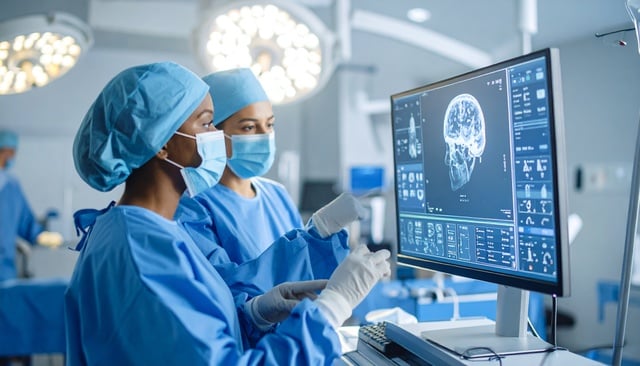
The anatomical context often defines what’s possible. Tumors near critical functional areas require a team with expertise in advanced imaging, functional mapping, and careful preoperative planning. Centers equipped with high‑resolution MRI, neuronavigation, and intraoperative monitoring can support safer decisions when millimeters matter.
Infrastructure also plays a role. Experienced ICU, specialized neuro‑anesthesiology, and early rehabilitation can influence recovery and overall stability. For international patients, these elements ensure that the entire pathway — from diagnosis to follow‑up — stays coordinated and predictable.
The Link Between Brain Tumors and Seizures
For many people, the first sign of a brain tumor is an unexpected seizure. It’s a frightening moment, but medically it often reflects how sensitive the brain is to even small disruptions in its electrical networks. A tumor doesn’t need to be large — its location and interaction with nearby tissue often matter more.
Seizures also affect daily life in ways that go beyond the diagnosis. People may worry about driving, working, or being alone, and these concerns naturally become part of the treatment discussion. If episodes continue or change, an epilepsy specialist may be involved to understand what’s driving them and how they fit into the broader tumor picture.
This overlap between neuro‑oncology and epileptology is why coordinated evaluation matters. When both teams look at the case together, they can clarify risks, refine the surgical plan, and help patients understand what to expect at each stage.
Key Criteria for Choosing a Neurosurgery Center in Germany
Choosing a clinic for brain tumor surgery in Germany means considering the entire care pathway — diagnostics, planning, surgery, recovery, and follow‑up. A strong center can coordinate all of this clearly.
Below is a practical checklist to assess whether a hospital is equipped for complex brain tumor cases and situations where seizure assessment also matters:
- Clinical focus on neuro-oncology. Centers that regularly treat brain tumors have established workflows, experienced teams, and access to specialized diagnostics.
- Multidisciplinary tumor board. A coordinated discussion among neurosurgeons, neuro-oncologists, radiologists, radiation specialists, pathologists, and, sometimes, epileptologists, refines the diagnosis and treatment plan.
- High-quality imaging and neuronavigation. Access to MRI with contrast, functional imaging when needed, and modern neuronavigation systems supports precise planning.
- Intraoperative neurophysiological monitoring. Monitoring motor, sensory, or language pathways during surgery can help protect critical functions.
- Functional mapping and awake surgery (in selected cases). These techniques may be considered when tumors are close to areas responsible for speech or movement.
- Experience with challenging locations. Tumors near eloquent cortex, deep structures, or vascular territories require the best neurosurgeon in Germany for brain tumor experienced in advanced approaches.
- Reliable pathology services. Accurate molecular and histological analysis supports precise diagnosis. It enables the team to determine the next steps in neuro‑oncology care.
- Postoperative care and rehabilitation. A strong ICU, neuro-anesthesiology team, and early rehabilitation services can influence recovery and stability after surgery.
- Transparent communication and structured follow-up. International patients benefit from clear explanations, written plans, and predictable coordination before and after the procedure.
What “Advanced Epilepsy Surgery Care” Means
When seizures remain part of the picture after a brain tumor is identified, patients may hear about “advanced epilepsy care” as an added layer of evaluation. It doesn’t imply surgery — it simply means taking a closer, structured look at where the seizures originate, how they relate to the tumor, and which specialists should weigh in to assess risks and treatment options.
When Epilepsy Surgery Is Considered
Epilepsy surgery in Germany usually enters the discussion when seizures keep happening despite the right medication — what doctors call drug‑resistant epilepsy — or when the episodes are clearly focal, meaning they start from one specific area of the brain.
In cases involving a tumor, the key question is whether the seizures come directly from the lesion or from irritated tissue around it. It becomes clearer only after the full diagnostic work‑up, which may include EEG, video‑monitoring, and detailed imaging.
Even then, surgery is not a default next step. Some patients never reach the point where epilepsy surgery is recommended, and that is entirely normal. The goal of the evaluation is to understand the situation as fully as possible so that any treatment decision is made with clarity and confidence.
Every case is individual, and the final plan always reflects the patient’s overall health, risks, and personal priorities.
Diagnostics That Support Decision-Making
A solid diagnostic work‑up is at the heart of advanced epilepsy care. EEG and video‑EEG pick up seizure activity that a routine visit might miss. MRI shows the structure, while PET or SPECT adds information about how the brain works between seizures.
These tests, on their own, do not dictate the treatment plan. Instead, they give the team a shared set of data to interpret together. The aim is to understand whether seizures are likely to improve with tumor removal alone or whether a more targeted epilepsy‑focused approach may be considered.
Why Specialized Centers Matter
Specialized centers that work with both brain tumors and epilepsy bring a more integrated view. They understand how seizures can complicate the picture and know how to balance tumor treatment with protecting function.
They also use techniques such as functional mapping, neuronavigation, and intraoperative monitoring to keep critical areas safe — especially when the seizure focus lies close to regions responsible for speech or movement.
Follow‑up is another strength of these centers. Patients often need guidance after returning home, whether to adjust medication, review imaging, or discuss changes in symptoms. This continuity helps ensure that both tumor‑related and seizure‑related issues are monitored over time.
Step-by-Step Pathway for International Patients
For international patients, the process usually follows a clear sequence. It’s less about medical details and more about understanding how the neuro-oncology care pathway is organized from start to finish:
- Collecting medical documents. The first step is sharing MRI scans in DICOM format, the radiology report, any pathology results, and a short description of symptoms or seizure history. That gives the team a clear starting point.
- Initial case review. Once the documents are received, the medical team takes a first look. They assess whether anything is missing, which specialists should be involved, and what questions still need clarification.
- Additional diagnostics (if needed). Sometimes the existing materials are enough. Other times, the team may recommend additional tests, such as a new MRI, functional imaging, or other studies. That isn’t about repeating work; it’s about making sure the diagnosis is as accurate as possible before planning treatment.
- Treatment or surgery planning and expected recovery path. After the diagnostic picture is clear, the team discusses possible treatment options. They explain the reasoning behind their recommendations, what alternatives exist, and what recovery might look like.
- Hospital admission and procedures. If the patient decides to proceed, the center organizes the admission dates and any necessary arrangements. Surgery or procedures follow the agreed plan.
- Discharge, follow‑up, and remote communication. After discharge, patients receive written recommendations and a follow‑up plan. Most centers continue supporting patients remotely by reviewing scans and answering questions.
Questions to Ask Before Booking Treatment
Before booking treatment, it can be helpful to ask a few clear questions. They’re not meant to challenge the team. They make it easier to understand the plan and feel confident about the next steps:
- What is the working diagnosis, and what still needs to be confirmed?
- How does the team assess risks to speech, movement, memory, or other functions?
- Which technologies are used for mapping and intraoperative monitoring?
- Will my case be discussed at a multidisciplinary tumor board?
- If I have seizures, what is the plan for managing them before and after surgery?
- Do you expect that tumor removal alone will help with seizures, or is further evaluation needed?
- What additional tests, if any, should I complete before coming to the clinic?
- What is the expected hospital stay, and what does early recovery usually look like?
- How is rehabilitation organized, and when does it typically start?
- What does follow‑up look like once I return home, and how will remote communication be handled?
Conclusion
Choosing a neurosurgeon in Germany is more than a practical step — it’s a decision that shapes the whole experience. With brain tumors, especially when seizures are involved, the way a team works together often matters just as much as the technical side of surgery. You want a place where the diagnosis is clear, the plan makes sense, and the people around you genuinely understand what you’re facing.
Germany stands out for its structured pathways and for the way specialists examine a case from multiple angles, which is exactly what makes a second opinion or a consultation with a high‑expertise center so valuable. It won’t promise specific outcomes, but it can bring clarity, help you ask the right questions, and make you feel that your decision is made consciously rather than by chance.
References
- Louis DN, Perry A, Wesseling P, et al. The 2021 WHO Classification of Tumors of the Central Nervous System. International Agency for Research on Cancer (IARC), 2021.
- Dr. Ahmed F. & Dr.Volvak M. Ranking 5 Leading Neurosurgeons in Germany for Brain Tumor. Airomedical. Updated January 12, 2026.
- National Comprehensive Cancer Network (NCCN). NCCN Clinical Practice Guidelines in Oncology: Central Nervous System Cancers. Version 2024.
- Weller M, van den Bent M, Preusser M, et al. EANO Guidelines on the Diagnosis and Treatment of Adult Gliomas. The Lancet Oncology, 2021.
- Mudr. Popel A. & Dr.Volvak A. Epilepsy Treatment in Germany. Airomedical. Updated January 23, 2026.
- German Cancer Society (DKG). Certification Requirements for Neuro‑Oncology Centers. 2023.
- European Association of Neurosurgical Societies (EANS). Recommendations on Functional Mapping and Intraoperative Monitoring. 2022.
Disclaimer
Artificial Intelligence Disclosure & Legal Disclaimer
AI Content Policy.
To provide our readers with timely and comprehensive coverage, South Florida Reporter uses artificial intelligence (AI) to assist in producing certain articles and visual content.
Articles: AI may be used to assist in research, structural drafting, or data analysis. All AI-assisted text is reviewed and edited by our team to ensure accuracy and adherence to our editorial standards.
Images: Any imagery generated or significantly altered by AI is clearly marked with a disclaimer or watermark to distinguish it from traditional photography or editorial illustrations.
General Disclaimer
The information contained in South Florida Reporter is for general information purposes only.
South Florida Reporter assumes no responsibility for errors or omissions in the contents of the Service. In no event shall South Florida Reporter be liable for any special, direct, indirect, consequential, or incidental damages or any damages whatsoever, whether in an action of contract, negligence or other tort, arising out of or in connection with the use of the Service or the contents of the Service.
The Company reserves the right to make additions, deletions, or modifications to the contents of the Service at any time without prior notice. The Company does not warrant that the Service is free of viruses or other harmful components.