A Region at the Breaking Point
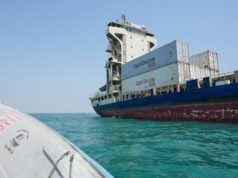
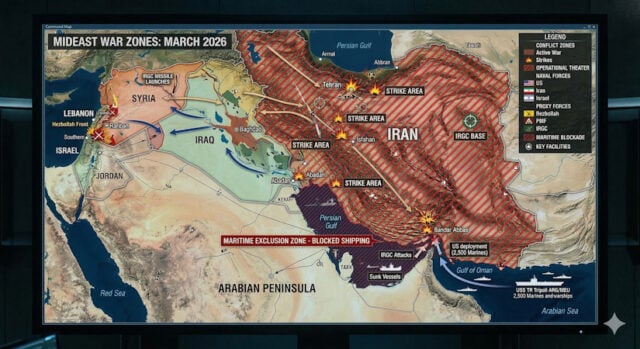
The conflict between the United States, Israel, and Iran has entered a perilous new phase as of March 13, 2026. Two weeks into a war that has fundamentally reshaped the Middle East, both sides are signaling a commitment to a long-term struggle. The U.S. Pentagon has authorized the immediate deployment of 2,500 U.S. Marines and additional warships to the region, including the USS Tripoli and an Amphibious Ready Group. These assets are moving to secure the Strait of Hormuz, where Iranian attacks have effectively paralyzed global oil trade and pushed crude prices above $100 a barrel.
In Tehran, the newly appointed Supreme Leader, Mojtaba Khamenei, issued his first major statement since the start of the war. Although he has not appeared in person—amid reports from U.S. Defense Secretary Pete Hegseth that the leader may be “wounded and disfigured”—Khamenei’s message was clear: Iran will continue its “retaliation” against U.S.-Israeli strikes and maintain its stranglehold on the world’s most critical energy corridor.
The Ground and Air Campaign
The military reality on the ground is a relentless exchange of high-tech ordinance and asymmetric strikes. U.S. Central Command (CENTCOM) reported on Thursday that coalition forces have struck over 6,000 targets inside Iran since the campaign, dubbed “Operation Epic Fury,” began on February 28. These strikes have focused on:

- Command and Control: The building housing the Assembly of Experts was destroyed, and internal security facilities in 11 different provinces have been hit.
- Strategic Infrastructure: Refineries in Abadan and storage facilities have been targeted to degrade the regime’s economic capability.
- Naval Assets: CENTCOM claims to have sunk over 60 Iranian ships, including all four IRGC Navy Soleimani-class warships.
Despite this, Iran’s “Axis of Resistance” remains active. Hezbollah has launched its highest volume of attacks to date, claiming 27 strikes against Israeli positions in a single 18-hour window. Meanwhile, Iranian-linked drones have struck civilian and oil infrastructure in the UAE, Bahrain, Saudi Arabia, and Kuwait.
Economic and Humanitarian Toll
The war has moved beyond a local military engagement, triggering what experts call a “global energy shock.” With over 1,000 cargo ships currently unable to pass through the Strait of Hormuz, the impact on Asian and European markets is becoming acute. In the United States, President Donald Trump has authorized the release of strategic oil reserves, yet stock markets remain volatile as the prospect of a “regime change” remains uncertain.
The human cost is also mounting. In one of the most tragic incidents of the conflict, a preliminary U.S. investigation suggests a strike intended for an IRGC base accidentally hit a school near Bandar Abbas, killing approximately 170 people. On the coalition side, four U.S. service members were killed in a KC-135 refueling tanker crash in western Iraq this week, an incident CENTCOM maintains was not caused by hostile fire.
Strategic Buildup and Escalation
The inclusion of the 2,500 Marines represents a significant shift from a purely aerial and naval standoff to a “boots-on-the-ground” deterrent. These forces, specialized in amphibious raids and maritime security, are expected to board and secure commercial tankers that have been harassed by the IRGC. Naval analysts suggest this move is intended to call Iran’s bluff regarding the total closure of the Persian Gulf.
As the U.S. buildup reaches levels not seen since the 2003 invasion of Iraq, the administration maintains that “diplomacy is always the first option,” but that military pressure will continue until Iran yields on its nuclear and missile programs. With Israel preparing to expand ground operations in southern Lebanon and Turkey already intercepting Iranian missiles in NATO airspace, the theater of war is widening daily.
Sources and Links
- Al Jazeera: Iran war: What is happening on day 14 of US-Israel attacks?
- Council on Foreign Relations (CFR): Iran Vows to Keep Fighting
- Investing.com: Pentagon sends USS Tripoli and Marines to Middle East
- CBS News: Iran war paralyzes oil trade, U.S. military plane crashes in Iraq
- Institute for the Study of War (ISW): Iran Update Morning Special Report, March 12, 2026
- Britannica: 2026 Iran conflict | Explained, United States, Israel, Map, & War
- Military Times: US military assembles largest force of warships, aircraft in Middle East in decades
- Türkiye Today: US said to deploy 2,500 Marines, tanker escorts to secure Hormuz shipping
Disclaimer
Artificial Intelligence Disclosure & Legal Disclaimer
AI Content Policy.
To provide our readers with timely and comprehensive coverage, South Florida Reporter uses artificial intelligence (AI) to assist in producing certain articles and visual content.
Articles: AI may be used to assist in research, structural drafting, or data analysis. All AI-assisted text is reviewed and edited by our team to ensure accuracy and adherence to our editorial standards.
Images: Any imagery generated or significantly altered by AI is clearly marked with a disclaimer or watermark to distinguish it from traditional photography or editorial illustrations.
General Disclaimer
The information contained in South Florida Reporter is for general information purposes only.
South Florida Reporter assumes no responsibility for errors or omissions in the contents of the Service. In no event shall South Florida Reporter be liable for any special, direct, indirect, consequential, or incidental damages or any damages whatsoever, whether in an action of contract, negligence or other tort, arising out of or in connection with the use of the Service or the contents of the Service.
The Company reserves the right to make additions, deletions, or modifications to the contents of the Service at any time without prior notice. The Company does not warrant that the Service is free of viruses or other harmful components.