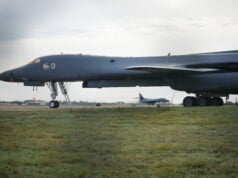
The global energy landscape shifted violently on Saturday, February 28, 2026, as the United States and Israel launched a massive military operation, dubbed “Operation Epic Fury,” targeting Iranian missile stockpiles and nuclear infrastructure. The strikes have sent immediate shockwaves through global financial centers, with Brent crude futures surging $3 to $5 per barrel in pre-market positioning, as the world prepares for what could be the most significant disruption to the global oil market in decades.
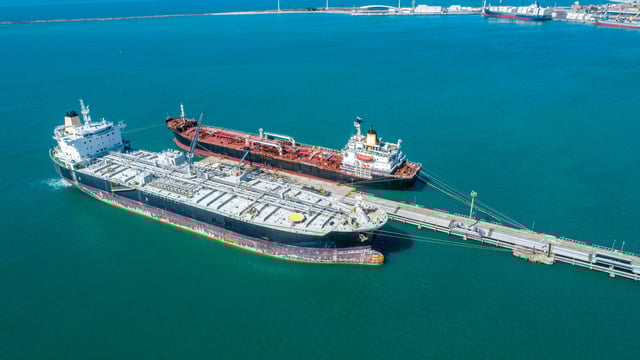
The ramifications of a direct conflict with Iran extend far beyond the immediate tactical objectives of the strikes. At the heart of the crisis is the Strait of Hormuz, a narrow 21-mile-wide waterway through which roughly 20 million barrels of oil per day—roughly 20% of global consumption—transit. Analysts warn that even a partial blockade of this chokepoint could trigger a “war premium” that pushes oil prices into the triple digits.
The Immediate Market Reaction
On the eve of the strikes, Brent crude had already been trading at approximately $73 per barrel, reflecting a growing “risk-averse” posture among traders following weeks of escalating rhetoric from the Trump administration. With the commencement of hostilities, experts from J.P. Morgan and Capital Economics suggest that if the conflict is prolonged or targets Iran’s own energy infrastructure—such as the vital Kharg Island export terminal—prices could rapidly escalate toward $100 per barrel.
“This is a pricing event turning into a fundamentals event,” noted Claire Jungman, Director of Maritime Risk at Vortexa. While no physical supply loss has been confirmed in the hours following the initial strikes, the psychological impact is profound. Freight markets and insurers are already reassessing risk exposure in Middle East load zones, a move that typically precedes a spike in retail fuel costs worldwide.

The “Hormuz Factor” and Global Agriculture
The strategic dilemma for the West lies in Iran’s potential for asymmetric retaliation. Tehran has long held the “Hormuz Card,” threatening to mine or block the strait if its own survival is at stake. Unlike previous regional skirmishes, the 2026 context involves a global economy already sensitive to inflationary pressures.
The disruption would not be limited to oil. The Strait of Hormuz is also a critical artery for:
- Liquefied Natural Gas (LNG): Approximately 20% of global LNG trade flows through the waterway. Analysts at ICIS warn that a closure could see European gas benchmarks, such as the Dutch TTF, soar above €90/MWh, a threefold increase from current levels.
- Fertilizers: Roughly 25% to 35% of the world’s traded ammonia and urea transit the Strait. A blockade would trigger “agflation,” driving up food production costs in major farming nations like India and Brazil, which rely heavily on Middle Eastern chemical supplies.
OPEC+ and the Quest for Stability
In a move that many see as a coordinated “painkiller” for the markets, OPEC+ is scheduled to meet on March 1, 2026. Internal sources suggest the cartel, led by Saudi Arabia and the United Arab Emirates, is considering a massive production hike to offset any Iranian shortfall. While a base-case increase of 137,000 barrels per day (bpd) was previously planned for April, sources indicate the group may now discuss a surge of up to 548,000 bpd.
Saudi Arabia currently maintains a spare capacity of approximately 1.8 million bpd, providing a crucial buffer. However, the efficacy of this buffer depends entirely on whether tankers can safely exit the Persian Gulf. If the Strait of Hormuz is rendered impassable, the world’s spare capacity remains trapped behind the blockade, leaving the market in a state of terminal deficit.
Regional and Global Economic Spillovers
The economic fallout is expected to be unevenly distributed. Asia is particularly vulnerable, as nearly 90% of Iran’s exports are destined for China, and the vast majority of Gulf oil traffic flows toward Asian refineries. In the West, while the U.S. remains a net energy exporter, the “contagion” of high oil prices will likely exacerbate domestic inflation, complicating the Federal Reserve’s monetary policy during a critical midterm election year.
Domestically, Iran faces a “use it or lose it” dilemma. The regime, already weakened by the massive internal protests of late 2025 and January 2026, may view a total disruption of energy markets as its final lever of influence. Iranian retaliation has already begun, with reports of missile strikes against U.S. military bases in Qatar and Bahrain.
The Long-Term Outlook
If the conflict is contained within a two-week window, energy experts believe the price spike may be temporary. However, a prolonged war that destroys Iranian infrastructure would negate years of production recovery. Historically, regime-change events in oil-producing nations have led to an average 76% increase in prices from onset to peak.
As the sun rises on a new era of Middle Eastern instability, the global community faces a stark reality: the era of “cheap” energy may be under its most severe threat since the 1970s. The coming days of trading will determine whether the world faces a manageable price correction or a structural energy crisis that could redefine global trade routes for a generation.
Sources and Links
- CSIS (Center for Strategic and International Studies): If Trump Strikes Iran: Mapping the Oil Disruption Scenarios
- J.P. Morgan Asset Management: What are the economic and market implications of the Israel-Iran conflict?
- BloombergNEF: Oil Can Hit $91 a Barrel in Late 2026 on Iran Disruption
- Pro Farmer / Bill Watts: What the Iran attack means for oil and ag commodities
- Vortexa: Strikes on Iran: Oil market implications
- ICIS Analytics: Potential Strait of Hormuz closure could push Europe’s TTF gas benchmark above €90.00/MWh
- Ground News: OPEC+ may consider larger oil output boost as Saudi, UAE up exports
- The Guardian: Oil prices hit seven-month highs as tensions rise
- Livemint / Khaleej Times: Will oil prices touch $100? Expert weighs in on US-Israel attack on Iran
Disclaimer
Artificial Intelligence Disclosure & Legal Disclaimer
AI Content Policy.
To provide our readers with timely and comprehensive coverage, South Florida Reporter uses artificial intelligence (AI) to assist in producing certain articles and visual content.
Articles: AI may be used to assist in research, structural drafting, or data analysis. All AI-assisted text is reviewed and edited by our team to ensure accuracy and adherence to our editorial standards.
Images: Any imagery generated or significantly altered by AI is clearly marked with a disclaimer or watermark to distinguish it from traditional photography or editorial illustrations.
General Disclaimer
The information contained in South Florida Reporter is for general information purposes only.
South Florida Reporter assumes no responsibility for errors or omissions in the contents of the Service. In no event shall South Florida Reporter be liable for any special, direct, indirect, consequential, or incidental damages or any damages whatsoever, whether in an action of contract, negligence or other tort, arising out of or in connection with the use of the Service or the contents of the Service.
The Company reserves the right to make additions, deletions, or modifications to the contents of the Service at any time without prior notice. The Company does not warrant that the Service is free of viruses or other harmful components.