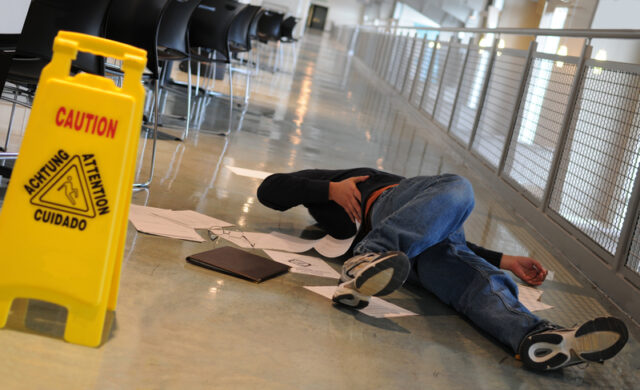
Slip and fall accidents in malls and shops are becoming a major worry for folks across the United States. The Centers for Disease Control and Prevention says there are over a million emergency room visits every year due to slips and falls and that makes them one of the leading causes of unintentional injury.
For older adults, the consequences can be especially dire. Sadly, we see around 15,000 seniors die each year from fall injuries. In Florida, there were actually documented 347 fall-related hospitalizations per 100,000 people in just one year. It really puts into perspective how serious this is.
Whether it’s a slippery floor in a grocery store or inadequate lighting in a parking lot, retail environments are packed with hazards. If you’ve been hurt in a slip and fall accident at someone else’s property, it’s pretty clear that understanding your options is a no-brainer. A Tampa slip and fall injury lawyer can help you navigate the system and get the compensation you deserve for your losses.
Common Causes of Slip and Fall Accidents in Retail Spaces
Slip and fall accidents happen for all sorts of reasons, many of which are common in retail environments. The Occupational Safety and Health Administration says the most common causes include slippery floors from spills or recent mopping, uneven flooring and broken tiles, clutter on walkways, broken handrails on staircases and poor lighting in aisles and parking lots. When a property owner didn’t take steps to address these clear hazards or alert visitors to them, they may be liable under premises liability law.

How Premises Liability Law Works in Florida
Slip and fall claims are all based on a principle called premises liability, which says property owners are responsible for keeping their properties safe for visitors. Under Florida law, property owners have to keep their properties in a safe condition. They’ve got to regularly inspect the property and either fix known hazards or warn people about them.
Florida law divides the types of duty a property owner owes depending on the type of visitor. People who come into your property for business – like customers in a retail store – get the highest level of care.
A person who just walks onto your property without permission is considered a trespasser – and Florida law typically doesn’t hold property owners automatically responsible for injuries to trespassers. Florida also places a high burden of proof on victims to show the property owner actually knew or should have known about the hazard there.
How to Prove Negligence in a Slip and Fall Case
To win your premises liability case, you’ve got to show that the property owner owed you a duty of care, they failed to meet that duty, that failure led to your fall and that you suffered actual harm as a result.
Most of this comes down to proving that the property owner just didn’t take proper care – and gathering evidence like surveillance footage, maintenance records and witness statements can be a big help in building your case.
If you slip and fall due to a condition that a property owner caused or failed to take care of, you may have a personal injury claim. Taking pictures at the scene and preserving any evidence like the shoes you were wearing can also be super helpful.
Deeper Injuries and Losses from Retail Slip and Falls
The truth is, slip and fall accidents are more serious than people often realize. You can end up with broken bones, head trauma or spinal injuries – in the worst-case scenario, even death. People often end up with massive medical bills, extensive physical therapy, and a lot of lost work time while they recover. The physical and emotional pain can be intense – and may even lead to long-term emotional problems.
A successful premises liability case lets you collect compensation for all the losses you suffered. You can get economic damages for things like medical expenses and lost wages – and non-economic damages for emotional losses like pain and suffering. A slip and fall lawyer in Tampa can help you figure out just how much you might be owed.
Florida’s Comparative Negligence Rule and Statute of Limitations
Florida follows a comparative negligence rule, which means that if you’re found to be even a tiny bit at fault for the accident, your compensation may be cut down by the percentage of fault you bear. But if you’re more than 50% at fault for your slip and fall – you won’t be able to collect damages at all.
Under Florida law, you generally have two years from the date of the accident to bring a lawsuit for a slip and fall case. If you don’t get that lawsuit in on time, you could lose your right to collect any money at all. That’s why talking to a personal injury lawyer as soon as you can after the accident is really important.
How a Tampa Slip and Fall Lawyer Can Help You Out
Slip & fall cases are rarely a cut & dry affair – there’s usually more to it than meets the eye. Insurance companies often try to wriggle out of paying up or downplay the severity of the claim. That’s why you need an experienced slip & fall lawyer from a reputable law firm who knows the ropes.
A lawyer will handle all the communication with the insurance company to stop them devaluing your claim, and do their best to negotiate a fair payout that covers all your damages. If the insurance company refuses to meet you halfway, they’ll go to court and get ready for a fight.
Tampa personal injury lawyers & attorneys who’ve spent years specializing in personal injury law, personal injury litigation & all kinds of personal injury matters are super familiar with the ins & outs of premises liability law in Florida.
They know the local court rules, who the judges are and their quirks and the tricks the defence likes to pull – all of which gives you a massive leg up in your personal injury cases.
What to Do After a Slip and Fall in a Retail Space
First priority is to get yourself to a doctor ASAP and then tell the property owner what happened, take some photos of the scene, and get the contact info of any witnesses who might have seen what happened.
Save any physical evidence too. Next, get in touch with a reputable slip injury lawyer who can tell you what your options are.
Filing a slip and fall lawsuit in Florida usually involves getting medical attention, gathering evidence, talking to a lawyer and then preparing the paperwork to actually file the case.
Most personal injury lawyers in Florida work on a contingency basis, so you’re not out of pocket unless you win – which means a free consultation is a no-risk proposition.
Finding the Right Slip and Fall Lawyer in Tampa
So, how do you go about finding a reliable slip and fall lawyer in Tampa? Here are the key things to look for:
- You want an attorney with lots of experience of Florida premises liability cases and a track record of getting good settlements.
- You need to check that the lawyer is licensed to practice law in Florida and hasn’t had any run-ins with the Florida Bar.
- Google, Yelp, Avvo & Martindale-Hubbell are all good resources to check out client testimonials and see how well-regarded the lawyer is.
- Check that the lawyer operates on a contingency fee basis and has dealt with cases similar to yours.
A top-notch slip and fall injury lawyer in Tampa with an in-depth knowledge of Florida law and the local court system will help you get maximum value for your injury.
Conclusion
The rise in slip and fall incidents in stores across Tampa is a big concern – not just for public safety but for the law too. If your injuries were caused by a preventable hazard, like a wet floor, bad lighting or something else entirely, you’ve got rights under Florida law and a right to compensation.
Don’t let yourself get stuck with a ton of medical bills, lost wages & emotional distress without doing something about it. Get in touch with a lawyer today for a no-obligation consultation and start the process of getting the fair compensation you deserve.
Disclaimer
Artificial Intelligence Disclosure & Legal Disclaimer
AI Content Policy.
To provide our readers with timely and comprehensive coverage, South Florida Reporter uses artificial intelligence (AI) to assist in producing certain articles and visual content.
Articles: AI may be used to assist in research, structural drafting, or data analysis. All AI-assisted text is reviewed and edited by our team to ensure accuracy and adherence to our editorial standards.
Images: Any imagery generated or significantly altered by AI is clearly marked with a disclaimer or watermark to distinguish it from traditional photography or editorial illustrations.
General Disclaimer
The information contained in South Florida Reporter is for general information purposes only.
South Florida Reporter assumes no responsibility for errors or omissions in the contents of the Service. In no event shall South Florida Reporter be liable for any special, direct, indirect, consequential, or incidental damages or any damages whatsoever, whether in an action of contract, negligence or other tort, arising out of or in connection with the use of the Service or the contents of the Service.
The Company reserves the right to make additions, deletions, or modifications to the contents of the Service at any time without prior notice. The Company does not warrant that the Service is free of viruses or other harmful components.