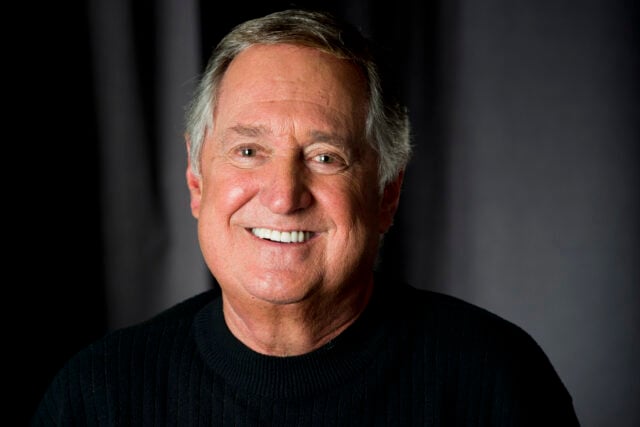
The music world lost one of its most resilient and melodic voices today. Neil Sedaka, the Brooklyn-born piano prodigy who evolved from a 1950s teen idol into one of the most successful songwriters in history, died Friday, February 27, 2026, at the age of 86. His family confirmed the news in a statement, describing him as a “true rock and roll legend” and an “incredible human being.”
Sedaka’s career was a masterclass in reinvention. He didn’t just survive the changing tides of pop music; he frequently rewrote the rulebook. From his early days at the Juilliard School to the height of the Brill Building era, and later his triumphant return to the top of the charts with the help of Elton John, Sedaka remained a constant, cheerful presence in the American songbook.
The Prodigy of Brighton Beach
Born in Brooklyn on March 13, 1939, Sedaka’s musical journey began with a secondhand upright piano funded by his mother’s part-time job at a department store. His talent was undeniable; by the second grade, he was recommended for serious study, eventually earning a scholarship to Juilliard’s Preparatory Division for Children. While his teachers envisioned a future in classical music, Sedaka’s heart belonged to the radio.
At age 13, he met Howard Greenfield, a neighbor in his apartment building. It was the birth of one of pop’s most prolific partnerships. Together, they began writing songs that would eventually define the “Brill Building Sound”—a sophisticated blend of classical structure and teenage sentiment.

The Teen Idol and the British Invasion
In the late 1950s and early ’60s, Sedaka became a star in his own right. Hits like “Oh! Carol” (written for his high school girlfriend, Carole King), “Calendar Girl,” and the chart-topping “Breaking Up Is Hard to Do” made him a household name. He was a pioneer of the “multi-tracking” vocal technique, layering his own voice to create a rich, choral sound that became his trademark.
However, the 1964 British Invasion led by The Beatles nearly ended his career as a performer. As the charts shifted toward self-contained rock bands, Sedaka’s polished pop felt out of step. Ever the craftsman, he retreated to the background, continuing to write hits for others, including the Monkees and Frank Sinatra.
The Legendary Comeback
The mid-1970s saw one of the greatest career revivals in music history. After moving to England, Sedaka caught the attention of Elton John, who signed him to his fledgling Rocket Records label. The result was a string of sophisticated soft-rock hits that introduced him to a new generation: “Laughter in the Rain,” “Bad Blood,” and a slowed-down, soulful version of “Breaking Up Is Hard to Do.”
During this era, he also penned “Love Will Keep Us Together,” which became a career-defining No. 1 hit for Captain & Tennille. It was a testament to Sedaka’s ability to write timeless melodies that transcended genres and eras.
A Life of Song
In his later years, Sedaka never slowed down. He performed dozens of concerts annually, well into his 80s, his voice remarkably preserved. During the COVID-19 pandemic, he endeared himself to a digital audience by hosting daily “mini-concerts” from his home, sharing stories and songs with a world in isolation. He often joked that whenever he opened the refrigerator and the light came on, he felt the urge to perform.
Neil Sedaka is survived by his wife of over 60 years, Leba Strassberg, and their children, Dara and Marc. His legacy remains etched in the over 500 songs he composed—melodies that, like the man himself, refused to go out of style.
Sources
- Paste Magazine: R.I.P. Neil Sedaka: Hit singer-songwriter dead at 86
- The Washington Post: Neil Sedaka, singer, songwriter and pop hitmaker in two eras, dies at 86
- Variety / KARE 11: Legendary singer Neil Sedaka dies at 86, family mourns ‘incredible human being’
- Hindustan Times: Neil Sedaka cause of death update
- Consequence: Neil Sedaka, “Laughter in the Rain” and “Breaking Up Is Hard to Do” Singer, Dead at 86
Disclaimer
Artificial Intelligence Disclosure & Legal Disclaimer
AI Content Policy.
To provide our readers with timely and comprehensive coverage, South Florida Reporter uses artificial intelligence (AI) to assist in producing certain articles and visual content.
Articles: AI may be used to assist in research, structural drafting, or data analysis. All AI-assisted text is reviewed and edited by our team to ensure accuracy and adherence to our editorial standards.
Images: Any imagery generated or significantly altered by AI is clearly marked with a disclaimer or watermark to distinguish it from traditional photography or editorial illustrations.
General Disclaimer
The information contained in South Florida Reporter is for general information purposes only.
South Florida Reporter assumes no responsibility for errors or omissions in the contents of the Service. In no event shall South Florida Reporter be liable for any special, direct, indirect, consequential, or incidental damages or any damages whatsoever, whether in an action of contract, negligence or other tort, arising out of or in connection with the use of the Service or the contents of the Service.
The Company reserves the right to make additions, deletions, or modifications to the contents of the Service at any time without prior notice. The Company does not warrant that the Service is free of viruses or other harmful components.