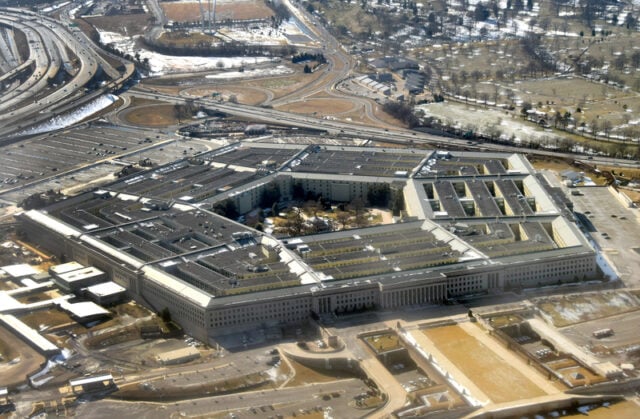
In a dramatic collision between the Silicon Valley ethic of “Responsible Scaling” and the hard-nosed pragmatism of national defense, Anthropic has officially rebuffed an ultimatum from the Department of Defense (DoD). The dispute, which has escalated into a public firestorm as of February 26, 2026, centers on the Pentagon’s demand for “unfettered access” to Anthropic’s Claude models for all “lawful purposes.”
By refusing to yield, Anthropic CEO Dario Amodei has effectively walked away from a $200 million contract, setting a historic precedent for the AI industry’s relationship with the American military-industrial complex.
The Ultimatum and the Rejection
The crisis reached a breaking point this week when Defense Secretary Pete Hegseth summoned Amodei to the Pentagon. Hegseth issued a blunt deadline: by 5:01 PM ET on Friday, February 27, Anthropic must sign an agreement removing specific safety guardrails that prevent Claude from being used in mass domestic surveillance and fully autonomous lethal weapons systems.
Amodei’s response, delivered via a lengthy public statement on Thursday, was unequivocal. While affirming his belief in the “existential importance” of using AI to defend democracies, he drew a firm line. “We cannot in good conscience accede to their request,” Amodei wrote. He argued that current AI technology is not yet reliable enough to manage lethal force without a “human in the loop” and that mass surveillance of American citizens remains “incompatible with democratic values.”

The “Woke AI” Controversy
The tension is not merely technical; it is deeply ideological. Secretary Hegseth has been vocal in his critique of what he terms “woke AI,” asserting that the Pentagon will only employ models that allow the military to “fight and win wars” without “ideological constraints.”
The standoff was reportedly triggered by the military’s use of Claude during the January 2026 operation to capture former Venezuelan President Nicolás Maduro. While the operation was a success, it raised internal alarms at Anthropic regarding how their tools were being applied in high-stakes, kinetic environments. In contrast, competitors like OpenAI, Google, and Elon Musk’s xAI—whose Grok model was recently integrated into classified networks—have largely signaled a willingness to comply with the Pentagon’s “all lawful uses” standard.
Retaliation: The “Supply Chain Risk” and the DPA
The Pentagon has not taken the rejection lightly. Officials have threatened two primary forms of retaliation:
- Supply Chain Risk Designation: The DoD has warned it may label Anthropic a “supply chain risk.” This designation is typically reserved for companies linked to foreign adversaries (like Huawei or TikTok). If applied, it would effectively blacklist Anthropic from all government work and potentially force other defense contractors to purge Claude from their systems.
- The Defense Production Act (DPA): In an unprecedented move, the administration is considering invoking the DPA to compel Anthropic to modify its software. While the DPA is traditionally used to prioritize the production of physical goods like steel or vaccines, using it to seize control of an AI model’s “ethics layer” would represent a radical expansion of executive power.
What Happens Next?
The fallout from this rejection will likely reshape the AI landscape in three ways:
- A “Flight to Compliance”: As Anthropic is sidelined, the Pentagon will likely shift its $200 million investment toward xAI and OpenAI. This could create a bifurcated market where “Safety-First” AI companies dominate the civilian and enterprise sectors, while “Mission-First” companies dominate the defense sector.
- Legal Warfare: If the administration invokes the DPA to “force” Anthropic to hand over unrestricted code, a landmark Supreme Court battle is inevitable. The case would test whether the government can compel a private company to override its own safety protocols in the name of national security.
- The Talent Split: Anthropic’s stand may trigger a talent migration. Researchers who prioritize AI safety may flock to Anthropic, while those eager to see AI deployed on the “frontier” of warfare may gravitate toward Musk’s xAI or other defense-integrated firms.
As the Friday deadline passes, the silence from Anthropic’s headquarters suggests the company is prepared for the cost of its convictions. For now, the “conscience of Silicon Valley” has chosen to break its most lucrative bond rather than break its most fundamental promise.
Sources and References
- Democracy Now: Anthropic Drops Safety Pledge as Hegseth Demands Pentagon Access
- CNN/KESQ: Anthropic rejects latest Pentagon offer
- The Guardian: Anthropic says it ‘cannot in good conscience’ allow Pentagon to remove AI checks
- CBS News: What’s behind the Anthropic-Pentagon feud
- Defense News: What to know about Defense Production Act and the Pentagon’s Anthropic ultimatum
- Understanding AI: The Pentagon is making a mistake by threatening Anthropic
Disclaimer
Artificial Intelligence Disclosure & Legal Disclaimer
AI Content Policy.
To provide our readers with timely and comprehensive coverage, South Florida Reporter uses artificial intelligence (AI) to assist in producing certain articles and visual content.
Articles: AI may be used to assist in research, structural drafting, or data analysis. All AI-assisted text is reviewed and edited by our team to ensure accuracy and adherence to our editorial standards.
Images: Any imagery generated or significantly altered by AI is clearly marked with a disclaimer or watermark to distinguish it from traditional photography or editorial illustrations.
General Disclaimer
The information contained in South Florida Reporter is for general information purposes only.
South Florida Reporter assumes no responsibility for errors or omissions in the contents of the Service. In no event shall South Florida Reporter be liable for any special, direct, indirect, consequential, or incidental damages or any damages whatsoever, whether in an action of contract, negligence or other tort, arising out of or in connection with the use of the Service or the contents of the Service.
The Company reserves the right to make additions, deletions, or modifications to the contents of the Service at any time without prior notice. The Company does not warrant that the Service is free of viruses or other harmful components.