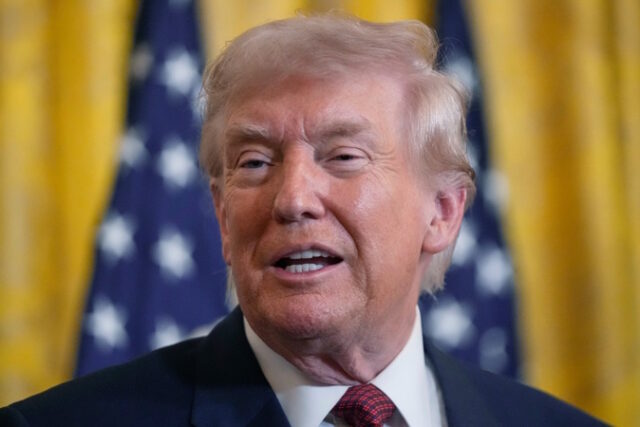
MIAMI, FL — In a move designed to cement U.S. preeminence in the Western Hemisphere, President Donald Trump has invited a select group of Latin American leaders to a high-stakes summit in Florida on March 7, 2026. The meeting, confirmed by White House officials this week, comes at a pivotal moment for the administration’s “America First” policy, arriving just weeks before the President is scheduled to travel to Beijing for a face-to-face meeting with Chinese President Xi Jinping.
A New Era of Hemispheric Dominance
The upcoming summit is the latest iteration of what many are calling the “Trump Corollary to the Monroe Doctrine.” Following a turbulent start to the year—highlighted by the audacious January 3 military operation that led to the capture of former Venezuelan leader Nicolás Maduro—the Trump administration is moving rapidly to fill the power vacuum in South and Central America.
Invitees reportedly include leaders from Argentina, Paraguay, Bolivia, El Salvador, Ecuador, and Honduras. These nations represent a growing “coalition of the willing” that have signaled a desire for closer economic and security ties with Washington. For instance, Argentine President Javier Milei and the newly inaugurated Honduran President Nasry Asfura are expected to discuss expanded trade deals modeled after the recent U.S.-Argentina pact, which quintupled the quota for Argentine beef in exchange for eliminating tariffs on hundreds of American products.
Countering the “Dragon in the Backyard”
Central to the Florida summit is the administration’s overt mission to roll back Chinese economic and strategic influence in the region. For years, Beijing has served as a primary financier for infrastructure projects across Latin America through massive loans and trade partnerships. The Trump administration, however, has recently characterized these deals as “predatory,” warning that “cheap Chinese money costs sovereignty.”

Specific flashpoints likely to dominate the agenda include:
- The Panama Canal: President Trump has repeatedly suggested that the U.S. should consider retaking oversight of the canal, claiming it is currently being “operated by China.”
- Critical Infrastructure: The U.S. State Department recently expressed alarm over Peru’s Chancay deepwater port, which is under Chinese jurisdiction.
- Energy Security: Following the ouster of Maduro, the administration has moved to integrate Venezuelan oil resources into the American energy framework, pitching a $100 billion private investment plan to rebuild the nation’s infrastructure under U.S. oversight.
Florida has become the unofficial capital of the administration’s foreign policy. While the March 7 summit is a regional gathering, it serves as a precursor to the even larger 2026 G20 Summit, which Trump has already announced will be held in Miami later this year. By hosting regional leaders in Florida, the President is leveraging the state’s cultural and economic ties to Latin America to project a message of stability and partnership.
Critics, including organizations like the Washington Office on Latin America (WOLA), have raised concerns about the “unilateral and coercive” nature of these policies. They argue that the focus on “God-given natural rights” and “peace through economic strength” has replaced traditional emphasis on human rights and international law. Nevertheless, proponents argue that the administration’s decisive actions are stabilizing a region long plagued by irregular migration and cartel violence.
Looking Ahead to Beijing
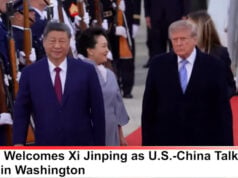
The timing of the Florida summit is no accident. By securing commitments from Latin American allies in March, Trump enters his late-spring negotiations with President Xi Jinping from a position of hemispheric unity. Defense Secretary Pete Hegseth recently told regional military chiefs that the goal is to “achieve a permanent peace in this hemisphere”—a peace that clearly places Washington at the head of the table.
As the March 7 date approaches, the eyes of the world will be on Florida to see if this “Americas First” strategy can truly decouple the region from its growing reliance on the East.
Sources and Links
- Associated Press: Trump is gathering Latin American leaders in Florida in March
- AS/COA Online: Trump in Latin America: Dispatches on Washington’s Hemispheric Strategy
- WOLA: Trump Administration’s Aim to Dominate Latin America: A Year In Review
- House Financial Services Committee: President Trump Can Make the Americas Great Again
- NAMPA/AFP: Trump to host Latin American leaders in Miami on March 7
Disclaimer
Artificial Intelligence Disclosure & Legal Disclaimer
AI Content Policy.
To provide our readers with timely and comprehensive coverage, South Florida Reporter uses artificial intelligence (AI) to assist in producing certain articles and visual content.
Articles: AI may be used to assist in research, structural drafting, or data analysis. All AI-assisted text is reviewed and edited by our team to ensure accuracy and adherence to our editorial standards.
Images: Any imagery generated or significantly altered by AI is clearly marked with a disclaimer or watermark to distinguish it from traditional photography or editorial illustrations.
General Disclaimer
The information contained in South Florida Reporter is for general information purposes only.
South Florida Reporter assumes no responsibility for errors or omissions in the contents of the Service. In no event shall South Florida Reporter be liable for any special, direct, indirect, consequential, or incidental damages or any damages whatsoever, whether in an action of contract, negligence or other tort, arising out of or in connection with the use of the Service or the contents of the Service.
The Company reserves the right to make additions, deletions, or modifications to the contents of the Service at any time without prior notice. The Company does not warrant that the Service is free of viruses or other harmful components.