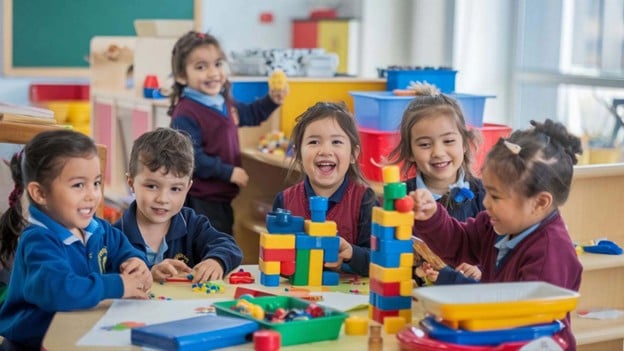
Young children experience the world as a series of new and often overwhelming moments. Sounds, transitions, social expectations, and unfamiliar environments can easily create uncertainty. In preschool settings, predictable routines serve as an emotional anchor, giving children a sense of order that helps them feel safe, confident, and ready to learn. Structure does not limit curiosity. Instead, it provides the stability children need to explore freely.
Families researching early education programs, including those at klaschools.com, often notice how much emphasis is placed on daily schedules. This focus exists for a reason. When routines are consistent, preschoolers develop trust in their environment and the adults guiding them. That trust becomes the foundation for emotional security and healthy development.
Understanding Security Through Repetition and Structure
Preschoolers thrive on repetition because it helps them predict what will happen next. Knowing the order of daily activities reduces anxiety and allows children to focus their energy on learning rather than uncertainty. A consistent schedule sends a clear message that their environment is reliable.
Structure also supports cognitive processing. When children recognize familiar patterns, they gain confidence in their ability to understand and respond to expectations. This predictability creates a calm mental state that encourages participation and curiosity.

Emotional Regulation and Daily Consistency
Emotional regulation is still developing during the preschool years. Sudden changes or unclear expectations can trigger stress responses. Predictable routines reduce emotional overload by creating clear boundaries and transitions throughout the day.
Regular meal times, rest periods, and activity blocks help children regulate mood and energy levels. When their bodies and minds adjust to a known rhythm, emotional outbursts decrease, andself-controll improves. Consistency supports emotional balance in ways that verbal reassurance alone cannot.
Building Trust Between Children and Educators
Trust is essential for emotional security. When teachers follow consistent routines, children learn that adults are dependable. This reliability encourages children to seek help, ask questions, and express feelings openly.
Predictable interactions also strengthen relationships. Children know when they will receive attention, guidance, or comfort. Over time, this consistency builds a strong sense of belonging within the classroom community.
Supporting Independence Through Familiar Patterns
Independence grows when children feel capable and informed. Predictable routines allow preschoolers to anticipate what comes next and prepare themselves accordingly. Simple actions such as cleaning up before snack time or lining up for outdoor play become opportunities for self-direction.
As children master daily sequences, they gain confidence in managing tasks independently. This sense of competence reinforces security and encourages initiative, both essential traits for future learning environments.
Smooth Transitions and Reduced Stress
Transitions are often the most challenging moments in a preschool day. Moving from play to quiet time or from indoor to outdoor activities can create frustration. Predictable routines ease these transitions by providing clear signals and expectations.
When transitions occur consistently, children adapt more easily. Visual schedules, verbal cues, and consistent timing help children adjust emotionally and behaviorally. Reduced transition stress leads to smoother days for both children and educators.
Cognitive Benefits of Structured Environments
Security and learning are closely connected. When children feel safe, their brains are more receptive to new information. Predictable routines free cognitive resources that would otherwise be spent on managing uncertainty.
Structured environments support memory, attention, and problem-solving. Children can focus on activities rather than worrying about unexpected changes. This mental clarity enhances engagement and supports more profound learning experiences.
Social Confidence Within Routine-Based Settings
Social interactions feel safer when children know the context in which they occur. Group activities scheduled at consistent times help children understand social expectations and practice cooperation.
Predictable routines encourage positive peer interactions by establishing explicit norms. Children learn when to share, listen, and collaborate. These social experiences strengthen communication skills and foster respectful relationships.
Physical Well Being and Biological Rhythms
Consistent schedules align with children’s natural biological rhythms. Regular times for meals, movement, and rest support physical health and energy regulation. Well-rested and well-nourished children are better equipped to manage emotions and engage socially.
Predictable routines also promote healthy habits that extend beyond preschool. Children begin to internalize patterns that support lifelong well-being, reinforcing the connection between structure and security.
Flexibility Within a Predictable Framework
Predictability does not mean rigidity. Effective preschool routines allow room for flexibility while maintaining overall structure. When occasional changes occur within a familiar framework, children learn adaptability without feeling overwhelmed.
This balance teaches children that change can be managed safely. They develop resilience while still relying on consistent anchors throughout the day.
Partnering With Families to Reinforce Stability
Consistency between home and school environments strengthens emotional security. When families understand classroom routines, they can mirror similar patterns at home. Shared expectations help children transition smoothly between settings.
Communication between educators and families ensures that routines support each child’s individual needs. This partnership reinforces stability and trust across all areas of a child’s life.
Where Stability Shapes Confident Learners
Predictable routines create an environment where preschoolers feel secure enough to grow. Through consistency, trust, and supportive structure, children develop emotional strength, independence, and social confidence. These early experiences establish a sense of safety that supports learning and personal development long into the future.
Disclaimer
Artificial Intelligence Disclosure & Legal Disclaimer
AI Content Policy.
To provide our readers with timely and comprehensive coverage, South Florida Reporter uses artificial intelligence (AI) to assist in producing certain articles and visual content.
Articles: AI may be used to assist in research, structural drafting, or data analysis. All AI-assisted text is reviewed and edited by our team to ensure accuracy and adherence to our editorial standards.
Images: Any imagery generated or significantly altered by AI is clearly marked with a disclaimer or watermark to distinguish it from traditional photography or editorial illustrations.
General Disclaimer
The information contained in South Florida Reporter is for general information purposes only.
South Florida Reporter assumes no responsibility for errors or omissions in the contents of the Service. In no event shall South Florida Reporter be liable for any special, direct, indirect, consequential, or incidental damages or any damages whatsoever, whether in an action of contract, negligence or other tort, arising out of or in connection with the use of the Service or the contents of the Service.
The Company reserves the right to make additions, deletions, or modifications to the contents of the Service at any time without prior notice. The Company does not warrant that the Service is free of viruses or other harmful components.