The internet has a peculiar way of turning the mundane into the monumental. We’ve seen dancing hamsters, cats playing pianos, and a literal potato that became a celebrity. But few things capture the pure, unadulterated “weird-cute” energy of the digital age quite like the Chicken Banana Song.
It is exactly what it sounds like: a rhythmic, nonsensical, and strangely hypnotic tribute to the intersection of poultry and fruit. But beneath the yellow feathers and the catchy beat lies a story of digital surrealism, the evolution of meme culture, and our collective need for “brain rot” that actually feels good.
Video courtesy Crazy Music Channel
The Anatomy of a Viral Earworm
The Chicken Banana Song didn’t just appear; it erupted. Characterized by high-pitched vocals—often modulated to sound like a cross between a toddler and a squeaky toy—the song follows a repetitive structure. The lyrics usually revolve around the simple declaration of being a “banana chicken” or a chicken who simply loves bananas.

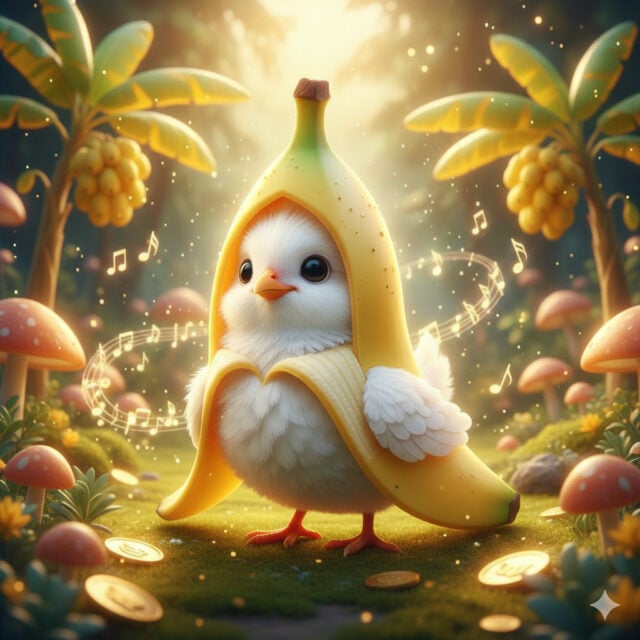
Why does it work? From a psychological perspective, it utilizes incongruity theory. Humans find things humorous or engaging when two unrelated concepts are smashed together. A chicken is a farm animal; a banana is a tropical fruit. There is no logical reason for them to be intertwined, and yet, the visual of a chicken wearing a banana peel like a hooded sweatshirt creates an immediate hit of dopamine.
Why Was It Made?
While there isn’t one single “Creator Zero” for the concept (as the internet often iterates on a theme collectively), the surge in Chicken Banana content can be traced back to three primary drivers:
- The Rise of “Cozy Chaos”: Following years of global stress, internet aesthetics shifted toward “low-stakes” humor. The Chicken Banana Song represents a world where the only problem is whether a chicken fits inside a fruit peel.
- Algorithm Baiting: Short-form video platforms like TikTok and Reels thrive on “audios.” Creators realized that the song’s high-frequency, rhythmic nature was perfect for background music in pet videos, digital art timelapses, and DIY crafts.
- The “Kawaii” Influence: Much of the song’s imagery draws on Japanese kawaii culture—round shapes, oversized eyes, and pastel palettes. By making the chicken “banana-shaped,” it fits into a specific design language that is globally understood as “adorable.”
The Evolution of the Lyrics
While versions vary, the core of the song usually focuses on the rhythmic repetition of the words. It’s a form of Lexical Gustation—where the words feel “tasty” to say.
- The Verse: Usually describes the chicken’s day.
- The Chorus: The “Banana” chant.
- The Bridge: Often involves a series of “clucks” set to a techno beat.
The Impact on Pop Culture
Believe it or not, the Chicken Banana Song has moved beyond just a 15-second clip. It has sparked an entire sub-genre of merchandise. You can now find:
- Plushies of chickens emerging from banana peels.
- Enamel pins for “Banana Bird” enthusiasts.
- Lo-fi remixes of the song for studying (ironically called “Cluck-fi”).
It serves as a digital campfire. In the comments sections of these videos, you won’t find the typical vitriol of the internet. Instead, you find people tagging friends, using chicken emojis, and sharing a brief, synchronized moment of silliness.
Sources and References
To track the flight of this fruit-filled bird, we looked at the following cultural archives:
- Know Your Meme: Meme Encyclopedia – Chicken Trends (Search: Chicken Banana)
- TikTok Creative Center: Trending Audio Analytics
- YouTube Trends: The Evolution of Surreal Humour
- Spotify Viral 50: Data on novelty track performance.
- Reddit: r/OutOfTheLoop – “Why is everyone posting chickens and bananas?”
Disclaimer
Artificial Intelligence Disclosure & Legal Disclaimer
AI Content Policy.
To provide our readers with timely and comprehensive coverage, South Florida Reporter uses artificial intelligence (AI) to assist in producing certain articles and visual content.
Articles: AI may be used to assist in research, structural drafting, or data analysis. All AI-assisted text is reviewed and edited by our team to ensure accuracy and adherence to our editorial standards.
Images: Any imagery generated or significantly altered by AI is clearly marked with a disclaimer or watermark to distinguish it from traditional photography or editorial illustrations.
General Disclaimer
The information contained in South Florida Reporter is for general information purposes only.
South Florida Reporter assumes no responsibility for errors or omissions in the contents of the Service. In no event shall South Florida Reporter be liable for any special, direct, indirect, consequential, or incidental damages or any damages whatsoever, whether in an action of contract, negligence or other tort, arising out of or in connection with the use of the Service or the contents of the Service.
The Company reserves the right to make additions, deletions, or modifications to the contents of the Service at any time without prior notice. The Company does not warrant that the Service is free of viruses or other harmful components.