The 50,000 Milestone: A New Era for Wall Street
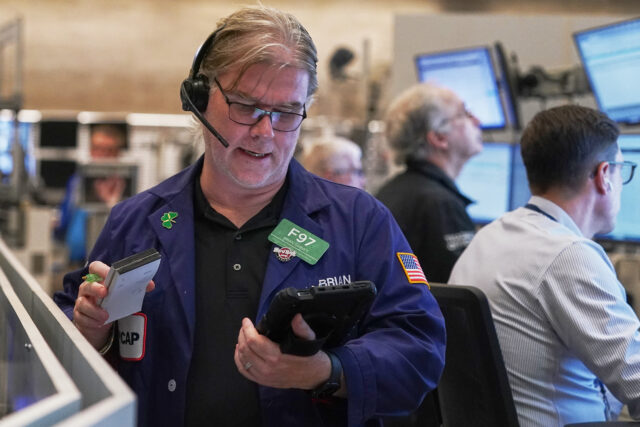
NEW YORK — In a day that will be etched into the annals of financial history, the Dow Jones Industrial Average (DJIA) surged past the 50,000-point threshold for the first time ever on Friday, February 6, 2026. The closing bell at the New York Stock Exchange signaled more than just a successful trading session; it marked the culmination of a decade-long journey of American corporate resilience and the relentless expansion of the digital economy.
The Dow finished the day at 50,115.67, climbing a staggering 1,206.95 points, or approximately 2.5%. The rally was not an isolated event; the S&P 500 jumped 2% to 6,932.30, and the tech-heavy Nasdaq Composite rose 2.2%, closing at 23,031.21.
The Anatomy of a Rebound
The week leading up to this milestone was anything but certain. Markets had been roiled by “AI jitters” earlier in the week, following a massive sell-off triggered by concerns over the capital expenditure required to maintain the artificial intelligence revolution. However, Friday saw a dramatic reversal.
The primary catalysts for the surge included:

- “Pick-and-Shovel” AI Winners: While giants like Amazon saw shares dip after announcing a gargantuan $200 billion investment in AI and robotics for 2026, the market realized this spending represents guaranteed revenue for chipmakers. Nvidia (NVDA) shares surged nearly 8%, leading the charge for the Dow’s blue-chip components.
- Consumer Resilience: The University of Michigan’s preliminary Consumer Sentiment survey for February topped expectations. Despite ongoing geopolitical tensions, the data suggested that the American consumer remains a pillar of the economy.
- The “Old Economy” Resurgence: While tech grabbed the headlines, the Dow’s ascent was underpinned by industrial and energy stalwarts. Caterpillar (CAT) surged 7%, benefiting from a multi-year trend in industrial reshoring and domestic infrastructure projects.
The Psychological Impact of 50,000
Market historians note that the Dow hit 10,000 in 1999, 20,000 in 2017, and 40,000 in early 2024. Crossing 50,000 in early 2026 represents a remarkable acceleration. “At 50,000, the Dow grabs headlines, but it’s a reminder that milestones get louder even when they are psychologically driven,” noted Mark Hamrick, Senior Economic Analyst at Bankrate.
For many, the number serves as a validation of the “soft landing” narrative that dominated 2025. It reflects a market that has largely shrugged off fears of a deep recession, focusing instead on the productivity gains promised by the integration of AI across traditional sectors like healthcare, finance, and manufacturing.
What is Expected Next?
While the mood on Wall Street is jubilant, analysts urge a blend of optimism and caution as the market enters uncharted territory.
1. Increased Volatility and Consolidation
Historically, after crossing a major “round number” milestone, the market often experiences a period of consolidation. Investors should expect increased volatility as the index “tests” the 50,000 level as a new floor. Profit-taking from institutional investors who have hit their quarterly targets could lead to short-term pullbacks.
2. Shift Toward “Fundamentals over Fed”
Analysts at Bloomberg and Morgan Stanley suggest that 2026 will be less about Federal Reserve interest rate decisions and more about corporate earnings. With double-digit earnings growth expected for the S&P 500, the focus will shift to which companies can turn AI “hype” into actual return on investment (ROI).
3. The Widening of the Rally
The “Magnificent Seven” tech dominance is beginning to give way to a “Broadened Rally.” Market strategists expect the Russell 2000 (small-cap stocks) and Dow industrials to continue outperforming if interest rates remain stable. The “catch-up trade”—where investors seek value in overlooked sectors—is expected to be the dominant theme in Q2 2026.
Sources and Links
- The Washington Post: Stock market hits all-time high as Dow closes above 50,000
- Investopedia: Markets News, Feb. 6, 2026: Dow Ends Above 50K for First Time
- Bloomberg via SwissInfo: Stocks Roar Back as Dow Average Hits 50,000 Mark
- ABC News: Dow closes above 50,000 for the first time ever
- Morgan Stanley Insights: Investment Outlook 2026: U.S. Stock Market to Guide Growth
- MarketWatch via Morningstar: Dow 50,000: What the milestone says about what’s ahead
Disclaimer
Artificial Intelligence Disclosure & Legal Disclaimer
AI Content Policy.
To provide our readers with timely and comprehensive coverage, South Florida Reporter uses artificial intelligence (AI) to assist in producing certain articles and visual content.
Articles: AI may be used to assist in research, structural drafting, or data analysis. All AI-assisted text is reviewed and edited by our team to ensure accuracy and adherence to our editorial standards.
Images: Any imagery generated or significantly altered by AI is clearly marked with a disclaimer or watermark to distinguish it from traditional photography or editorial illustrations.
General Disclaimer
The information contained in South Florida Reporter is for general information purposes only.
South Florida Reporter assumes no responsibility for errors or omissions in the contents of the Service. In no event shall South Florida Reporter be liable for any special, direct, indirect, consequential, or incidental damages or any damages whatsoever, whether in an action of contract, negligence or other tort, arising out of or in connection with the use of the Service or the contents of the Service.
The Company reserves the right to make additions, deletions, or modifications to the contents of the Service at any time without prior notice. The Company does not warrant that the Service is free of viruses or other harmful components.