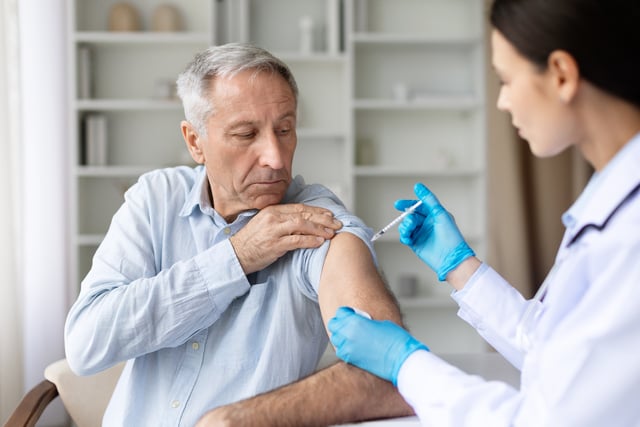
For decades, vaccines have been celebrated as the primary shield against acute infectious diseases. However, a growing body of scientific evidence suggests their benefits may extend far beyond preventing sore throats or painful rashes. Recent studies, including several highlighted by medical researchers and major health institutions, indicate that routine adult vaccinations—specifically for shingles, influenza, and pneumonia—could significantly reduce the risk of dementia and cardiovascular disease in later life.
According to a report by The New York Times earlier this year, these “off-target” benefits are transforming how scientists view the relationship between the immune system and chronic age-related decline. The paper noted that as researchers look for ways to stem the rising tide of Alzheimer’s and heart failure, the humble vaccine clinic may be providing an answer that was hiding in plain sight.
The Shingles-Dementia Connection
The most striking evidence involves the shingles vaccine. A massive “natural experiment” in Wales, which was analyzed by researchers at Stanford Medicine and published in Nature, took advantage of a historical quirk in vaccine eligibility. Because the vaccine was rolled out based on specific birth dates, researchers could compare two almost identical groups of seniors.
The results were “striking,” as senior author Dr. Pascal Geldsetzer told reporters. Those eligible for the vaccine saw a 20 percent reduction in new dementia diagnoses over a seven-year period. This effect was even more pronounced in women. More recently, data presented at IDWeek 2025 indicated that the newer shingles vaccine (Shingrix) may be even more potent, potentially reducing the risk of vascular dementia by up to 50 percent compared with other vaccines.

Protecting the Heart
It isn’t just the brain that benefits. Vaccination against influenza and pneumonia has long been associated with better outcomes for heart patients. According to a meta-analysis published in the journal Age and Ageing, healthy older adults who receive their annual flu shot have substantially lower risks of being hospitalized for heart failure, stroke, or heart attack.
The logic is increasingly clear to the medical community: when an infection like the flu or shingles triggers massive systemic inflammation, it doesn’t just affect the lungs or the skin. It stresses the entire vascular system. By preventing the infection, vaccines prevent the “downstream” inflammatory damage that often precipitates a cardiac event or accelerates the cognitive decline associated with vascular dementia.
The Science of “Trained Immunity”
Why would a vaccine for a specific virus protect against a complex neurodegenerative disease like Alzheimer’s? Scientists are coalescing around two main theories. The first is direct: certain viruses, such as the herpes zoster virus (which causes shingles), may travel to the brain and trigger the inflammatory processes that lead to plaque formation. By keeping the virus in check, the vaccine keeps the brain quiet.
The second theory involves “trained immunity.” This suggests that vaccines “exercise” the immune system, keeping it nimble and efficient. A “trained” immune system may be better at clearing toxic proteins, such as amyloid-beta and tau, that are hallmarks of Alzheimer’s disease.
“We now know that many infections are associated with the onset of dementia,” said Dr. Nicola Maggi, lead author of a recent meta-analysis covering over 104 million participants. In her team’s research, the Tdap vaccine (tetanus, diphtheria, and pertussis) was associated with a one-third reduction in dementia risk—a finding that suggests the protective effect is a general benefit of a well-regulated immune system rather than a specific response to a single virus.
A New Frontier in Public Health
Despite these findings, vaccine uptake among seniors remains lower than health officials would like. For many, the memory of the infection they are avoiding is enough motivation, but for others, the “bonus” benefits of heart and brain health might be the ultimate selling point.
As reported by The New York Times, the discovery of these secondary benefits comes at a crucial time. With the global population aging and the costs of dementia care projected to reach trillions of dollars, any intervention that can delay the onset of cognitive decline by even a few years is a public health “holy grail.”
For the average senior, the takeaway is increasingly simple. “If you prevent the infection, you prevent this other damage,” noted Dr. Helen Chu, an immunologist involved in vaccine research. While a shingles shot or a flu jab might be a temporary inconvenience, the long-term payoff might be a decade of extra clarity and a stronger heart.
As researchers continue to investigate whether these effects are cumulative—meaning whether getting all recommended shots provides a “shielding” effect—the medical community’s advice is unanimous: stay up to date on your shots. The needle might be small, but the protection it offers for the aging mind and body is proving to be immense.
Source: The New York Times
Disclaimer
Artificial Intelligence Disclosure & Legal Disclaimer
AI Content Policy.
To provide our readers with timely and comprehensive coverage, South Florida Reporter uses artificial intelligence (AI) to assist in producing certain articles and visual content.
Articles: AI may be used to assist in research, structural drafting, or data analysis. All AI-assisted text is reviewed and edited by our team to ensure accuracy and adherence to our editorial standards.
Images: Any imagery generated or significantly altered by AI is clearly marked with a disclaimer or watermark to distinguish it from traditional photography or editorial illustrations.
General Disclaimer
The information contained in South Florida Reporter is for general information purposes only.
South Florida Reporter assumes no responsibility for errors or omissions in the contents of the Service. In no event shall South Florida Reporter be liable for any special, direct, indirect, consequential, or incidental damages or any damages whatsoever, whether in an action of contract, negligence or other tort, arising out of or in connection with the use of the Service or the contents of the Service.
The Company reserves the right to make additions, deletions, or modifications to the contents of the Service at any time without prior notice. The Company does not warrant that the Service is free of viruses or other harmful components.